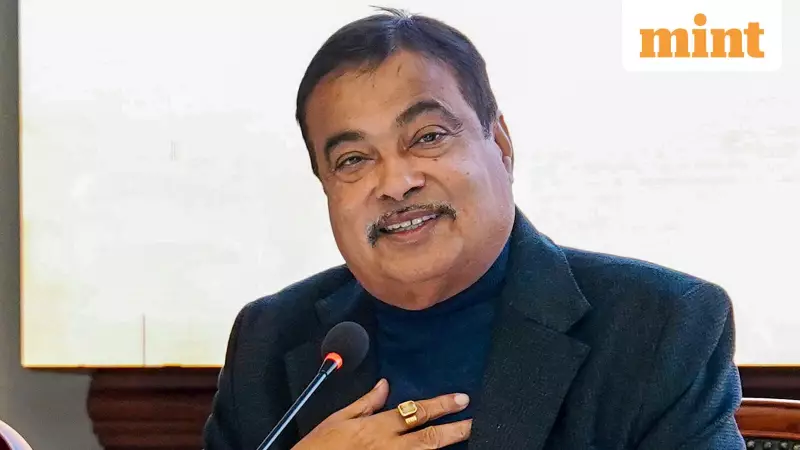
In a significant move aimed at saving lives, the Indian government has announced a new healthcare scheme that guarantees prompt and cashless medical treatment for all victims of road accidents, even for those without insurance. Union Minister for Road Transport and Highways, Nitin Gadkari, revealed the details on Thursday, stating the scheme will be officially launched by Prime Minister Narendra Modi soon.
Cashless Care in the Golden Hour
The scheme is designed to ensure that immediate medical attention is not denied during the critical "golden hour"—the first hour after an accident—which is crucial for survival. It will provide cashless treatment of up to ₹1.5 lakh per person per accident, covering hospitalization for up to seven days from the date of the incident.
Treatment will be available at all hospitals empanelled under the government's Ayushman Bharat health insurance scheme. The initiative will cover accidents on both national highways and state roads.
Nitin Gadkari emphasized that the cover extends to victims of uninsured vehicles, removing a major financial barrier to emergency care. The scheme has already been piloted in several regions, including Assam, Chandigarh, Uttarakhand, Haryana, Punjab, Uttar Pradesh, and Puducherry, with a nationwide rollout to follow.
Funding and Broader Safety Push
The scheme will be funded by a contribution of approximately 1% of the premium from insurance companies that provide third-party vehicle covers, directed into a common fund. Additionally, the existing 'Rah-Veer' scheme will continue, where the Centre reimburses states for rewarding Good Samaritans with ₹25,000 for helping accident victims reach hospitals swiftly.
This policy is a direct response to India's alarming road safety record. Official data indicates that last year, Indian roads witnessed around 500,000 accidents, resulting in over 180,000 deaths—the highest number globally. The cashless treatment scheme is part of a multi-pronged strategy by the Ministry of Road Transport and Highways (MoRTH) to reduce fatalities and improve emergency response.
Tech and Regulatory Overhaul for Safer Roads
Alongside the medical scheme, the government is pushing a technological mandate to enhance vehicle safety. The MoRTH plans to make Vehicle-to-Vehicle (V2V) communication compulsory for all new four-wheelers in the country. This system uses short-range radio signals to allow vehicles to warn each other about hazards like fog, blind spots, or accidents, giving drivers critical early alerts.
MoRTH Secretary V. Umashankar stated that a joint task force with the Department of Telecommunications has secured in-principle approval for spectrum allocation in the 5.875-5.905 GHz band for this purpose. The V2V system is expected to cost automakers between ₹5,000 and ₹7,000 per vehicle to install, with guidelines for mandatory use in new cars being finalized this year.
In response to a series of fatal bus accidents—six major incidents claiming 145 lives in just three months—the Centre is also tightening the Bus Body Code. The revised norms will replace self-certification with mandatory type approval from authorized agencies. Furthermore, sleeper coach buses can now only be manufactured by certified automobile companies, and existing buses must be retrofitted with safety features like fire detection systems and emergency exit hammers.
The government is also preparing to introduce 61 proposed amendments to the Motor Vehicles Act in the upcoming Parliament session, focusing on road safety, improved regulations, and harmonization with global standards. Gadkari also reviewed progress on the new driving training policy and the implementation of the Bharat NCAP 2.0 vehicle safety rating system during his meeting with state transport ministers.