

NABH CEO Champions Public-Private Partnerships for Healthcare Transformation
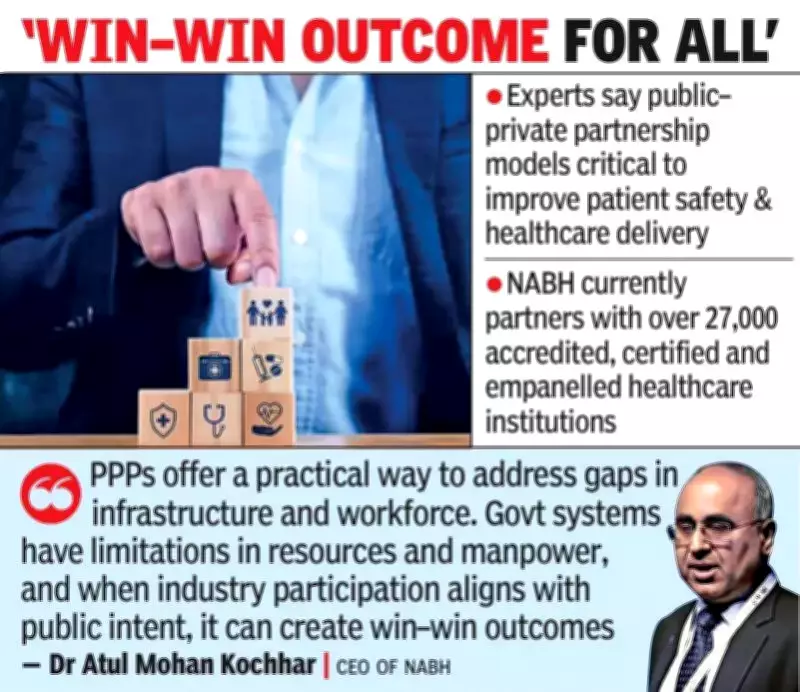
In a significant address at the Apollo Hospitals International Health Dialogue 2026 in Hyderabad, Dr Atul Mohan Kochhar, CEO of the National Accreditation Board for Hospitals & Healthcare Providers (NABH), underscored the pivotal role of public-private partnership (PPP) models in revolutionizing patient safety and healthcare delivery across India. As the apex body under the Quality Council of India (QCI), NABH sets quality and safety standards, partnering with over 27,000 accredited, certified, and empanelled healthcare institutions globally, including 131 in Hyderabad alone.
Bridging Gaps Through Strategic PPP Initiatives
Dr Kochhar highlighted that well-designed PPP initiatives, already operational in states like Andhra Pradesh and Karnataka, are essential to address critical shortages in resources, manpower, and service delivery. "While the intent behind PPP models is strong, their success hinges on effective execution," he remarked. He explained that healthcare, being largely a state subject, benefits from PPPs as they offer a practical solution to infrastructure and workforce gaps, where government systems often face limitations.
"When industry participation aligns with public intent, it creates win-win outcomes," Dr Kochhar added, citing the AB-PMJAY scheme as a key facilitator in bringing stakeholders together. This alignment is crucial in a country where, out of nearly 80,000 hospitals, only about 4,000 are fully accredited, with many medium and small hospitals operating in tier-4 and tier-5 cities.

NABH's Outreach and Training Efforts
To promote basic quality practices, NABH conducted approximately 400 outreach programmes in smaller cities during 2025, focusing on essentials like hand hygiene and surgical safety checklists. The board has also urged state governments and municipalities to adopt Samarpan, a collective pledge encouraging community ownership of patient safety.
Furthering its mission, NABH launched Gunvata Mitra, a consultancy wing dedicated to supporting small and first-time hospitals in embarking on their quality journey. Ambitious plans include training one lakh hospital staff, including nurses and paramedics, over the next year through low-cost and free programmes. Dr Kochhar noted, "It took 20 years to skill 1.5 lakh professionals, but digital platforms will now enable us to add one lakh trained quality managers and champions annually."
Beyond Accreditation: A Call for Continuous Improvement
Dr Madhu Sasidhar, president and CEO of Apollo Hospitals' hospital division, emphasized that accreditation alone is insufficient. "Hospitals may meet minimum standards through accreditation, but as healthcare complexity increases, patient safety must be driven by continuous processes that extend beyond accreditation," he stated.
Experts at the dialogue pointed to alarming global statistics, with nearly 30 lakh deaths annually due to unsafe care and one in four patients harmed in low- and middle-income countries. Jayesh Ranjan, special chief secretary for industries & commerce and IT departments, stressed the need for an equity-focused approach. "An equity lens forces a design lens. To ensure patient safety in the real world, we must design for the most vulnerable and plan for continuity, access, and actual human behavior," he asserted, highlighting that patient diversity necessitates tailored safety measures.
This comprehensive dialogue in Hyderabad reinforces the urgent need for collaborative efforts, innovative PPP models, and sustained quality initiatives to elevate India's healthcare landscape, ensuring safer and more accessible care for all citizens.






