Guntur's Govt General Hospital Burns Ward Stalled Despite Funds and Sanction
The proposed burns ward at Government General Hospital (GGH) in Guntur continues to be a non-starter, with administrative sanction and allocated funds failing to translate into operational reality. Persistent space constraints and unmet technical requirements have effectively stalled all progress on this critical healthcare facility.
Space Constraints Hinder Implementation
According to National Medical Commission (NMC) guidelines, a burns ward must be located adjacent to the Emergency Medicine Department (EMD) to ensure immediate specialized care for patients. However, authorities have consistently failed to identify suitable space within the existing hospital building that meets this crucial requirement.
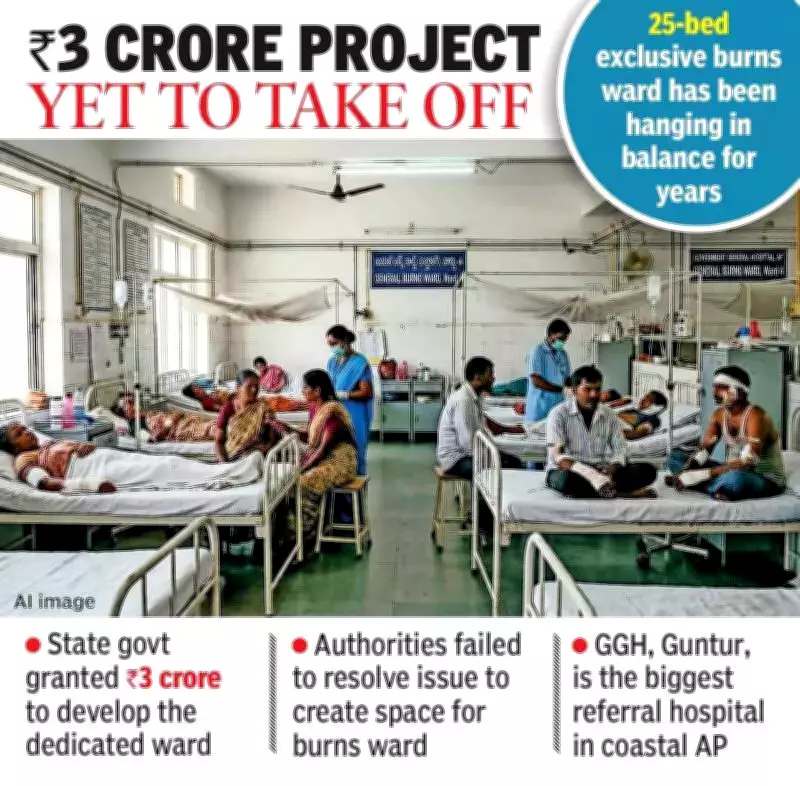
The state government had planned an exclusive 25-bed burns ward at an estimated cost of ₹3 crore. While funds were properly allocated for this purpose, officials have been unable to overcome significant logistical hurdles, particularly the complete lack of available space around the Emergency Medicine Department.

No Alternative Solutions Finalized
No alternative arrangements have been finalized to address the space limitation issue. Potential solutions such as establishing the burns ward in a nearby building with proper emergency connectivity have been discussed but not implemented, leaving the crucial facility existing only on paper.
This failure to operationalize the burns ward comes despite clear administrative sanction and the availability of necessary funding, highlighting systemic implementation challenges within the healthcare infrastructure development process.
Pressure Mounts on GGH Services
The absence of a dedicated burns unit is creating immense pressure on GGH, which serves as a primary referral center for multiple districts including NTR, Krishna, Bapatla, Prakasam, and Palnadu. Doctors across these regions continue to send serious burn cases to Guntur, expecting specialized treatment that the hospital currently cannot provide.
In reality, hospital staff are forced to manage critical burn patients in general wards where proper isolation and infection control measures are inadequate. This compromised treatment environment significantly affects patient outcomes and places additional strain on already overburdened medical personnel.
Expert Concerns About Patient Safety
Medical experts emphasize that burn injuries demand immediate treatment in properly controlled, infection-free environments. Delays in establishing appropriate facilities can lead to severe complications or even fatalities among patients who require specialized care.
Patients and their families bear the brunt of this infrastructure gap, often being compelled to seek treatment in private hospitals or travel long distances to other medical centers. This results in substantial additional costs and dangerous treatment delays for those already facing medical emergencies.
Urgent Call for Resolution
Social activist Dr. T. Seva Kumar has highlighted the urgent need for authorities to resolve the space constraints and operationalize the 25-bed facility at the earliest possible opportunity. "There is an urgent need for authorities to resolve space constraints and operationalize the 25-bed facility at the earliest," stated Dr. Kumar, emphasizing the critical nature of this healthcare gap.
The situation at GGH Guntur represents a significant healthcare infrastructure challenge where bureaucratic and logistical hurdles are preventing the implementation of a facility that has already received both administrative approval and financial allocation.