GRH Ophthalmology Department Achieves Milestone with 22 Advanced Corneal Procedures
The ophthalmology department at Government Rajaji Hospital (GRH) in Madurai has successfully performed 22 advanced corneal procedures over the past six months, providing specialized treatment for patients suffering from progressive corneal disorders. This initiative marks a significant step in enhancing eye care services in the region.
Breakdown of Procedures and Their Benefits
During this period, 14 patients underwent Corneal Collagen Cross-Linking (C3R), while eight received Descemet's Stripping Endothelial Keratoplasty (DSEK), as confirmed by Dr. K Kavitha, head of the department. These procedures are tailored to address specific corneal conditions with minimal invasiveness and faster recovery times.
C3R Procedure Details: C3R is a minimally invasive technique designed to strengthen the cornea and halt the progression of keratoconus. Keratoconus is a condition where the cornea thins and bulges outward, leading to blurred or distorted vision. This procedure is particularly recommended for young patients with progressive keratoconus. Visual stabilisation is typically achieved within two months, which is significantly faster than conventional corneal transplant surgeries.

DSEK Procedure Details: DSEK is performed when the inner layer of the cornea fails due to congenital disorders, ageing, or complications following eye surgery. This technique replaces only the damaged inner layer, allowing for quicker recovery—usually within four to six weeks—and carries a lower risk of rejection compared to full-thickness corneal transplants.
Importance of Early Detection and Symptoms to Watch For
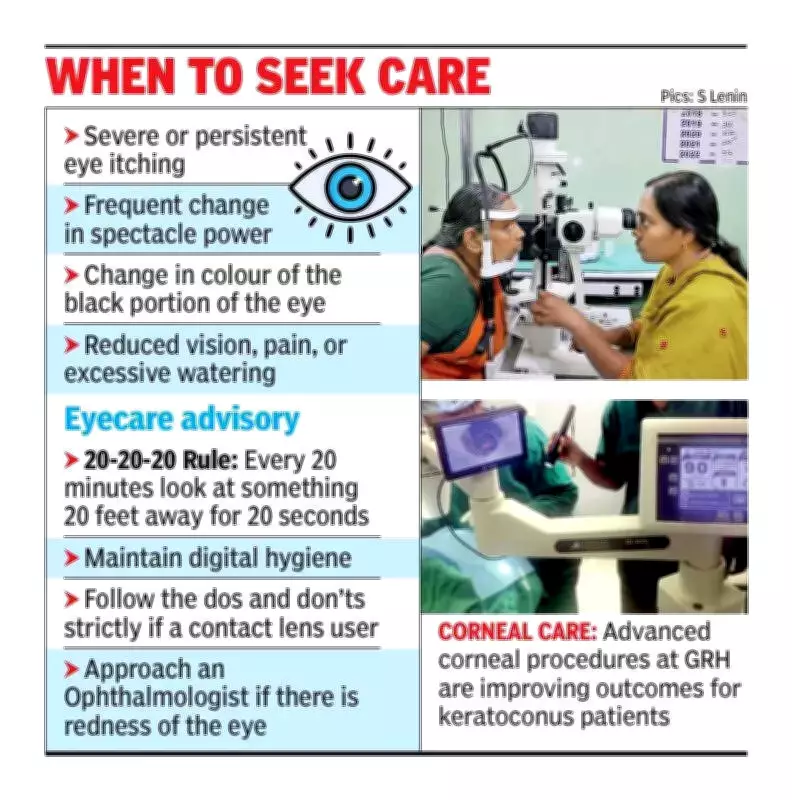
Doctors have advised individuals experiencing persistent symptoms such as eye itching, frequent changes in spectacle power, reduced vision, pain, or excessive watering to seek early evaluation for corneal disease. Early detection is crucial as it can prevent progression and improve treatment outcomes, potentially avoiding the need for more invasive surgeries later on.
Department Statistics and Patient Trends
The ophthalmology department at GRH handles between 250 to 300 outpatients daily and operates with 120 beds. Hospital authorities have noted an increasing trend where more patients are opting for advanced corneal care at GRH. This care is provided either free of cost or under the Chief Minister's Comprehensive Health Insurance Scheme, offering a viable alternative to expensive private facilities.
Eye Care Advisory for General Public
To maintain optimal eye health, especially in today's digital age, the following guidelines are recommended:
- 20-20-20 Rule: Every 20 minutes, look at something 20 feet away for 20 seconds to reduce eye strain.
- Maintain digital hygiene by adjusting screen brightness and taking regular breaks.
- Follow dos and don'ts strictly if using contact lenses to prevent infections.
- Approach an ophthalmologist immediately if there is redness or any unusual symptoms in the eye.
This comprehensive approach by GRH underscores its commitment to advancing eye care and making specialized treatments accessible to a broader population.