Dhanbad Hospital Medical Staff Stage Silent Protest Against Lawyer Access Through Premises
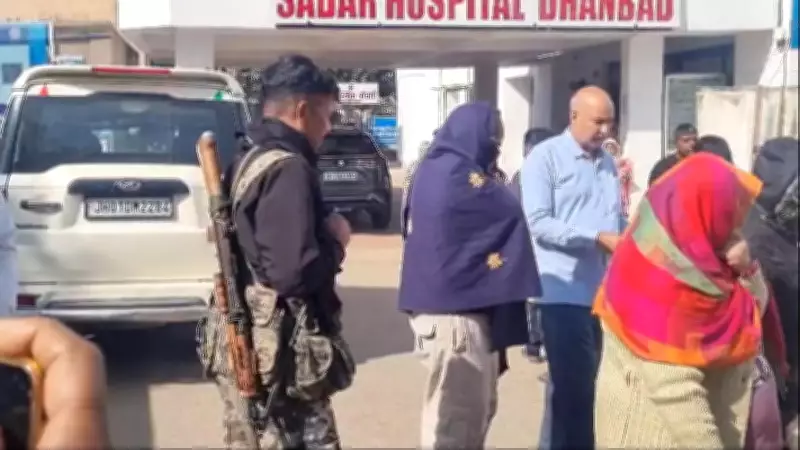
In a significant development highlighting tensions between healthcare services and legal professionals, doctors, nurses, and other medical staff at Dhanbad Sadar Hospital organized a silent march on Saturday. The protest was specifically aimed at demanding a complete and permanent ban on the use of hospital premises by lawyers for transit purposes.
Background to the Dispute Over Boundary Wall Access
The medical staff's demonstration came just one day after lawyers concluded their pen-down strike. This legal professionals' strike had been resolved when Senior Superintendent of Police Prabhat Kumar provided assurances that a portion of the recently constructed boundary wall would be dismantled. The wall had been blocking the traditional access route to the bar building adjacent to the hospital property.
SSP Kumar had committed to creating a new gate installation that would facilitate lawyer movement between their offices and the court premises. Furthermore, authorities had promised that the boundary wall would not be restored until permanent road infrastructure and adequate parking arrangements were established specifically for legal professionals.

Medical Community's Safety and Operational Concerns
Healthcare workers at the hospital expressed strong opposition to these arrangements, raising multiple concerns about patient safety, hospital security, and the uninterrupted functioning of critical medical services. Dr. Sanjeev Kumar, the nodal officer of Sadar Hospital, emphasized that the hospital administration had already provided an alternative route specifically designated for lawyer movement.
"Despite this existing accommodation, the renewed demand to break through the boundary wall and create an additional passage appears unjustified from a healthcare perspective," Dr. Kumar stated. "Opening hospital premises for general transit purposes would inevitably compromise both security protocols and internal management systems that are essential for patient care."
Potential Impact on Emergency Medical Services
The medical community's concerns extended beyond general security to specific operational challenges that could directly affect patient outcomes. Dr. A. K. Singh, president of the Jharkhand chapter of the Indian Medical Association, which formally endorsed Saturday's protests, highlighted the practical implications of increased traffic through hospital grounds.
"Creating a new passage by dismantling the boundary wall would likely result in frequent traffic congestion within the hospital premises," Dr. Singh explained. "Such congestion scenarios could severely hamper the movement of emergency ambulances and critically ill patients during time-sensitive medical situations, potentially putting numerous lives at risk."
The silent protest by medical professionals represents a growing concern among healthcare workers about maintaining the sanctity and functionality of medical facilities amid competing demands for access and convenience from other professional groups operating in proximity to hospital campuses.