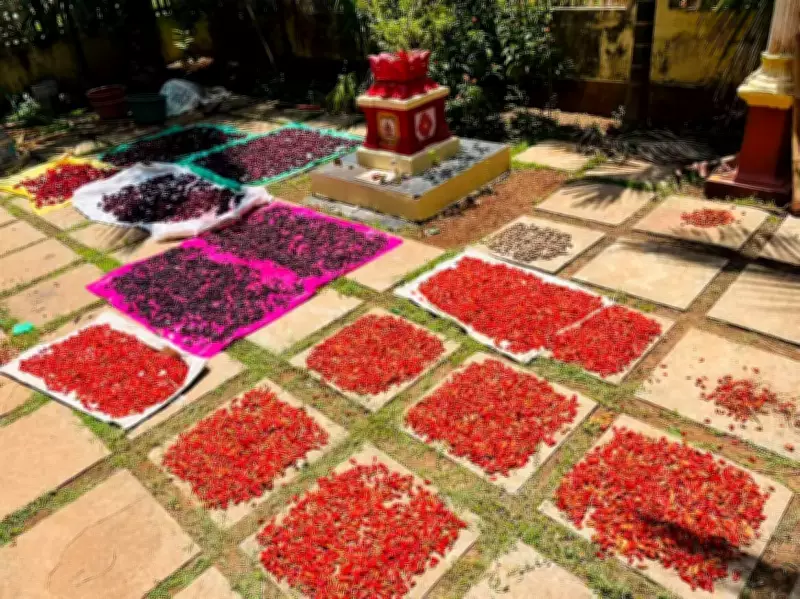
Mapusa: A blazing summer has brought relief and optimism to chilli farmers in Pernem taluka, with this year's abundant crop maturing under ideal conditions for sun-drying. Farmers across Pernem said the prolonged hot and dry weather helped produce healthy, flavour-rich chillies, for which the taluka is well known. Despite mounting challenges, several villages in the region have continued the traditional cultivation of the famed crop.
Price Fluctuations and Local Commitment
This season, chilli prices fluctuated between Rs 800 and Rs 1,200 per kg. However, many growers said they deliberately capped rates between Rs 700 and Rs 800 per kg for local consumers. "We are not here just to make profit, but to lay down our legacy," said Mandrem-based grower Subhadra Gaonkar.
Wildlife Threats on the Rise
Yet, farmers said sustaining chilli cultivation is becoming increasingly difficult due to untimely rain and growing wildlife intrusion. This year, cultivators in Arambol, Mandrem and neighbouring villages reported significant crop losses caused by monkeys and peacocks. More alarming for farmers, however, has been the emergence of wild gaur (Indian bison) in the area.

"Bisons were never heard of in Arambol, but this year, we saw them roaming freely like domestic cattle and damaging our plantations," said Prasad Naik, a cultivator from Arambol. Senior farmers said that while monkeys and peacocks have long been part of the local ecosystem, the scale of destruction caused by gaur is unprecedented. Despite these challenges, farmers in Pernem continue to treat chilli cultivation as a specialised craft shaped by the region's unique terroir.
Distinct Flavours of Arambol Chillies
Among the villages, Arambol chillies are considered especially prized for their distinct flavour. Farmers say even minor variations in cultivation techniques can significantly alter the taste of the produce. "Despite the proximity between Paliem and Arambol, the taste of chillies grown in the two villages differs," said Sudip Naik, a major chilli grower from Arambol. Another farmer, Devanand Naik, said even irrigation methods influence flavour and quality.
While flood irrigation is commonly used in villages such as Mandrem, which records some of the highest chilli yields, growers in Arambol prefer manually sprinkling water on their farms. According to farmers, this traditional method contributes to the punchy flavour for which Arambol chillies are known.
Preserving Tradition Amid Challenges
Despite labour shortages and increasing fears of wildlife damage, chilli growers across Pernem said they remain determined to preserve the region's long-standing farming tradition. The summer heat has provided a much-needed boost, but the resilience of these farmers underscores their dedication to a legacy that spans generations.