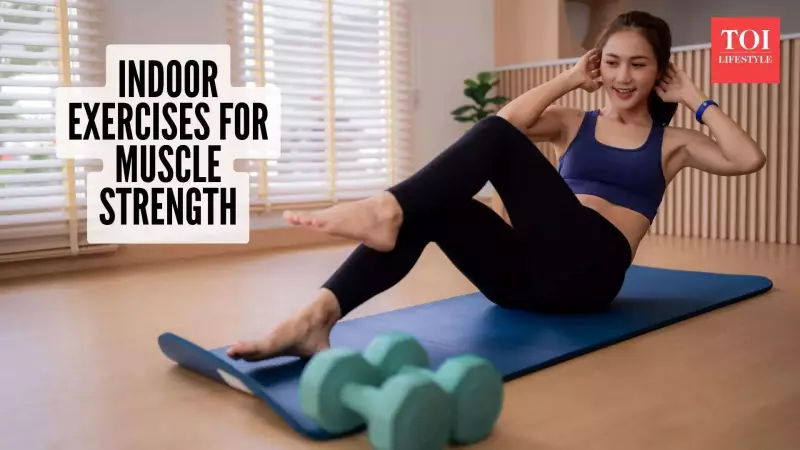
Forget the notion that building muscle strength requires a gym membership or heavy machinery. As we approach a new year, fitness goals often top resolution lists, and experts confirm that a quiet room, consistent effort, and the right movements can lead to significant gains. Indoor exercises offer a controlled, focused, and safe environment for progressive strength development, training muscles, joints, and balance in unison. Here are six indoor exercises, detailed by fitness experts, that support genuine strength building, not shortcuts.
Foundational Lower Body Movements
Slow Squats with a Pause: The classic squat transforms when you alter its tempo. Instead of a quick drop, lower your body over a count of four seconds. Hold the bottom position for a deliberate two-second pause before rising back up. This pause eliminates momentum and forces your thigh, hip, and glute muscles to work harder under sustained tension, promoting strength even without added weights. For safety and to guide depth, placing a chair behind you can be immensely helpful.
Controlled Lunges in Place: Forward lunges, when performed slowly and with control, are excellent for building leg strength and coordination. The key is to step forward and then return to the exact starting spot, which minimizes strain on the joints. Maintaining an upright chest and a controlled pace ensures the quadriceps, hamstrings, and glutes are engaged evenly. This exercise also inherently trains your balance, a crucial component of long-term functional strength.

Core and Upper Body Strengtheners
Push-ups with Hand Release: To make the standard push-up more effective, introduce a brief hand release at the bottom of the movement. After lowering your chest, briefly lift both hands off the floor before placing them back and pushing up. This simple act removes any bouncing momentum, ensuring each repetition honestly challenges your chest, shoulders, arms, and core. Beginners can start with knees on the floor, progressing to full push-ups as strength improves.
Floor Plank with Shoulder Taps: Elevate the standard plank by adding slow, alternating shoulder taps. From a high plank position, lift one hand to tap the opposite shoulder while keeping your hips perfectly still and level. This movement demands immense stability, training the deep core muscles and shoulder strength simultaneously. A few controlled, precise reps are far more beneficial than numerous rushed ones, ultimately improving posture and reducing injury risk.
Stability and Posterior Chain Focus
Glute Bridges with a Hold: Targeting the often-neglected posterior chain, glute bridges are perfect for counteracting the effects of prolonged sitting. Lie on your back with knees bent and feet flat. Lift your hips to form a straight line from shoulders to knees and hold this top position for a solid five seconds. This sustained contraction effectively ‘wakes up’ the glute and lower back muscles. Strong glutes are vital for spinal protection and powering daily movements like walking and lifting.
Wall-Supported Single-Leg Stands: True strength encompasses balance and joint control. Standing on one leg with light fingertip support from a wall challenges your calves, hip stabilizers, and core. Aim to hold the position for 20 to 40 seconds. As your stability strength improves over time, you can gradually reduce reliance on the wall support. This exercise builds a quiet but foundational strength that supports all other movements.
Disclaimer: This article is intended for general informational purposes only. It is not a substitute for professional medical or fitness advice. Individuals with pre-existing injuries, pain, or health conditions must consult a qualified healthcare or fitness professional before initiating any new exercise routine.