

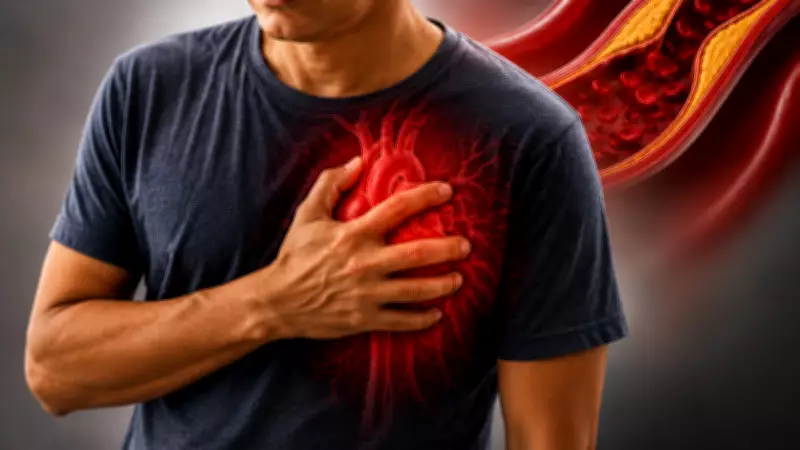
High cholesterol is often called a silent assassin. You can have dangerously elevated levels coursing through your bloodstream and feel absolutely fine. No chest pain, no shortness of breath, no warning lights on your internal dashboard. It quietly does its damage, thickening arteries, clogging vessels, and setting the stage for a heart attack or stroke years later. The scariest part? Most people do not realize they have it until something goes catastrophically wrong.
Young Adults Increasingly Affected
According to the latest data from the National Health and Nutrition Examination Survey (August 2021 to August 2023), 11.3% of adults aged 20 and older in the United States have high total cholesterol. That is nearly 25 million people with cholesterol levels above 240 mg/dL, the threshold for high cholesterol. The numbers spike dramatically with age—16.7% of adults in their 40s and 50s are affected—but younger people should be genuinely worried: you can start developing high cholesterol as early as your 20s or 30s, long before you would expect such a middle-aged problem.
Dr. Ashish Kumar Govil, Associate Director of Interventional Cardiology at Max Super Speciality Hospital in Noida, explains why early detection matters. "Although cholesterol can start developing as early as age 20 or 30, it is frequently associated with ageing. It can begin to develop without causing any noticeable symptoms until it leads to serious conditions such as heart disease or stroke. For this reason, it is extremely important that people learn about their cholesterol as early as possible and receive appropriate testing at regular intervals."

When Your Eyes Start Telling Secrets
Your eyes can reveal what is happening inside your arteries. Look in the mirror. Do you notice a grayish-white ring around the colored part of your eye? That is called corneal arcus, and it is one of the most visible warning signs of high cholesterol hiding in plain sight. "Even though most people do not notice these symptoms, there are some physical changes that may serve as a warning sign that high cholesterol is present," Dr. Govil says. "The physical signs may include xanthomas, fatty yellow spots located under the skin, especially around the eyes, elbows, and knees, and corneal arcus, greyish-white circles around the iris of the eye."
A 2021 study published in the Journal of Translational Medicine examined 250 patients with familial hypercholesterolemia, a genetic form of high cholesterol, and found that those with physical signs like tendon xanthomas and corneal arcus showed significantly higher rates of coronary artery disease. The study noted that "corneal arcus in people less than 50 years of age should be regarded as an indicator of hyperlipidemia," essentially saying if you are young and see that ring around your eye, do not ignore it. Get tested immediately.
The reason these physical manifestations appear is fascinating from a medical standpoint. Corneal arcus happens because cholesterol and lipoproteins leak from blood vessels in the eye and accumulate in the cornea itself. It is literally your body telling you there is too much cholesterol circulating. The deposits consist mostly of low-density lipoprotein (LDL)—the bad cholesterol that builds up in your arteries.
Bumps and Lesions Under Your Skin
Xanthomas are another telltale sign, and they are harder to miss. These are firm, yellowish bumps that appear under the skin, most commonly around the eyelids (where they are called xanthelasmas), on the elbows, knees, and Achilles tendons. They are essentially cholesterol deposits that have nowhere else to go, so they accumulate in your skin.
Recent research in 2024 and 2025 found that when xanthomas appear in younger patients, they often indicate extremely high cholesterol levels. One case study from China documented a 12-year-old boy with xanthomas across his fingers, hands, elbows, knees, and buttocks, whose total cholesterol level reached 752.1 mg/dL. He had a family history nobody was checking. The concerning thing about xanthomas is that many people assume they are just benign skin bumps. They are not. "Many people will have no visible signs, but these changes should not be ignored," Dr. Govil emphasizes.

High Cholesterol Does Not Appear Out of Nowhere
For younger people, the culprits are usually behavioral. Dr. Govil points to what he sees in his practice: "For younger individuals, even when their health appears to be good, early signs of high cholesterol are often linked to lifestyle choices. These include an excessive amount of processed and high-fat foods in the diet, a lack of physical activity, smoking, and excess stress." The data backs this up. Recent surveys show that younger adults with high cholesterol tend to share common patterns—sedentary jobs, processed food diets, and stress. Add genetic predisposition on top of that, and you have a recipe for early cardiovascular disease.
"Additionally, obesity, type 2 diabetes, and a family history of high cholesterol can all increase the likelihood that a younger person will develop high cholesterol as well," Dr. Govil notes. If your parents had high cholesterol, you are significantly more likely to develop it too. That is not an excuse to give up—it is a reason to be vigilant.
The Cardiac Warning Signs That Show Up Late
Here is where things get urgent. By the time your heart starts sending distress signals, the damage might already be significant. "Some of the very first effects that present on the heart and blood vessels could include feelings of fatigue, shortness of breath, and mild chest pains," Dr. Govil warns. These are not dramatic symptoms. You might chalk up fatigue to poor sleep or shortness of breath to being out of shape. But if these symptoms emerge suddenly or without explanation, they could be your heart struggling against clogged arteries. The problem is these symptoms only appear after your cholesterol has already been damaging your arteries for years. This is why waiting for symptoms is a losing strategy.
Getting Tested Is Your Only Real Defense
There is no way around it: the only way to know your cholesterol status is through blood work. "The only way to accurately determine whether an individual has high cholesterol is through a lipid profile test," Dr. Govil states definitively. A lipid profile shows your total cholesterol, LDL (bad cholesterol), HDL (good cholesterol), and triglycerides. These numbers tell the real story. Health guidelines recommend that healthy adults get their cholesterol checked every 4 to 6 years starting at age 20. If you have a family history, if you are overweight, if you smoke, or if you have any of the physical signs mentioned above—get tested now. Do not wait.





