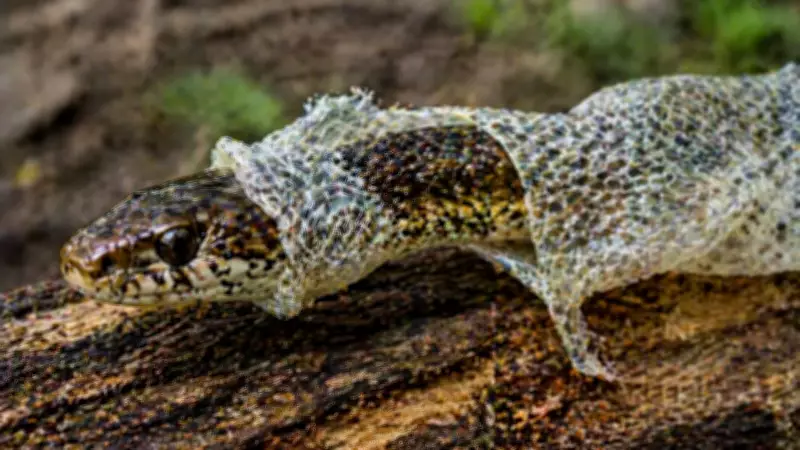
The Complete Biological Phenomenon of Snake Skin Shedding
Snakes captivate scientific and public interest through their remarkable ability to shed their entire skin in one intact piece, a process that leaves no fragments behind. This complete renewal, known scientifically as ecdysis, stands in stark contrast to the gradual, continuous skin cell turnover observed in humans. For snakes, ecdysis is not merely a curious behavior but a vital biological necessity essential for their development, health, and very existence.
The Biological Imperative Behind Skin Shedding
Research detailed in the study "Structure, Development, and Evolution of the Reptile Epidermis," published in the Journal of Developmental Biology, explains that reptile skin is composed of layered keratin. This rigid structure cannot expand to accommodate increases in body size, necessitating periodic renewal. As a snake grows in mass or length, a new skin layer forms beneath the existing one. The old skin becomes tight and restrictive, triggering the shedding process to allow for further physical development.
Beyond growth, skin shedding serves as a critical health maintenance mechanism. It enables snakes to effectively eliminate parasites such as mites, accumulated dirt, and damaged or aged scales. This renewal also restores the snake's vibrant natural coloration, which often appears dull and lackluster prior to shedding, ensuring optimal camouflage and physiological function.

The Step-by-Step Process of Ecdysis
The shedding cycle initiates with the formation of new skin underneath the current epidermal layer. Fluids accumulate between these two layers, causing separation. During this preparatory phase, the snake's skin loses its characteristic shine, and its eyes may turn a milky blue or white due to fluid buildup, temporarily impairing vision.
To facilitate shedding, the snake actively rubs its head against rough surfaces like rocks or tree bark. This action creates an initial tear or opening near the snout. The snake then continues to scrape its body along abrasive materials, gradually peeling off the entire old skin in one continuous, inside-out piece. Typically, the shed skin remains fully intact, resembling a translucent replica of the snake.
Frequency and Environmental Influences
The frequency of ecdysis varies significantly based on age, species, and environmental conditions. Juvenile snakes, experiencing rapid growth phases, may shed their skin as often as every couple of weeks. In contrast, adult snakes shed less frequently, typically only a few times per year once growth rates stabilize.
Environmental factors play a crucial role in regulating this process. Research from the Journal of Experimental Biology, in the paper "Complexity in the timing of the first postnatal ecdysis in snakes," indicates that shedding schedules can differ considerably due to conditions like humidity, temperature, and habitat. Inappropriate environmental settings may lead to incomplete or problematic sheds, potentially causing health issues for the snake.
Evolutionary and Biological Significance
Skin shedding represents a fundamental distinction between reptiles and mammals. Unlike mammals, which shed skin cells continuously and imperceptibly, snakes undergo a discrete, complete renewal event. This adaptation allows them to maintain an effective protective barrier while accommodating growth, a key evolutionary advantage.
This process also illustrates how snakes have evolved to thrive in diverse habitats. Ecdysis enhances flexibility, reduces vulnerability to infections, and supports adaptation to varying environmental pressures. It underscores the importance of seemingly minor biological processes in an organism's overall life strategy and survival.
Why Ecdysis Is Vital for Snakes
The shedding process is indispensable to a snake's lifecycle. It facilitates unimpeded growth, removes harmful organisms and debris, and ensures the skin functions properly in protection, sensation, and hydration. Without regular ecdysis, snakes would struggle to develop, potentially facing stunted growth, increased disease susceptibility, and compromised mobility.

Studying skin shedding provides profound insights into reptile biology and adaptive mechanisms. It demonstrates that even small, routine biological events can hold immense significance, offering a window into the intricate balance of growth, health, and environmental interaction in the animal kingdom.