

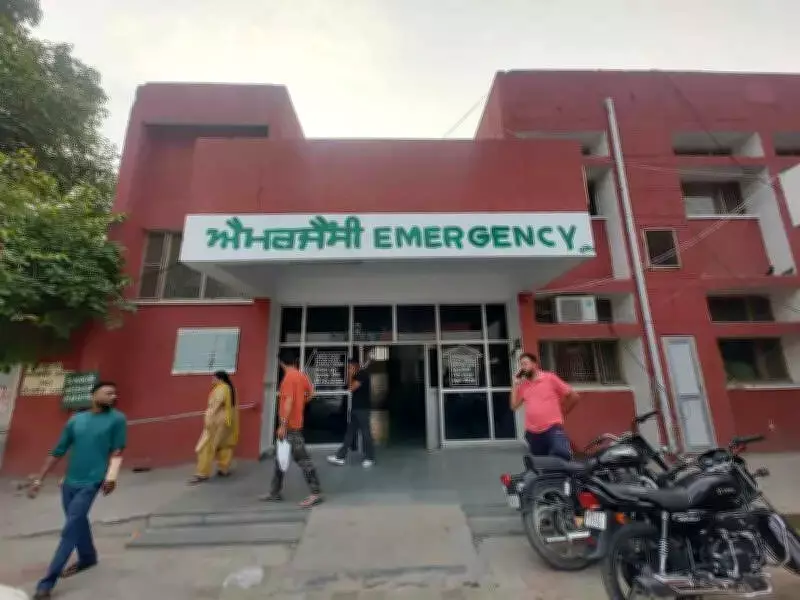
Chandigarh: Sixteen years after the Centre enacted the Clinical Establishments (Registration and Regulation) Act to regulate healthcare facilities and curb unethical medical practices, Punjab is yet to implement the law. Though Punjab notified its own Clinical Establishments (Registration and Regulation) Act in October 2020, the state government has still not framed the rules needed to enforce it.
Delay Leaves Regulation in Limbo
The delay has left regulation of private hospitals and clinical establishments in limbo, with no effective mechanism to check alleged overcharging and profiteering by healthcare providers. The Act makes registration mandatory for all healthcare facilities and prescribes penalties for operating without registration. A first violation can attract a penalty of up to Rs 50,000, a second up to Rs 2 lakh, and subsequent violations up to Rs 5 lakh.
Under the law, civil surgeons are to register hospitals with 50-100 beds, while larger hospitals are to be registered by the director of health services. The legislation also provides for regulation of rates charged by hospitals for consultations, investigations, ICU care, surgeries, implants, and other services. Hospitals are barred from charging above prescribed rates, while final bills are not supposed to exceed estimates given to patients.

Government Admits Feasibility Issues
However, Punjab has admitted before the Punjab State Information Commission that implementation of the Act is not feasible without notification of the rules. The Centre has been regularly reviewing implementation of the law and asking states to ensure mandatory registration and standardised healthcare norms. Punjab informed the Centre that draft rules were under finalisation and registration had not yet begun.
Public health advocacy group Jan Swasthya Abhiyan India has also demanded implementation of the Act and regulation of private hospital charges. According to National Statistics Office data for 2025, average out-of-pocket expenditure per hospitalisation case in Punjab stood at Rs 35,703, higher than the national average of Rs 34,064. In private hospitals, the average expenditure was Rs 45,080.
Principal Secretary Confirms Draft Rules Ready
Principal Secretary, Health, Kumar Rahul said the draft rules were ready and would be notified after consultations with stakeholders.
Why the Act Is Important
The Act mandates registration and regulation of healthcare facilities to ensure improved quality of care, standardised services, transparency in costs, and better patient safety. It also seeks to benefit patients by ensuring accountability, reducing quackery through mandatory registration, and prescribing minimum standards for infrastructure and staffing. The Act has been adopted in 19 states and Union Territories, including Arunachal Pradesh, Assam, Bihar, Chandigarh, Haryana, Himachal Pradesh, Jharkhand, Puducherry, Rajasthan, Telangana, Uttar Pradesh, Uttarakhand, Andaman and Nicobar Islands, Mizoram, and Sikkim.
Call for Time-Bound Enforcement
The Punjab State Information Commission, in its recent order, asked the state's chief secretary and principal secretary of health and family welfare to look into the matter in the larger public interest, stressing that the law must be enforced in a time-bound manner.






