Pune's Naidu Hospital Records 82 Rabies Admissions, All from Rural Regions
Pune: The Dr Naidu Infectious Disease Hospital, operated by the civic body, has admitted a total of 82 rabies patients between the years 2022 and March 2025. Notably, all these individuals were transported from peripheral and rural areas only after clinical symptoms had already manifested.
Critical Insights from Health Officials on Rabies Management
Dr Ramchandra Hankare, the Pune district health officer, emphasized that most patients who contract rabies either neglect proper wound care or receive incomplete treatment. Rabies is a viral disease with a 100% fatality rate once symptoms appear, and it is responsible for nearly 20,000 deaths annually across India.
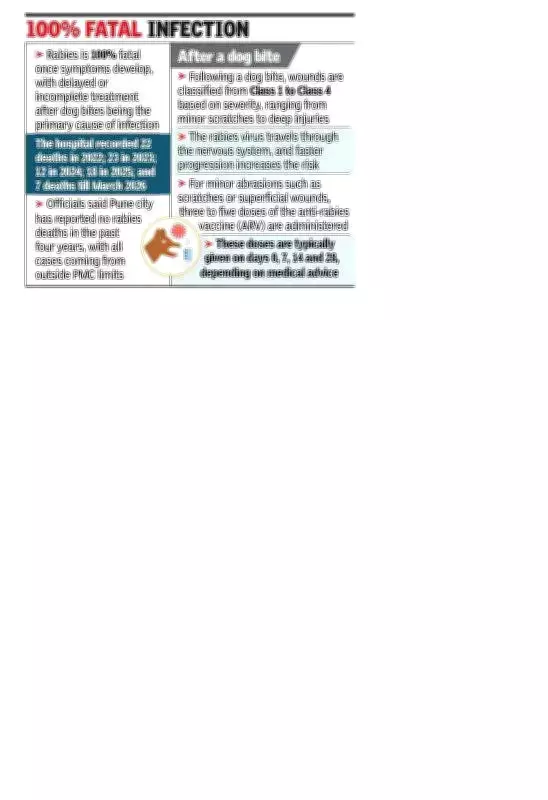
According to data released by Naidu Hospital, rabies fatalities have been recorded as follows: 22 deaths in 2022, 23 in 2023, 12 in 2024, 18 in 2025, and 7 deaths reported up to the end of March 2026.

Vaccine Availability and Cost Considerations in Pune
Dr Sanjeev Wavare, assistant health officer of the Pune Municipal Corporation (PMC), provided detailed information on vaccine procurement and distribution. "As per municipal data, approximately 60,000 doses of anti-rabies vaccines are required across all civic hospitals. These vaccines are procured through local tenders issued by the corporation. Anti-rabies injections are provided free of cost at all municipal hospitals," he stated.
In contrast, private clinics charge between Rs 300 and Rs 400 per vaccine dose, with immunoglobulin injections starting at Rs 4,000. For deep or bleeding wounds, immunoglobulin serum is administered alongside the vaccine. Dr Wavare added that PMC has not reported any rabies-related human deaths within city limits over the past four years, with all cases at Naidu Hospital originating from outside PMC boundaries, sometimes even beyond Pune district.
Role of Naidu Hospital as a State Isolation Center
Dr Hankare explained that Naidu Hospital serves as the state's primary infectious diseases isolation centre, leading to all patients exhibiting rabies symptoms being referred there. "In rural areas, we maintain sufficient stocks of anti-rabies vaccines and immunoglobulins at rural, sub-district, maternity, and district hospitals. Patients are only referred to Naidu after they begin showing symptoms and require isolation," he noted.
Essential First Aid and Vaccination Protocols
Dr Hankare further outlined critical steps for post-bite care. "If a canine bites a person, the wound must be washed immediately with soap and water, and the anti-rabies vaccine should be administered without delay. Depending on the severity and location of the wound, vaccination within 24 hours is crucial. If required, immunoglobulin is administered at a secondary care centre. Medical officers have also been instructed to procure vaccines locally in case of shortages," he added.
This comprehensive approach underscores the importance of timely intervention to prevent rabies fatalities, particularly in rural settings where access to healthcare may be limited.