Nagpur Hatchery Faces Major Bird Flu Outbreak, Prompting Mass Culling and Quarantine
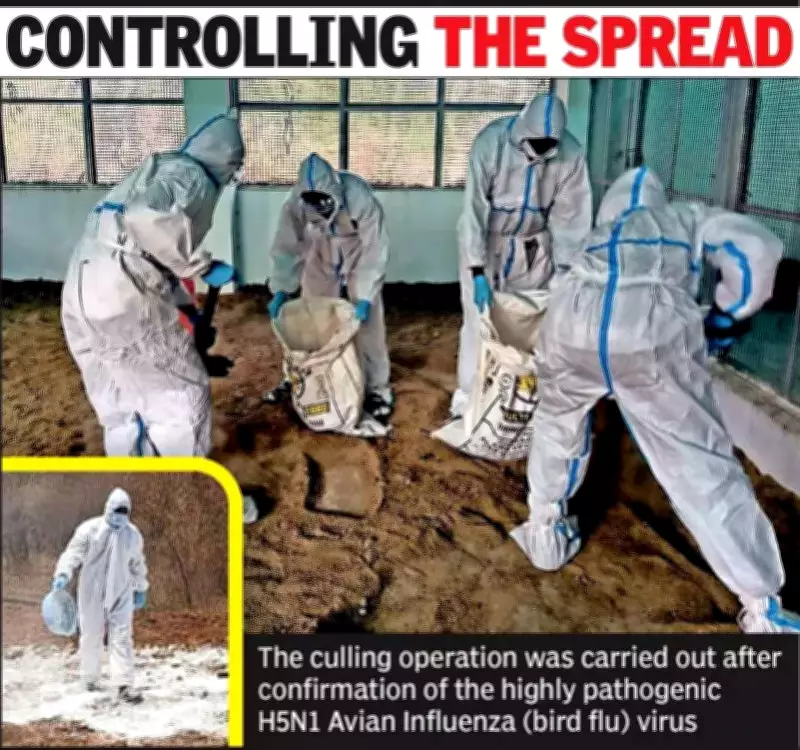
In a decisive move to contain a dangerous outbreak, rapid response teams from the animal husbandry department executed a large-scale culling operation at the Government Central Hatchery in Seminary Hills, Nagpur. The action, carried out late on Monday night, resulted in the destruction of approximately 1,000 poultry birds and the scientific disposal of nearly 14,000 eggs. This drastic measure was implemented as a critical precaution following laboratory confirmation of the highly pathogenic H5N1 Avian Influenza virus, commonly known as bird flu.
Outbreak Linked to Migratory Birds and Previous Incident
Officials investigating the source of the infection have pointed to migratory birds as the likely carriers. The hatchery, situated near Futala Lake, is a frequent wintering ground for these birds, which are believed to have introduced the virus. Notably, this is not the first time the facility has grappled with avian influenza; a similar outbreak occurred in 2024, highlighting ongoing vulnerability. The confirmation came from two authoritative institutions: the National Institute of High Security Animal Diseases (NIHSAD) in Bhopal and the Disease Investigation Section in Pune, which tested positive for H5N1 in poultry samples from the hatchery.
Immediate Containment Zones and Movement Restrictions Enforced
Responding swiftly to the crisis, Collector Vipin Itankar declared a strict containment protocol on Tuesday. A 1-kilometer radius around the hatchery has been officially designated as an infected zone, while a broader 9-kilometer radius is now a surveillance zone. Within the infected area, a comprehensive 21-day ban has been imposed on:

- The purchase, sale, and transport of poultry, eggs, and feed
- All poultry fairs and exhibitions
- Movement of any birds
Additionally, poultry shops and bird markets within the surveillance zone have been ordered to remain closed indefinitely. The Nagpur Municipal Corporation (NMC) health department has initiated surveillance visits to monitor the situation and ensure compliance.
Operational Details and Health Precautions
Animal Husbandry Joint Commissioner Satish Raju provided detailed insights into the response. "Rapid Response Teams were formed the same evening and culling, disposal were carried out by creating pits," he stated. The operation also involved discarding about 1,250 kg of potentially contaminated feed. Suspicion of infection first arose around March 10-11, prompting sample testing, with confirmation received on Monday. Raju explained, "Earlier, there were mixed infection indications, and treatment was being attempted, but once bird flu is confirmed even in one bird, the entire stock must be culled to prevent further spread."
Health teams have begun monitoring individuals involved in the culling operations under the One Health approach, which integrates human, animal, and environmental health. While no respiratory issues have been reported among workers so far, precautionary sampling will be conducted to rule out any transmission to humans.
Long-Term Impact and Hatchery's Role
The outbreak has severe implications for the hatchery's operations and the local agricultural community. Raju outlined the recovery timeline: "As per protocol, there will be no activity for at least 21 days at the hatchery, followed by further testing. The farm may remain closed for three months, and full restoration could take around five to six months after clearance from authorities." The facility serves as a crucial mother unit, supplying chicks to rural farmers under government schemes and supporting poultry farming as an alternative income source. It maintained multiple breeds, including Kaveri and Aseel, used for both egg and meat production, playing a key role in regional food security and rural economies.