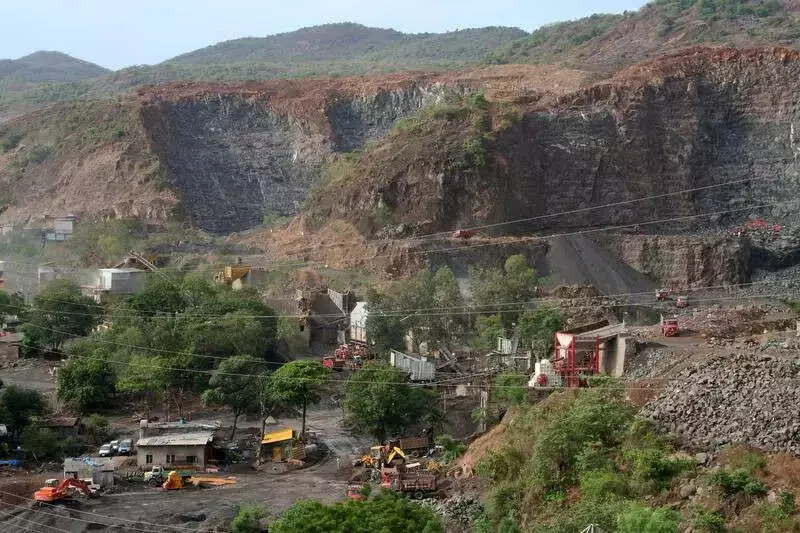
Mumbai's air quality has undergone dramatic transformations over the years, with pollution regulatory norms becoming increasingly stringent. However, a startling revelation has emerged: three stone quarries within the Mumbai Metropolitan Region continue to operate based on environmental clearances granted more than two decades ago.
RTI Revelations Uncover Outdated Permissions
Records obtained from the forest department through Right to Information applications filed by activist Jeetendra Ghadge, founder of The Young Whistleblowers Foundation, have exposed this concerning situation. The RTI applications sought details about permissions granted for quarry proposals involving forest land diversion under the Thane division.
Decades-Old Approvals Still in Effect
The responses revealed three specific quarries operating with remarkably outdated clearances:

- One quarry involving 0.8 hectares of forest land received initial approval on December 3, 2002, but only secured its final forest clearance on December 1, 2021
- Two other quarries, each involving approximately 1 hectare of land, received approvals in 2002 and 2007 respectively
- Both of these quarries obtained their final forest department nod as recently as 2022
What remains particularly troubling is the uncertainty surrounding whether these three operations have undergone recent audits for compliance with contemporary environmental standards.
Questioning the Relevance of Outdated Norms
Activist Jeetendra Ghadge has raised serious questions about the appropriateness of applying regulatory norms from the early 2000s to today's pollution-heavy landscape. "In the early 2000s, air quality standards were significantly weaker and environmental safeguards far less stringent," Ghadge emphasized.
"Treating these decades-old approvals as 'evergreen' permissions, without conducting fresh environmental appraisals, completely ignores the scale of the air quality crisis that Mumbai currently faces," he added.
Beyond Tree Felling: The Broader Environmental Impact
While official records indicate no tree felling occurred in these specific cases, environmental activists argue this narrow parameter masks much broader ecological damage. "Tree cutting represents only one aspect of environmental impact," explained Ghadge.
"The processes of blasting, drilling, crushing operations, and constant movement of heavy trucks generate extensive dust pollution that directly contributes to PM10 and PM2.5 levels. Residents of Mumbai and Thane are already breathing these pollutants at unsafe concentrations."
Additional Environmental Concerns
Environmental experts have identified several other significant impacts of continued quarry operations:
- Soil erosion caused by excavation activities
- Destabilization of hill slopes increasing landslide risks
- Heightened flood vulnerability due to altered natural drainage patterns
Calls for Comprehensive Audits and Action
The RTI findings have prompted environmentalist Rajesh Ruparel to formally write to the Maharashtra Pollution Control Board. His letter demands a comprehensive audit of all stone quarries operating within the Mumbai Metropolitan Region and requests stop-work notices for facilities violating current air quality norms.
Official Response and Balancing Development Needs
A senior state official responded to these concerns by stating that no quarrying occurs without basic permissions. The official explained that operators must surrender land equivalent to their quarrying area for afforestation projects and pay Rs 10 lakh per hectare for this compensation.
"For mega infrastructure projects like the Navi Mumbai airport, Samruddhi and Vadodara-Mumbai expressways, and Vadhvan port, quarrying represents a necessity," the official acknowledged. "However, this development cannot come at the cost of environmental protection."

This situation highlights the ongoing tension between infrastructure development requirements and environmental protection in one of India's most populous metropolitan regions. As Mumbai continues to grapple with severe air quality challenges, the question of how to balance these competing priorities remains urgent and unresolved.