

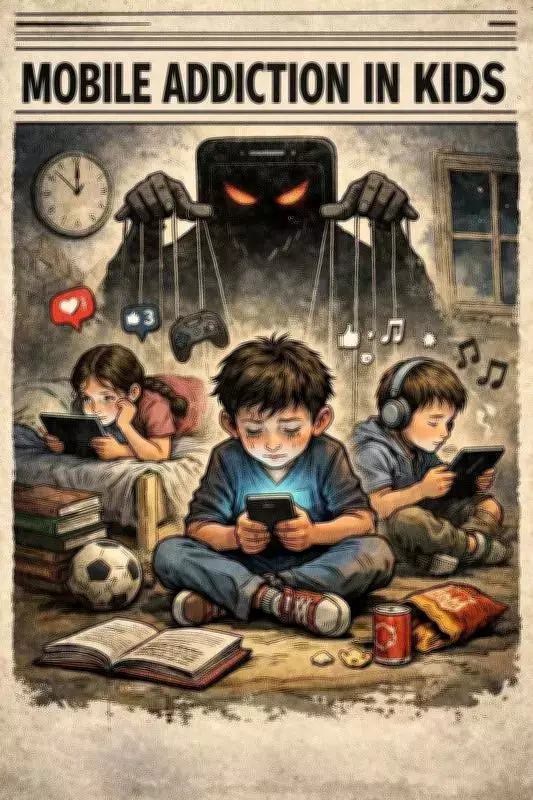
Doctors Warn: Excessive Mobile Use Linked to Rising Squint Cases in Children
In Lucknow, medical experts from King George's Medical University (KGMU) have issued a stark warning about the growing connection between excessive mobile phone usage and an alarming increase in squint cases among young children. This concerning trend has become particularly pronounced in the aftermath of the Covid-19 pandemic, with ophthalmologists observing a significant rise in related consultations.
Pandemic-Era Screen Exposure Fuels Ophthalmic Crisis
Professor Siddharth Agrawal from KGMU's ophthalmology department revealed that many outpatient departments now see at least two children daily presenting with squint symptoms. The common denominator in nearly all these cases is prolonged and intense screen exposure. "When children focus continuously on mobile screens from very close distances, their eye muscles remain in a constant state of contraction," explained Professor Agrawal during a Continuing Medical Education session. "Over time, this sustained tension can disrupt the delicate coordination between both eyes, eventually leading to visible deviation."
The professor noted this phenomenon predominantly affects children below six years of age, whose visual systems are still developing and particularly vulnerable to such strain.

The Physiological Mechanism Behind Screen-Induced Squint
Professor Apjit Kaur, head of the ophthalmology department, elaborated on the physiological processes at play. "Human eyes are naturally designed to frequently shift focus between near and distant objects," she stated. "Continuous viewing of small screens forces the focusing muscles to work without adequate relaxation periods. This prolonged strain can weaken binocular coordination, and in susceptible children, the eyes may gradually turn inward or outward—clinically recognized as strabismus."
Scientific studies on digital eye strain support these observations, showing that children who use screens for several hours daily experience reduced blinking frequency, fatigue of extra-ocular muscles, and convergence stress—all conditions known to elevate the risk of squint and other focusing disorders.
International Guidelines and Parental Responsibilities
Professor Kaur emphasized that international pediatric ophthalmology guidelines strongly recommend avoiding mobile use altogether for children below three years and strictly limiting screen time for older children. Their developing visual systems require protection from such artificial stressors.
Beyond Cosmetic Concerns: Serious Health Implications
Doctors cautioned that squint represents more than just a cosmetic issue. Senior ophthalmologist Professor Vineeta Singh explained, "If left untreated, squint can progress to amblyopia, commonly called 'lazy eye,' where the brain begins ignoring signals from one eye, potentially causing permanent vision loss. Children may also experience diminished confidence and social difficulties due to their condition."
Early Intervention and Prevention Strategies
Dr. Latika Tandon highlighted the importance of early diagnosis in preventing complications. "When detected promptly, treatments including corrective glasses, specialized eye exercises, or patch therapy can significantly improve eye alignment," she noted. "Surgical intervention is typically reserved for advanced cases only."
Dr. Tandon advised parents to remain vigilant for warning signs such as one eye drifting, frequent eye rubbing, or complaints of double vision.
Proactive Prevention Measures
Medical experts unanimously stress that prevention remains the most effective strategy. They recommend:
- Strictly limiting children's daily screen time
- Ensuring proper lighting during device use
- Encouraging regular outdoor play and activities
- Maintaining a minimum viewing distance of 30-40 centimeters when children use digital devices
This comprehensive approach can help safeguard children's visual health in an increasingly digital world, protecting them from both immediate and long-term ocular complications.






