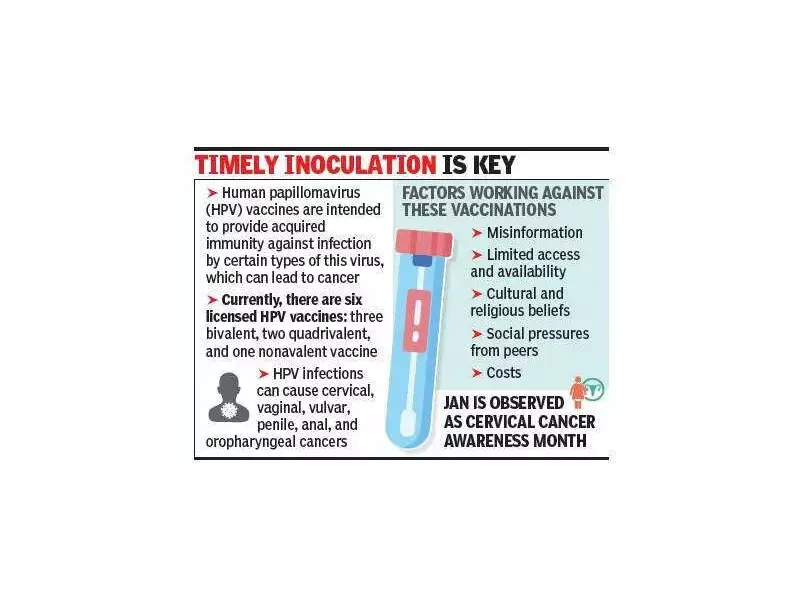
HPV Vaccine Acceptance Remains Low in Pune Despite Rising Cervical Cancer Cases
Doctors in Pune express serious concern over low acceptance rates for HPV vaccines. This situation persists even though multiple vaccines exist to protect adolescent girls and boys from cancers caused by certain HPV strains.
Alarming Rise in Cervical Cancer Cases
Maharashtra has witnessed a dramatic increase in reported cervical cancer cases. State health department data reveals troubling numbers:
- 2023-24 recorded 12.33 lakh cases
- 2024-25 saw 27.58 lakh cases
- Between April and December 2025, cases reached 34.40 lakh
Cervical cancer remains largely preventable. Yet it continues as one of the leading causes of cancer-related deaths among Indian women.
Vaccination as Primary Prevention Tool
Medical specialists emphasize that vaccination stands among the most effective tools to prevent infection from cancer-causing HPV strains. The Human Papilloma Virus serves as the primary virus linked to cervical cancer.
January marks Cervical Cancer Awareness Month. Health experts now urge families to prioritize timely vaccination. They also encourage women to undergo regular screening, including Pap smear tests after age 20. These measures enable early detection and treatment.
Awareness Gap Persists
Lack of awareness plays a major role in India's high cervical cancer incidence. Dr Santosh Sidid, senior consultant and head of obstetrics and gynaecology at Noble Hospital Pune, explains the situation.
"The HPV vaccine has been available for years," says Dr Sidid. "Yet public understanding remains limited despite cervical cancer being a serious public health concern."
He notes that most people recognize only vaccines like BCG, rabies, and polio. Preventive healthcare adoption stays low because many seek medical care only after symptoms appear.
"The term 'cervical vaccine' discourages young males," Dr Sidid observes. "Calling it the HPV vaccine would make it more inclusive. Government efforts to ramp up vaccination programs will help, but we need more awareness activities targeting parents specifically."
Second Most Diagnosed Cancer Among Women
Dr Bijal Mistry, obstetrician and gynaecologist at Apollo Clinic, emphasizes cervical cancer's prevalence. She identifies it as the second most diagnosed cancer among Indian women.
"The HPV vaccine prevents HPV effects and HPV-related cancers," Dr Mistry states. "It has been available in India for almost 17 years. Now we face an urgent threat to millions of girls' health with fewer receiving vaccinations."
She cites multiple causes for vaccine hesitancy:
- Misinformation spreading through communities
- Limited access and availability issues
- Cultural and religious belief systems
- Social pressures from peers and communities
- Cost concerns affecting affordability
Combined Approach Needed
Experts advocate for a multi-pronged strategy to eliminate such cancers. This approach must include three key elements:
- Improving awareness through education campaigns
- Normalising preventive screening practices
- Increasing vaccine confidence with accurate information
They believe community-level education can make a significant difference. Counselling by doctors and wider affordability measures can address hesitancy effectively. These steps ensure more families choose protection early rather than facing disease later.
Focus on Holistic Counselling
Dr Sweta Kumar, consultant in obstetrics and gynaecology at Surya Mother and Child Super Specialty Hospital, stresses counselling importance.
"We must focus on active and holistic counselling for patients and caregivers," Dr Kumar asserts. "The ideal age for HPV vaccination is 10–14 years, before any sexual exposure, when immune response peaks."
She explains that catch-up vaccination remains recommended up to 35 years. In selected cases, vaccination can occur even later following medical consultation.
Multiple vaccine variants exist, including bivalent, quadrivalent, and nonavalent options. Choice depends on age, prior sexual history, and clinician's advice.
"We understand parental hesitation," Dr Kumar acknowledges. "That's why we emphasize counselling about HPV vaccine safety. This evidence-based approach represents one of our strongest tools to prevent cervical cancer before it begins."