

Kolkata Histopathologist's Remarkable Collection Chronicles India's Fight Against Tuberculosis
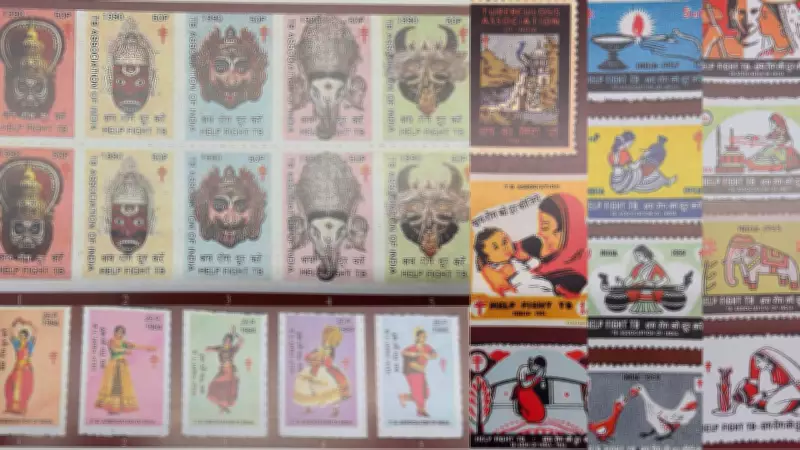
In a remarkable testament to dedication and historical preservation, a Kolkata-based histopathologist has assembled an extraordinary collection of over 350 Tuberculosis (TB) seals. These unique non-postage stamps, issued annually to raise crucial funds and awareness for tuberculosis, represent a nearly complete archive of India's anti-TB efforts since 1940.
A Lifelong Passion for Philanthropic Philately
Bhaskar Mitra, a senior consultant at Drs Trivedi & Roy Diagnostic Laboratory, began his philatelic journey as a school student in 1990. What started as a childhood hobby has evolved into a comprehensive historical archive. "The tradition of issuing TB seals remains alive, but their practical relevance has diminished with the decline of physical mail," Mitra observed. "People have shifted from letters to emails, so these stamps are no longer pasted on correspondence to spread their vital message."
The Evolution of TB Seals in India
Each year, approximately four TB seals are released on October 2nd by the President of India, coinciding with Mahatma Gandhi's birthday. This represents a significant shift from the original tradition. "Until 1949, these seals were issued on Christmas Day," Mitra explained. "The TB Association of India changed the date post-Independence to maintain secular principles, ensuring this important cause wasn't associated with any particular religion."

The artistic evolution of these seals mirrors changing cultural priorities:
- Early Designs: Initially hand-drawn, featuring works by renowned artists like Jamini Roy
- 1980s Transition: Shift to photographs depicting diverse societies, cultures, and ecosystems
- Modern Era: Since 2000, Yoga has been the predominant theme, with this year focusing on community empowerment
Global Origins and Historical Significance
The TB seal movement has deep international roots that Mitra's collection helps preserve. "The concept originated in Copenhagen in 1903," he recounted. "Postal clerk Einar Holbøll, witnessing two children suffering from TB, conceived the idea of special stamps to fund sanitariums and child care."
The historical progression is fascinating:
- First Danish Christmas seal released in 1904
- Practice spread to the United States and Europe
- Korea became Asia's first adopter
- India introduced Christmas seals from Ajmer, Rajasthan, in 1940
Cultural and Educational Value
Ranjan Kumar Das, Chairman of the Bengal Tuberculosis Association, emphasized the collection's importance during the release of 'From Seals to Survival: Echoes of Unspoken Crusade Against TB in India.' "These colorful stamps carry powerful messages about fighting tuberculosis," Das stated. "While they lack postage value, they attract serious philately connoisseurs who recognize their historical and cultural significance."
Mitra's collection serves multiple vital purposes:
- Preserves visual history of public health campaigns
- Documents changing artistic and cultural trends
- Maintains awareness about tuberculosis prevention
- Provides educational resource for researchers and historians
This extraordinary collection stands as both a personal achievement and an important historical archive, bridging medical history, cultural preservation, and philanthropic tradition in India's ongoing battle against tuberculosis.






