Indore's Air Quality Persists in Moderate Range During February and March
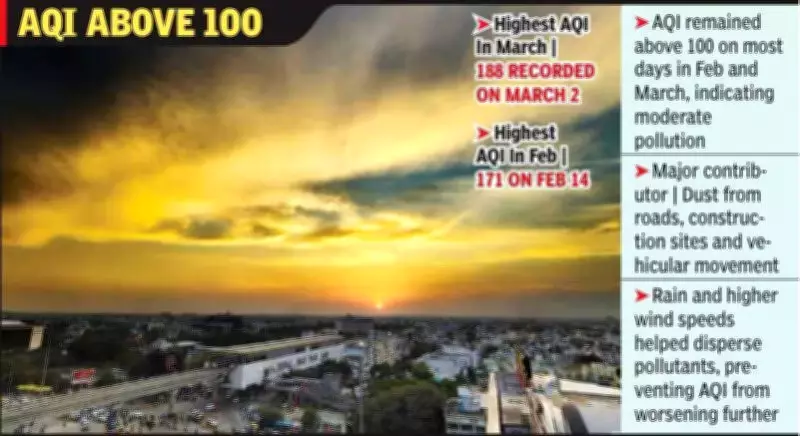
Residents of Indore, Madhya Pradesh, faced prolonged exposure to air in the 'moderate' pollution category throughout February and March, with the Air Quality Index (AQI) frequently surpassing the 100 mark during these months. While a recent spell of rain provided temporary relief by settling dust particles and improving air quality, pollution levels largely remained above the healthy range for most of the period.
Monitoring Data Reveals Consistent Pollution Patterns
Data from city monitoring stations indicated that numerous days in February recorded AQI levels exceeding 100, signaling moderate pollution across Indore. This trend extended into March, with the Chhoti Gwaltoli station reporting a peak AQI of 188 on March 2. The index stayed above 100 on multiple other days, including March 4, 5, 8, 10, 12, 14, 15, and 18, highlighting a persistent air quality issue.
Residents and Experts Weigh In on Pollution Sources
Local commuters, particularly two-wheeler riders, have expressed discomfort due to road dust and traffic emissions, especially during peak hours. Morning walkers also noted that the air often feels dusty, despite Indore's reputation as one of India's cleanest cities. "Some days the air feels heavier, particularly near busy roads. After the recent rain, the difference was noticeable, and the air felt fresher," shared Manoj Rai, a Patnipura resident.

Environmental experts attribute the city's air pollution during late winter and early summer primarily to dust, rather than industrial emissions alone. Dr. DK Waghela, former chief chemist of the Madhya Pradesh Pollution Control Board, explained that weather conditions played a crucial role in preventing further deterioration. "In both February and March, the AQI in Indore largely remained in the moderate category. Two main factors helped prevent it from rising further: increased wind speed, which dispersed pollutants, and light rains that settled dust particles," he stated.
Future Concerns and Recommendations
Dr. Waghela emphasized that dust from roads, construction sites, and vehicular movement is a major contributor to particulate pollution in urban areas like Indore. "Rainfall helps temporarily because suspended particulate matter settles down and AQI improves. But once the weather becomes dry again, dust levels begin to rise," he added. With summer approaching, experts warn that dry conditions and increased dust activity could elevate pollution levels unless effective measures are implemented to manage road dust and construction emissions across the city.