

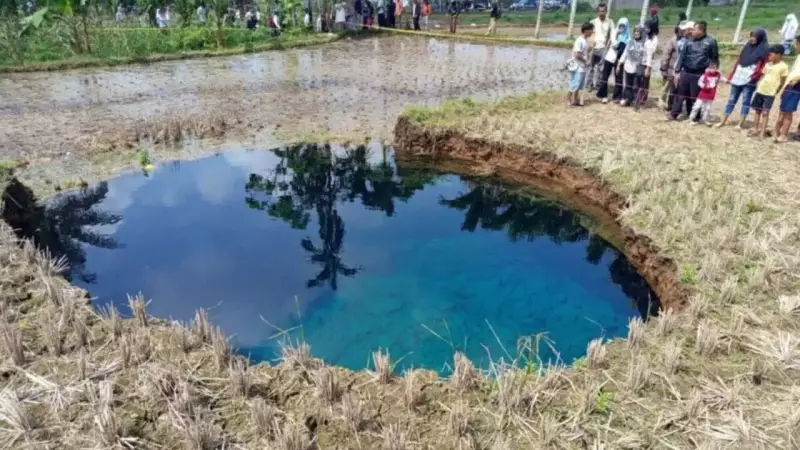
Indonesian Officials Issue Urgent Warning Over Contaminated Sinkhole Water
Residents in West Sumatra, Indonesia face a serious health alert. Authorities have issued a strong public warning against collecting and drinking water from a newly formed sinkhole. Tests conducted by local health officials and the Geological Agency confirmed the water contains Escherichia coli, commonly known as E. coli. This bacteria causes severe gastrointestinal illnesses.
Viral Belief in "Healing Water" Sparks Concern
The incident began in Limapuluh Kota Regency when a large ground collapse created a sinkhole in a rice field area. Local residents quickly gathered at the site, believing the water pooling inside possessed medicinal properties. Videos and social media posts showed people lining up with bottles to collect what they called "healing water." This turned the sinkhole into an unexpected destination for those seeking natural remedies.
West Sumatra's Deputy Governor Vasko Ruseimy addressed the public directly. He cautioned everyone against consuming the contaminated water. Official reports state the water fails to meet safe drinking standards. Authorities specifically warned against using it for any health or treatment purposes.

Geological Assessment Reveals Underlying Risks
The sinkhole appeared in Jorong Tepi, Nagari Situjuah Batua, within Limapuluh Kota Regency. Indonesian authorities and geology experts immediately began assessing the site. Their concern extended beyond water contamination to potential ground instability. They worry the collapse might expand further.
A geology expert from Universitas Gadjah Mada explained the phenomenon. Local geological conditions combined with heavy rainfall likely triggered the sinkhole formation. This event connects to broader hydrometeorological impacts affecting parts of Sumatra.
Understanding Sinkhole Formation
Sinkholes occur when the ground surface collapses into an underground void. This process often happens silently over time before sudden failure becomes visible. Several factors contribute to sinkhole development:
- Hidden erosion beneath the surface: Underground water movement gradually carries away soil particles through "piping erosion." This creates hollow spaces that eventually cause the ground above to collapse.
- Intense rainfall and flooding pressure: Heavy rain destabilizes soil layers and accelerates erosion. Extreme rainfall often serves as the final trigger for ground collapse, even if weakening occurred over months or years.
- Landscape vulnerability: Some areas naturally face higher collapse risks due to soil composition, underground drainage patterns, and human alterations like farming or construction.
Sinkholes represent more than dramatic ground openings. They signal significant underground structural changes and potential ongoing instability in surrounding areas.
Clear Water Does Not Mean Safe Water
The West Sumatra case highlights a dangerous misconception. Clear-looking water often gets mistaken for safe drinking water. Sinkholes function as natural funnels, pulling contaminants from surrounding environments. Potential contamination sources include:
- Animal waste from nearby fields
- Bacteria from soil and surface runoff
- Agricultural chemicals and pollutants
- Drainage seepage from various sources
Even visually clear water can harbor harmful microorganisms. This explains why officials acted quickly after detecting E. coli contamination.
Public Health Meets Viral Misinformation
This sinkhole water episode demonstrates how health misinformation spreads rapidly. Curiosity, hope, and fear combined to create a viral moment around potentially dangerous water. For many residents, the attraction stemmed from genuine belief that unusual natural phenomena offer healing properties.
Authorities maintain a firm position against this belief. Their message remains clear and simple: do not drink the water. As monitoring continues for further ground movement, the greater risk may involve viral beliefs outpacing basic water safety knowledge.






