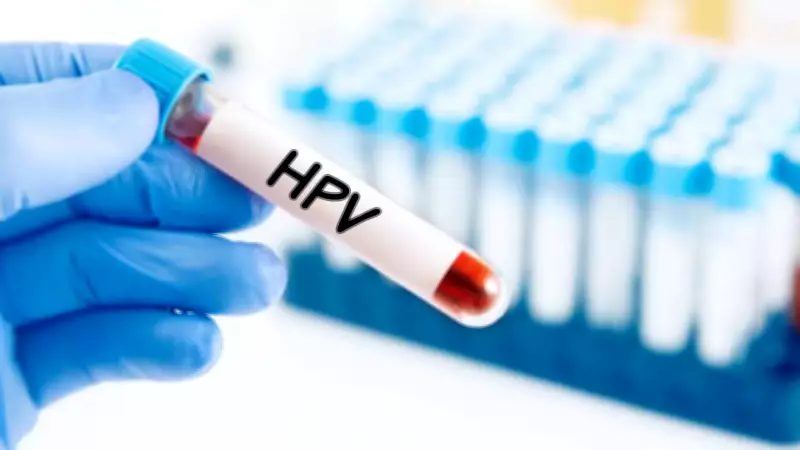
NEW DELHI: As India rolls out its national HPV vaccination campaign, researchers from AIIMS New Delhi, ICMR institutes, and the World Health Organization's International Agency for Research on Cancer (IARC) in France have validated an indigenous HPV test that meets international standards for cervical cancer screening. This development could provide the country with an affordable tool to screen millions of women above 30 years who remain at risk of the disease.
Significance of the Study
The findings, published in the International Journal of Cancer, are significant because HPV vaccination alone will not address the risk among women already in the vulnerable age group for cervical cancer. Researchers emphasize that large-scale HPV testing will be critical if India is to meet its cervical cancer elimination goals.
Validation of Indigenous Tests
Of four indigenous HPV DNA tests evaluated, Truenat HR-HPV-Plus, developed by Goa-based Molbio Diagnostics, was the only assay to completely satisfy international validation criteria. Pathodetect-7 from MyLabs met sensitivity criteria well. Researchers said this finding gives India its first validated indigenous point-of-care HPV screening test.

HPV and Cervical Cancer
HPV infection is the necessary cause of cervical cancer, one of the most common cancers among Indian women. While the World Health Organization recommends HPV testing as the primary screening method, adoption has been constrained by high costs, imported technologies, and infrastructure requirements.
Study Details
The study, supported by DBT-BIRAC under the Grand Challenges India initiative, evaluated four Indian-developed HPV tests against WHO and IARC standards using 1,159 cervical samples, including confirmed cases of precancerous lesions and cervical cancer. The Truenat assay detects eight high-risk HPV types responsible for about 95% of cervical cancers and demonstrated accuracy comparable to internationally validated reference tests. It also met requirements for reproducibility across laboratories.
Lead author Dr. Neerja Bhatla, Professor Emeritus at AIIMS, said the study is among the first to evaluate Indian-developed reduced-valency HPV assays targeting the HPV types responsible for most cervical cancers. Designed for use at district and sub-district facilities with minimal training, such tests could significantly reduce costs and improve access to screening.
Performance of Other Tests
The remaining three indigenous assays failed to meet validation benchmarks, with some showing poor sensitivity or reproducibility.
Integration into Screening Programmes
Researchers said the validated platform could be rapidly integrated into screening programmes because the Truenat system is already widely used across India for infectious disease testing. Dr. Showket Hussain, a corresponding author, said district-level healthcare workers are already familiar with the technology. Meanwhile, ICMR-NICPR Director Dr. Shalini Singh stressed that affordable indigenous testing is essential to expand screening coverage.