

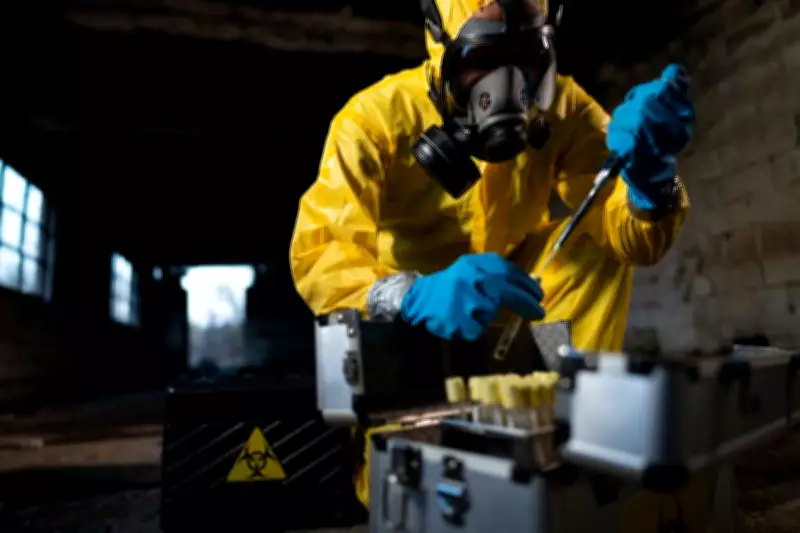
Illegal Bioweapons Laboratory Uncovered in Las Vegas Garage
In a shocking development that has sent ripples through global security circles, an illegal bioweapons laboratory was discovered operating clandestinely in a residential garage in Las Vegas, Nevada. This alarming find underscores the pervasive and hidden threats to public health and national security that can emerge in unsuspecting urban settings. The discovery has prompted urgent calls for enhanced surveillance and regulatory measures worldwide, with Australia specifically highlighted as a nation that must heed this warning to bolster its own biosecurity frameworks.
Details of the Discovery and Immediate Concerns
Authorities stumbled upon the illicit facility during a routine investigation, revealing a makeshift setup equipped with hazardous biological materials and equipment typically used in advanced genetic engineering. The lab was reportedly involved in unauthorized experiments with pathogens capable of causing severe diseases, posing a direct risk to the local community and potentially beyond. This incident exposes critical vulnerabilities in current biosecurity protocols, as such dangerous operations were able to evade detection in a densely populated area like Las Vegas.
The implications are profound: if a bioweapons lab can operate undetected in a major U.S. city, similar threats could easily emerge elsewhere, including in countries with less stringent oversight. Experts warn that the proliferation of DIY biotechnology and online access to sensitive information has lowered the barriers for malicious actors, making incidents like this increasingly plausible on a global scale.

Global Biosecurity Risks and the Australian Context
This discovery serves as a stark warning for Australia, a nation with vast borders and significant agricultural and human health sectors that are highly susceptible to biological threats. Australia has historically faced challenges with biosecurity, such as outbreaks of foot-and-mouth disease and other invasive pests, but the Las Vegas case highlights a new dimension: the potential for deliberate, human-engineered biological attacks. Australian authorities are now urged to reassess their preparedness, focusing on intelligence-sharing, stricter import controls, and community vigilance to prevent similar illegal labs from taking root.
Key areas for Australia to address include:
- Enhancing monitoring of high-risk biological materials and equipment sales.
- Strengthening collaboration with international agencies like Interpol and the WHO.
- Investing in public awareness campaigns to report suspicious activities.
Broader Implications and Call to Action
The Las Vegas incident is not an isolated event but part of a growing trend of biosecurity breaches that threaten global stability. It underscores the urgent need for a coordinated international response to curb the illegal trade and misuse of biological agents. Nations must prioritize updating their legal frameworks and investing in advanced detection technologies to stay ahead of evolving threats. For Australia, this is a critical moment to lead by example in the Asia-Pacific region, fostering resilience against biological warfare and ensuring the safety of its citizens and ecosystems.
In conclusion, the discovery of an illegal bioweapons lab in a Las Vegas garage is a wake-up call for the world, emphasizing that biosecurity is a shared responsibility. By learning from this incident, countries like Australia can fortify their defenses and contribute to a safer, more secure global environment.






