

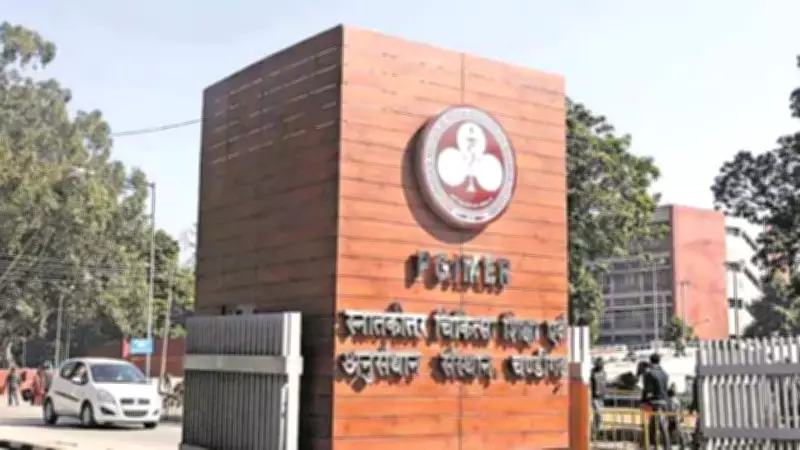
PGI Research Links Extreme Heat to Sharp Rise in Mortality in Chandigarh
A groundbreaking study conducted by researchers from the Postgraduate Institute of Medical Education and Research (PGI) and Panjab University has established a critical connection between extreme temperature events and increased mortality rates in Chandigarh. The research, published in the prestigious journal Nature Scientific Reports, provides concrete evidence that daily all-cause mortality rises significantly when temperatures exceed a specific threshold, highlighting an urgent need for targeted public health interventions.
Identifying the Critical Temperature Threshold
The study, titled 'Extreme temperature events and their relationship with excess all-cause mortality in Chandigarh, India', analyzed comprehensive daily mortality data alongside detailed meteorological records over a six-year period from 2010 to 2015. Utilizing an advanced statistical model known as an over-dispersed Poisson Generalised Additive Model (GAM), the research team identified a precise maximum temperature threshold of 33.8°C. Beyond this point, the risk of daily all-cause mortality in Chandigarh spikes dramatically, with mortality increasing by approximately 4.1% during heatwave conditions.
Vulnerable Population Groups and Gender Disparities
The analysis revealed significant disparities in mortality risks among different demographic groups. Individuals aged over 65 were found to face a 1.5 times higher risk of heat-related mortality compared to the general population, underscoring the heightened susceptibility of older adults to physiological stress caused by extreme temperatures. Furthermore, the study documented that, on average, daily all-cause mortality was consistently higher for males, with approximately 9 deaths per day, compared to females, who experienced about 6 deaths per day throughout the study period. Interestingly, while baseline mortality rates differed by gender, the increase in risk during heatwaves was similar for both males and females.

First-of-its-Kind Research in the Indian Context
Led by Dr. Ravindra Khaiwal, Professor in the Department of Community Medicine and School of Public Health at PGI, the research team included Prachi Chauhan, Sanjeev Bhardwaj, Abhishek Kumar, and Dr. Suman Mor. Dr. Khaiwal emphasized the pioneering nature of this study, stating, "This is the first study from India to quantify a temperature threshold above which all-cause mortality rises significantly. We have identified a temperature breakpoint of 33.8°C beyond which excess deaths increase, providing critical evidence of the temperature-mortality linkage in the Indian context." He noted that previous studies were largely theoretical and not grounded in actual mortality data, making this research a vital contribution to public health science.
Call for Granular Public Health Interventions
Dr. Suman Mor, Professor in the Department of Environment Studies at Panjab University, highlighted the practical implications of the findings. "There is an urgent need for heat action plans integrated with real-time mortality data," she asserted. The authors strongly recommend that public health interventions be planned at a granular level, such as at the ward level, to effectively identify vulnerability hotspots and protect those most at risk, particularly older individuals. This targeted approach is essential for mitigating the adverse effects of extreme heat events and safeguarding public health in urban areas like Chandigarh.
Broader Implications for Climate and Health Policy
The study's findings underscore the growing public health challenge posed by climate change and rising temperatures in India. By establishing a clear link between extreme heat and increased mortality, the research provides a scientific basis for developing and implementing robust heat action plans. These plans should include early warning systems, community outreach programs, and infrastructure improvements to reduce heat exposure and vulnerability. As temperatures continue to rise globally, such evidence-based strategies will be crucial for protecting vulnerable populations and reducing the health impacts of heatwaves in cities across India and beyond.






