

Major Synthetic Milk Racket Busted in Gujarat, FSSAI Issues Consumer Alert
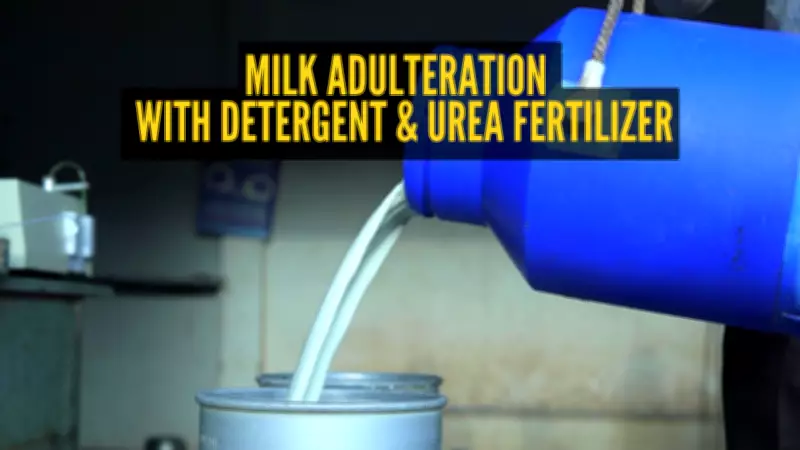
In a shocking revelation that underscores the pervasive issue of food adulteration in India, authorities have uncovered a large-scale synthetic milk operation in Gujarat. The Food Safety and Standards Authority of India (FSSAI) confirmed that a factory in the Sabarkantha district was raided on February 8, 2026, exposing a five-year-long illicit business producing imitation milk with hazardous chemicals.
Factory Operations and Seizure Details
According to reports, the factory utilized a mere 300 liters of genuine milk to manufacture between 1,700 and 1,800 liters of synthetic milk daily. Workers blended a cocktail of dangerous substances, including detergent powder, urea fertilizer, caustic soda, refined palm oil, refined soybean oil, whey powder, skimmed milk powder, and premium SMP powder. This concoction was then packaged in pouches and distributed as milk and buttermilk across Sabarkantha and Mehsana districts, deceiving countless consumers.
During the raid, officials from the Sabarkantha Local Crime Branch (LCB) destroyed 1,370 liters of unsafe milk on the spot. They seized substantial quantities of adulteration materials: 450 kg of whey powder, 625 kg of skimmed milk powder, 300 kg of premium SMP powder, along with urea fertilizer, caustic soda, detergent powder, soybean oil, and palmolein oil. Additionally, 1,962 liters of adulterated milk and 1,180 liters of adulterated buttermilk intended for distribution were confiscated.

Police have arrested four accused and a juvenile worker, while the factory owner remains at large. The FSSAI has urged consumers to remain vigilant and report any suspicious dairy products, highlighting the severe health risks posed by such adulterated items.
Six Simple Home Tests to Check Milk Purity
In response to this incident, the FSSAI recommends several easy methods to verify milk purity at home. These tests can help identify common adulterants like starch, detergent, urea, formalin, synthetic components, and water.
- Starch Adulteration Test: Boil 2-3 ml of milk and let it cool. Add 2-3 drops of iodine solution. Pure milk will show no change or a slight yellowish tint, while adulterated milk will turn blue.
- Detergent Adulteration Test: Mix 5 ml of milk with an equal amount of water in a transparent glass and shake well. Pure milk will have minimal or no lather, whereas detergent-adulterated milk will produce persistent froth.
- Urea Adulteration Test: Combine 5 ml of milk with an equal amount of soybean or arhar powder in a test tube. Shake and let it sit for 5 minutes, then dip a red litmus paper. If it remains red, the milk is pure; if it turns blue, urea is present.
- Formalin Presence Test: Place 10 ml of milk in a test tube and add 2-3 drops of concentrated sulphuric acid along the sides without shaking. Pure milk will not change color, but if violet or blue rings form, formalin is detected.
- Synthetic Milk Test: Add 5 ml of milk and 5 ml of water to a test tube and shake. Pure milk will not form a stable lather, while synthetic detergent-adulterated milk will create persistent froth.
- Water Adulteration Test: Drop milk on a polished, slanting surface. Pure milk will flow slowly, leaving a white trail, whereas water-adulterated milk will drop quickly without a trail.
These methods empower consumers to take proactive steps in ensuring their milk is safe for consumption, especially in light of such alarming adulteration cases.






