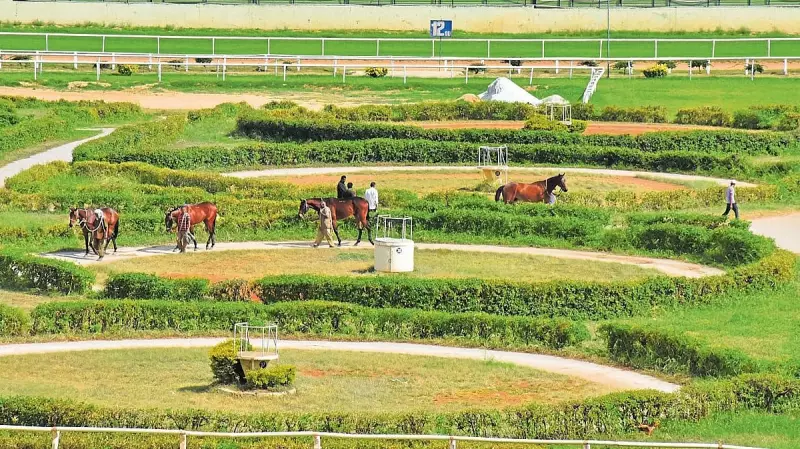
A serious animal health alert has been issued in Bengaluru after a horse stabled at the prestigious Bangalore Turf Club (BTC) tested positive for the dangerous and contagious disease known as glanders. The infected animal was subsequently euthanised as per standard protocol to prevent further spread.
Immediate Containment Measures Enforced
In response to the confirmed case, the state's Animal Husbandry Department has officially declared the entire Bangalore Turf Club premises a 'notified area' under the Prevention and Control of Infectious and Contagious Diseases in Animals Act, 2009. This decisive legal step grants authorities sweeping powers to implement strict containment protocols.
The primary actions mandated include a complete prohibition on the movement of all equine animals—horses, ponies, mules, and donkeys—into, out of, or within the BTC campus. This lockdown is crucial for establishing a quarantine zone. Furthermore, officials have ordered the immediate disinfection of all stables, sheds, and equipment used by the animals to eradicate any lingering traces of the bacteria.

Understanding the Glanders Threat
Glanders is a highly infectious disease caused by the bacterium Burkholderia mallei. It primarily affects horses, mules, and donkeys but poses a significant zoonotic risk, meaning it can be transmitted from animals to humans. Transmission typically occurs through direct contact with infected tissues or body fluids, making it a serious concern for veterinarians, stable staff, and handlers.
The disease can manifest in various forms, including respiratory issues, skin lesions, and severe weight loss. In animals, it is often fatal, and due to its severity and contagious nature, infected animals are usually humanely euthanised to control outbreaks, as was done in this instance at the BTC.
Ongoing Surveillance and Public Assurance
The Animal Husbandry Department has not limited its response to the BTC alone. As a precautionary measure, surveillance has been intensified across the city. Veterinary teams are conducting checks and monitoring other equine populations to ensure the infection has not spread beyond the identified cluster.
Authorities have moved to reassure the public, emphasizing that the situation is under control. The swift declaration of the notified area and the enforcement of movement restrictions are standard, science-backed procedures designed to swiftly contain and eliminate the threat. The focus remains on protecting both animal and public health through rigorous bio-security measures.
This incident underscores the critical importance of robust disease surveillance in animal populations, especially in facilities involved in equine sports and husbandry. The proactive steps taken by the Karnataka authorities aim to prevent a localized case from escalating into a wider outbreak, safeguarding the health of Bengaluru's equine community and its citizens.