

Evolution's Hidden Truth: How Losing Traits Drives Survival in Nature
Evolution is commonly envisioned as a progressive march toward greater complexity, with organisms steadily acquiring new abilities over millennia. However, a fascinating counter-narrative reveals that evolution is equally about subtraction—the strategic abandonment of traits that have become burdensome or unnecessary. This process, known as regressive evolution, demonstrates that survival hinges not on accumulating features but on optimizing efficiency and adaptation to environmental demands.
Adaptation to Dark or Isolated Environments
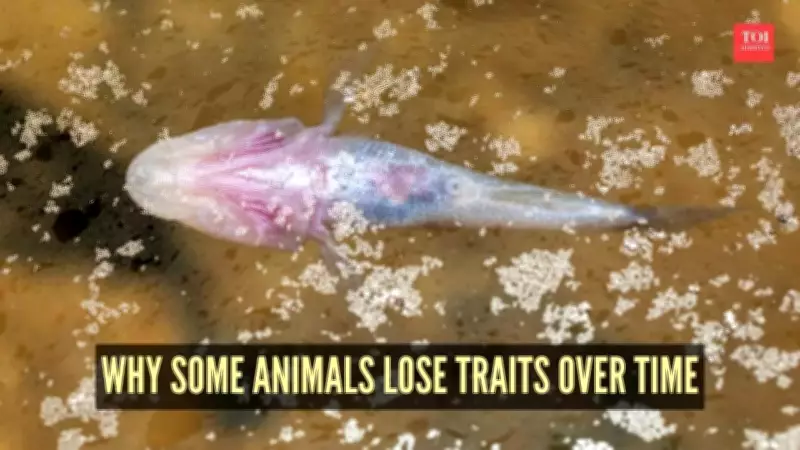
One of the most striking illustrations of regressive evolution occurs in cave-dwelling animals. Over countless generations, species inhabiting perpetual darkness often lose their eyes and body pigmentation, a phenomenon termed troglomorphism. These creatures typically develop heightened non-visual senses, such as enhanced taste or touch, while vision and coloration diminish or vanish entirely.
A groundbreaking study by the National Institutes of Health sheds light on the genetic mechanisms behind this trait loss. In blind cavefish, eye-development genes are silenced through epigenetic changes—specifically, increased DNA methylation and elevated DNMT3B activity—rather than permanent DNA mutations. These epigenetic modifications reduce gene expression, leading to early eye degeneration. This research underscores how minor genetic adjustments that alter epigenetic regulation can drive significant evolutionary shifts, such as the complete loss of eyes.

Trade-offs and New Sensory Advantages
Losing a trait does not signify weakness or decline. In many cavefish, genes originally linked to eye development are repurposed to bolster other capabilities, creating a trade-off between vision and alternative senses better suited to dark environments. For instance, enhanced taste buds or tactile receptors may emerge, allowing these animals to thrive in lightless habitats where sight is irrelevant.
Why Some Birds Lose the Ability to Fly
Trait loss extends beyond caves to diverse ecosystems. Numerous birds, including ostriches, kiwis, and penguins, have descended from flying ancestors but evolved to become flightless. Flying demands substantial energy—approximately 75% more than walking—making it an unnecessary expenditure in predator-free or island settings where escape via flight offers little advantage.
Over time, wings shrink, flight muscles weaken, and legs strengthen for running or swimming. Genetic research on the Galápagos cormorant reveals that mutations affecting cellular structures crucial for bone growth shortened wings and prevented flight. This example illustrates how small genetic changes can profoundly reshape an animal's lifestyle, redirecting resources toward more beneficial adaptations.
The Bigger Picture of Regressive Evolution
Across global ecosystems, traits disappear primarily for three interconnected reasons:
- Energy conservation: Maintaining a feature becomes too costly in terms of metabolic resources.
- Relaxed natural selection: The trait no longer confers a survival advantage, reducing evolutionary pressure to retain it.
- Genetic mutations and trade-offs: Developmental pathways are redirected toward more useful abilities, often through genetic or epigenetic shifts.
Rather than representing evolutionary decline, these changes highlight a core principle: organisms survive by fitting their environment, not by becoming more complex. The loss of eyes in cave dwellers and flight capability in certain birds underscores evolution's efficiency—traits are preserved only if they serve a purpose. If not, nature refines itself through removal, emphasizing survival through adaptation, balance, and energy conservation.






