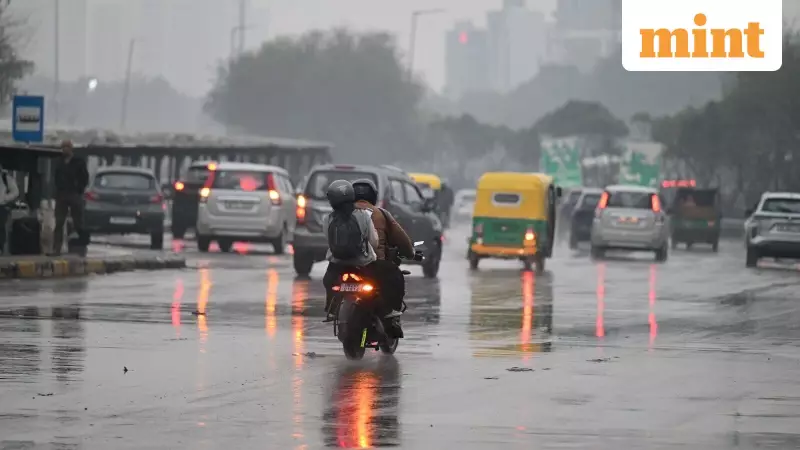
The first rainfall of 2026 brought much-needed relief to Delhi's residents on Friday morning, significantly improving the city's air quality after a prolonged spell of toxic conditions. The Air Quality Index (AQI) returned to satisfactory levels at several key monitoring stations, marking a positive shift following ten consecutive days of poor air quality.
AQI Shows Marked Improvement Across Key Locations
Delhi's AQI recorded a substantial enhancement on January 23, with air quality improving to satisfactory levels at prominent locations including Indira Gandhi International Airport (IGI), Pusa Road, Lodhi Road, and Mandir Marg. This improvement came as the AQI moved back into the 201-300 range, indicating a reduction in pollution levels that had plagued the capital for over a week.
Weather Patterns Drive Air Quality Change
The heavy rainfall that occurred on the morning of January 23 effectively ended Delhi's extended dry spell, which had contributed to the accumulation of pollutants in the atmosphere. According to the India Meteorological Department (IMD), this change in weather resulted from an intense western disturbance, a meteorological phenomenon that brought moisture and precipitation to the region.

At 11:00 AM on Friday, Delhi's average Air Quality Index registered a reading of 285. Data from monitoring stations revealed that out of 39 stations across the city, 21 reported poor AQI, 4 registered moderate air quality, and the remaining 4 recorded satisfactory levels. This distribution highlights the varying impact of the rainfall across different areas of Delhi.
Detailed Weather Forecast and Temperature Outlook
The weather office has forecast generally cloudy skies with predictions of one or two spells of light rain throughout the day. Their latest weather forecast for January 23 also indicates the possibility of thunderstorms, lightning, and gusty winds, adding another layer of atmospheric activity that could further influence air quality.
Meteorological officials noted that another spell of very light to light rain is expected towards the afternoon or evening hours, with shallow fog likely during morning periods. Regarding temperature patterns, the maximum and minimum temperatures in the capital city are projected to range between 18°C to 20°C and 11°C to 13°C respectively.
According to the Meteorological Department's analysis, the minimum temperature will be appreciably above normal by approximately 3.1 to 5 degrees Celsius, while maximum temperatures will remain below normal by around 1.6 to 3 degrees Celsius. This temperature anomaly contributes to the unique weather conditions affecting Delhi's air quality dynamics.
Broader Implications for Delhi's Air Quality Management
The sudden improvement in air quality following the first rainfall of 2026 underscores the significant impact that meteorological conditions can have on pollution levels in urban environments. While the satisfactory AQI readings at key locations provide temporary relief, they also highlight the ongoing challenges Delhi faces in maintaining clean air throughout the year.
Residents and authorities alike will be monitoring whether this improvement sustains or if pollution levels creep back up as weather patterns evolve. The IMD's continued observations and forecasts will be crucial for understanding how natural phenomena like western disturbances interact with human-made pollution sources in determining Delhi's air quality trajectory.