Bengaluru's IT Workforce Faces Rising Threat of Computer Vision Syndrome
If you've been experiencing persistent eye discomfort, redness, or excessive tearing while working on screens, you might be among the growing number of Bengaluru residents suffering from Computer Vision Syndrome (CVS). Ophthalmologists across India's technology capital are reporting a significant increase in cases, particularly among the city's vast IT workforce.
Alarming Prevalence Among Working Professionals
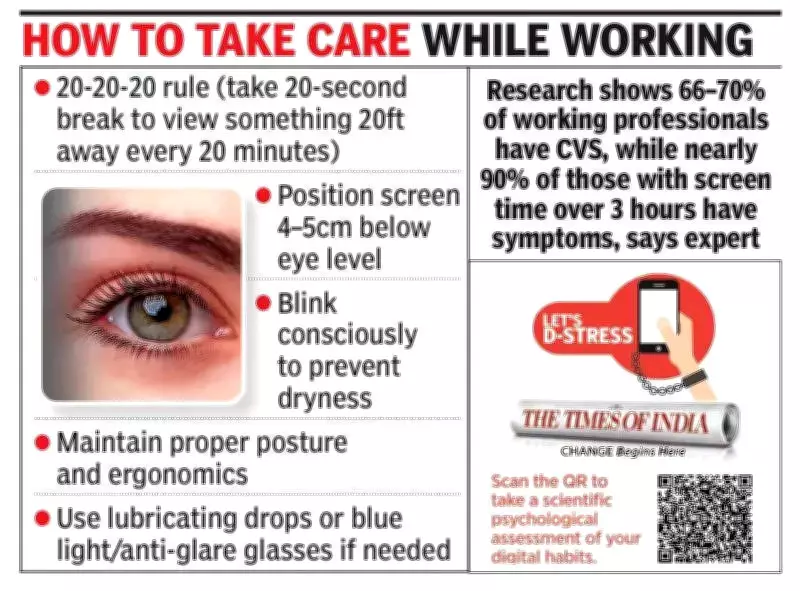
Computer Vision Syndrome represents a collection of eye and vision-related issues directly linked to prolonged screen exposure. Dr. Naren Shetty, Director and Head of Cataract & Refractive Services at Narayana Nethralaya, reveals startling statistics: "Existing research indicates that approximately 66 to 70 percent of working professionals exhibit signs of CVS. More concerning is that nearly 90 percent of individuals who spend more than three hours daily in front of screens experience noticeable symptoms."
Dr. Shetty adds, "In our clinical practice at Narayana Nethralaya, we have documented that at least 47 percent of our patients present with clear indicators of Computer Vision Syndrome."

Vulnerable Demographics and Daily Impact
While CVS affects individuals across all age groups—from children as young as nine to seniors in their nineties—working professionals remain particularly susceptible. Dr. Mahima Mahesh, Consultant Ophthalmologist at Dr. Agarwals Eye Hospital on Coles Road, shares her daily observations: "I typically encounter four to five patients each day with symptoms directly attributable to computer vision syndrome, and this is in central Bengaluru alone. One can only imagine how much higher these numbers would be in technology-intensive zones like Electronics City or Whitefield."
Dr. Mahesh explains the physiological mechanism: "The human eye naturally relaxes when viewing distant objects. However, for near-vision tasks like screen work, specific eye muscles must actively contract to maintain focus. When someone spends entire workdays staring at monitors, these same muscle groups remain continuously engaged, inevitably leading to significant fatigue by day's end."
Beyond Eye Strain: Systemic Symptoms Emerge
The consequences of CVS extend far beyond ocular discomfort. Dr. Savitha Arun, Senior Eye Surgeon and Medical Superintendent at Nethradhama Super Speciality Eye Hospital, notes that many patients report additional systemic issues. "Numerous individuals experience neck pain, back discomfort, and even sleep disturbances, often resulting from poor posture maintained during extended, uninterrupted screen sessions without adequate breaks. Proper ergonomics plays a crucial role in mitigating these broader symptoms."
Comprehensive Management and Prevention Strategies
Effective management of Computer Vision Syndrome requires a holistic approach. Dr. Savitha outlines the treatment protocol: "We begin with symptomatic relief for eye discomfort and assess whether corrective eyewear is necessary. Simultaneously, we educate patients about optimal ergonomics, including proper posture and workstation configuration, while emphasizing the importance of regular breaks and healthy screen habits. For cases involving dryness, we provide appropriate treatments, and when muscle imbalance is detected, we prescribe specific eye exercises. More severe instances may require in-clinic therapeutic interventions."
Practical Preventive Measures
Ophthalmologists strongly advocate for preventive practices, most notably the 20-20-20 rule: every twenty minutes, shift your gaze to an object approximately twenty feet away for at least twenty seconds. Dr. Naren Shetty highlights that even minor ergonomic adjustments can yield substantial benefits. "Rather than positioning your screen directly at eye level, lowering it by about four to five centimeters can significantly reduce strain. This slight downward angle allows the eyelids to provide better natural protection and lubrication for the eyes."

Key Prevention Checklist
- 20-20-20 Rule: Take a 20-second break every 20 minutes to focus on something 20 feet away.
- Screen Positioning: Place your monitor 4–5 centimeters below eye level to minimize strain.
- Conscious Blinking: Make a deliberate effort to blink regularly to prevent corneal dryness.
- Posture and Ergonomics: Maintain proper sitting posture with an optimally arranged workstation.
- Supportive Aids: Consider using lubricating eye drops, blue light filtering glasses, or anti-glare screens if symptoms persist.
As Bengaluru continues to solidify its position as India's premier technology hub, the health implications of prolonged screen exposure become increasingly critical. Medical professionals urge both employers and employees to prioritize eye health through awareness, preventive measures, and timely medical consultation when symptoms arise.