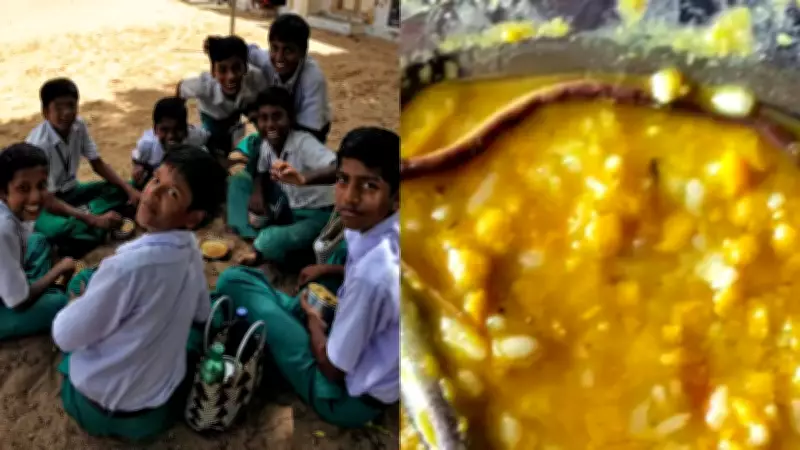
Food is an integral part of human existence. However, when the same food becomes the cause of food poisoning, food mishandling, or unhygienic kitchen practices, it becomes essential to re-evaluate the system. In a recent unfortunate incident, hundreds of school children in Bihar's Saharsa district fell ill after a baby snake was discovered in their mid-day meal.
The Incident
According to reports, the incident occurred at Middle School Baluaha in the Mahishi block of Saharsa. The mid-day meal, supplied by an NGO, was served to the children on Thursday. As the children began eating, a baby snake was found while serving food to one of the students. Soon, more than 150 children started complaining of stomach pain. Within a short time, dozens of children were shifted to a local hospital, and several were later referred to Sadar Hospital. Following the incident, the District Magistrate sent an investigation team to the NGO's cluster, where mid-day meals are cooked for multiple local schools.
What is a Mid-Day Meal?
The mid-day meal scheme is a government school meal program in India that provides free lunches to children in government and government-aided schools. Its primary objectives are to improve nutrition, increase school attendance, and reduce classroom hunger. With large-scale commercial kitchens involved, the Ministry of Human Resource Development issued guidelines for food safety and hygiene in school-level kitchens in February 2015. Below are nine key guidelines and their importance.

Food Safety Measures During Preparation
- Cleaning of cereals and pulses: They should be manually cleaned before cooking to remove extraneous matter.
- Single dish meals: Using broken wheat or rice with pulses, soybeans, seasonal vegetables, and edible oil saves time and fuel while being nutritious.
- Cereal-pulse combination: A ratio of 3:1 to 5:1 ensures good quality protein. Sprouted pulses are more nutritious and should be included.
- Leafy vegetables: They should be thoroughly washed before cutting and not washed after cutting.
Food Safety Measures During Cooking
- Fermentation and sprouting: Recipes using these methods enhance nutritional value and should be considered in the menu.
- Cooking with lid on: This prevents nutrient loss and contamination.
- Container cleanliness: Containers should be checked for cleanliness.
- Serving temperature: The meal should be served at 65°C to prevent microbial growth, as microorganisms multiply rapidly between 5°C and 60°C.
- Segregation: Vegetarian and non-vegetarian items must be kept separate. Refrigerators should be cleaned weekly, maintaining a temperature of 4°C to 6°C.
Tasting of Mid-Day Meals by Teachers
Teachers must taste the food before serving and maintain a tasting record. School Management Committee members should also taste the food on a rotation basis.
Testing of Mid-Day Meals
States and Union Territories should engage CSIR institutes, NABL-accredited laboratories, or FSSAI-accredited labs for testing samples of mid-day meals for microbial and chemical contamination.

Cleaning of Cooking Areas
- Floors and slabs should be cleaned daily before and after cooking, especially obstructed sites like cooking areas and floor-wall junctions.
- Cooking areas must be kept clean, and surfaces in direct contact with food should be clean and dry. Cracks and rough surfaces should be repaired promptly.
Cleaning of Utensils and Equipment
- Cleaning accessories like cloths, mops, and brushes carry high cross-contamination risk. They must be washed, cleaned, and dried after use, and not used in other parts of the kitchen. Sun drying is recommended.
- Tables, benches, cupboards, and glass cases should be clean and tidy. Cooking utensils and crockery should be in good condition, not broken or chipped.
Personal Hygiene of Cook-Cum-Helpers
- Cooks and helpers must maintain high personal hygiene. Those with infectious diseases should not work. Biannual health checkups are mandatory.
- They should report immediately if suffering from food-transmissible diseases like diarrhea, vomiting, infected wounds, skin infections, or jaundice.
Pest Control
Cleanliness is crucial for pest control (rodents, birds, insects). Wire mesh on windows, doors, and ventilators reduces pest entry.
Hand Washing for Children
- Dedicated time should be allocated for hand washing with soap for children, cooks, and teachers.
- Hand washing should be supervised and promoted before and after eating. Schools can set up simple, scalable hand-washing facilities for large groups.
This incident underscores the urgent need for strict adherence to these guidelines to ensure the safety and well-being of school children.