A concerning rise in scrub typhus cases across Andhra Pradesh is being complicated by a changing symptom profile, leading to widespread underdiagnosis and delayed treatment. Health authorities report that the classic identifying mark of the disease, a skin lesion called an eschar, is increasingly absent in patients, causing confusion with more common fevers like dengue.
The Stealthy Spread and Diagnostic Dilemma
Scrub typhus typically begins as a sudden, high fever with headaches, body aches, and general malaise. The traditional hallmark is the eschar – a small, painless black scab at the site of the mite bite. However, doctors across the state are noting its frequent absence. This leads initial investigations towards diseases like malaria or dengue, delaying the specific antibiotic treatment scrub typhus requires.
Dr. K Rambabu, Director of Visakha Institute of Medical Sciences, emphasizes that treatment should not wait for confirmatory tests if clinical suspicion is high. "First-line therapy includes doxycycline, with azithromycin as an alternative in certain cases. Prompt initiation of treatment typically leads to rapid clinical improvement, often within 24-48 hours. Delayed therapy, however, significantly increases the risk of severe complications," he warned.

Statewide Data Reveals Widespread Transmission
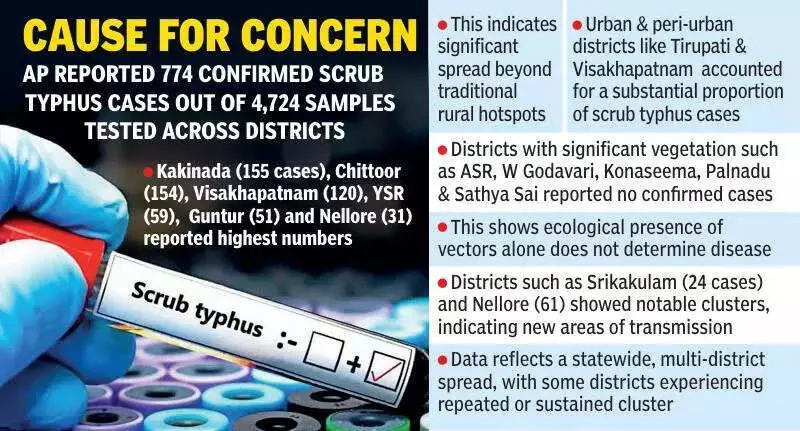
Recent data paints a picture of extensive spread. Out of 4,724 samples tested statewide, 774 confirmed cases of scrub typhus were identified. The districts with the highest numbers include:
- Kakinada: 155 cases
- Chittoor: 154 cases
- Visakhapatnam: 120 cases
- Nellore: 61 cases (31 in a notable cluster)
- Guntur: 51 cases
- YSR District: 59 cases
A significant finding is the disease's expansion beyond rural areas. Urban and peri-urban districts like Visakhapatnam and Tirupati accounted for a substantial share of cases. Interestingly, several heavily vegetated districts reported zero cases, indicating that the mere presence of mites does not guarantee outbreaks.
Severe Risks and Essential Prevention
Dr. Tata Seva Kumar of the Indian Medical Association in Guntur notes that while easily treatable, the disease's prevalence is steadily rising. "If not detected and treated in time, scrub typhus can damage major organs such as the lungs, heart, brain, kidneys and liver, eventually leading to multi-organ failure — a life-threatening stage. In pregnant women, it may even cause miscarriage," he stated. Diagnosis relies on the eschar (when present) and blood tests like ELISA, IFA, and PCR.
The disease is transmitted through the bite of infected chigger mites, sometimes carried by rodents, bandicoots, cats, and dogs. It can be more severe in children, the elderly over 60, and those with low immunity.
Prevention is crucial, especially in rural and affected areas:
- Wear full-sleeve shirts, full pants, socks, and shoes.
- Keep pet animals clean and check for mites.
- Be cautious in areas with tall grass or brush where mites thrive.
The current situation underscores the need for heightened clinical suspicion for scrub typhus during the monsoon and post-monsoon seasons, even in the absence of its classic sign, to prevent severe complications and save lives.