

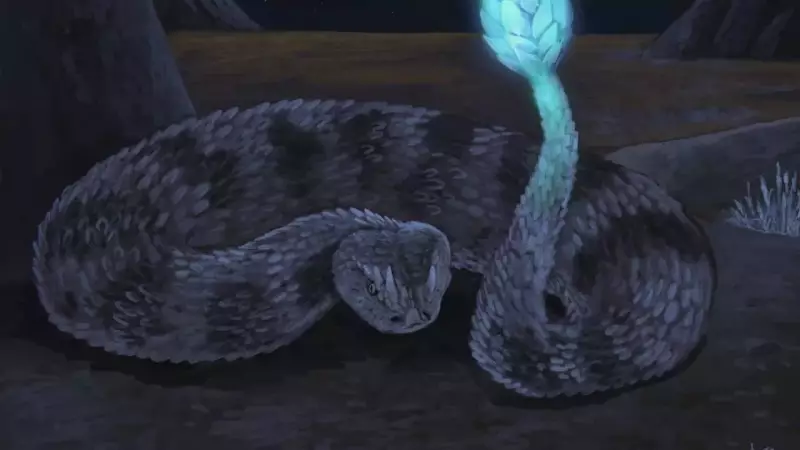
Ancient Greek Viper Challenges King Cobra's Supremacy
For generations, the King Cobra has been celebrated as the largest venomous snake to ever roam our planet. Its impressive length and formidable reputation made it a creature that commanded both fear and respect across the globe. However, a groundbreaking scientific study from Greece now suggests that this long-held belief might be inaccurate. Evidence from an ancient viper species indicates that the King Cobra may not be the giant we once thought it was.
Rediscovery of a Prehistoric Giant
The story begins in 1857 with the pioneering work of British paleontologist Richard Owen, the renowned scientist who coined the term "dinosaur." While examining fossils from the Thessaloniki region of Greece, Owen identified 13 fossilized vertebrae belonging to an enormous snake species. Based on the vertebrae's shape, bone density, and proportions, he concluded they belonged to a giant viper and named the species Laophis crotaloides.
Owen estimated that this prehistoric snake measured between 10 to 13 feet in length and weighed approximately 57 pounds. This weight is nearly three times that of modern large venomous snakes, making his claim revolutionary for its time. Yet, despite Owen's stature in the scientific community, his findings were met with skepticism due to the limited evidence—only vertebrae were found, with no skull, fangs, or tissue samples to corroborate his theory.

Over the following 157 years, Laophis crotaloides faded into obscurity, often dismissed as a footnote in paleontology. Some researchers even questioned whether the fossils truly belonged to a snake, suggesting they might have been misidentified remains of another reptile. It was not until recent studies that Owen's work was revisited and validated, bringing this ancient giant back into the scientific spotlight.
Size Comparison: Laophis Crotaloides vs. King Cobra
While the modern King Cobra can grow up to 18 feet in length, it is relatively slender, with a maximum weight of around 20 pounds. In contrast, Laophis crotaloides was significantly heavier, tipping the scales at 57 pounds. This substantial mass suggests a muscular, powerful body built for strength rather than agility, making it the heaviest venomous snake ever identified, even if it was not the longest.
From a biological perspective, this distinction is crucial. Greater mass implies enhanced muscular development, increased striking power, and the ability to subdue more robust or larger prey. The discovery reshapes our understanding of venomous snake evolution and highlights the diversity of prehistoric reptilian life.
Cold Climate Adaptations and Growth
One of the most fascinating aspects of Laophis crotaloides is its environment. This snake thrived approximately four million years ago, during a period when temperatures in Greece were cooler than those in modern snake habitats. Modern snakes rely on warmth for digestion, movement, and survival, often hibernating during cold seasons. The giant size of Laophis crotaloides in such a relatively cold climate points to unique adaptations.
Scientists theorize that lower temperatures may have slowed the snake's metabolic rate, allowing for gradual growth and increased size over time. Additionally, low competition levels and abundant food supplies could have enabled it to flourish despite the challenging environment. These adaptations offer valuable insights into how prehistoric species evolved to survive in diverse ecological conditions.
Confirming Venomous Identity and Hunting Behavior
A critical question surrounding Laophis crotaloides was whether it was truly venomous. Owen's initial classification placed it in the viper family, and later analysis of its vertebrae confirmed this. Viper vertebrae exhibit specific characteristics related to ambush predation, and the fossil record aligns with this evidence, affirming both the species' massive nature and its venomous capabilities.

This classification distinguishes Laophis crotaloides from giant constrictors like boas and pythons, which crush their prey rather than using venom. Although no direct evidence of venom exists in the fossil record, scientists infer its likely characteristics based on its viper lineage. Modern vipers possess venom rich in enzymatic and non-enzymatic proteins that destroy tissue, disrupt blood clotting, and cause intense pain and swelling. It is reasonable to assume that Laophis crotaloides had similar venom, delivered through long, hollow fangs designed for deep injection. Given its size, even moderate venom potency would have made it an extremely dangerous predator.
Despite its massive body, researchers believe Laophis crotaloides likely fed on relatively small mammals, such as rodents. This aligns with the hunting strategies of modern vipers, which rely on ambush rather than active pursuit. Paleontologist Georgios Georgalis suggests that the snake probably hunted much like today's vipers, remaining concealed in vegetation, striking quickly, and allowing venom to incapacitate prey before consumption. Its size may have allowed it to target a wider range of prey, but there is no evidence it regularly hunted large animals.
In conclusion, the rediscovery of Laophis crotaloides challenges long-standing perceptions about venomous snakes. While the King Cobra remains the longest, this ancient Greek viper claims the title of the heaviest, offering a fascinating glimpse into the prehistoric world and the incredible adaptations of its inhabitants.





