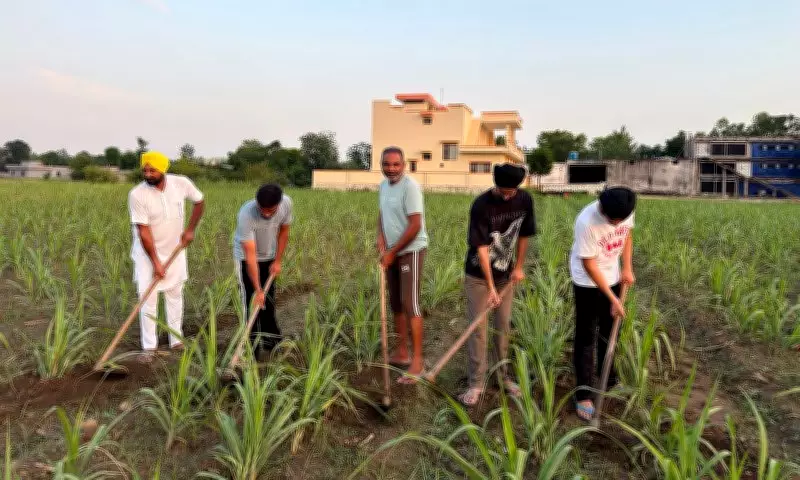
In the heart of Punjab's agricultural belt, a family in Jalandhar has been quietly revolutionizing farming practices for over six decades. The Singh family's commitment to organic farming spans three generations, proving that sustainable agriculture is not just a trend but a viable, long-term legacy.
The Roots of a Vision
The journey began with grandfather Gurdev Singh in the 1960s. At a time when chemical fertilizers and pesticides were hailed as the panacea for agricultural productivity, Gurdev chose a different path. He believed that the land should be nourished, not exploited. His small plot of land became a laboratory for traditional farming methods, using cow dung, compost, and natural pest repellents. Despite initial skepticism from neighbors, his yields were healthy, and the soil remained fertile year after year.
Passing the Torch
Gurdev's son, Balwinder Singh, grew up watching his father work the fields. After completing his education in agriculture, Balwinder returned to the family farm with a mission: to scale up organic practices while preserving their essence. He introduced systematic crop rotation, vermicomposting, and integrated pest management. Balwinder also started documenting the farm's methods, creating a manual that would later become a reference for aspiring organic farmers in the region.

The second generation faced its own challenges. The green revolution had made chemical farming the norm, and organic produce struggled to find a market. Balwinder had to innovate: he began selling directly to consumers, setting up a small store in Jalandhar city. Word spread about the quality and taste of his vegetables, and soon, he had a loyal customer base willing to pay a premium for chemical-free food.
The Third Generation: Innovation Meets Tradition
Today, Balwinder's son, Amanpreet Singh, represents the third generation. Armed with a degree in environmental science and a passion for technology, Amanpreet has taken the family legacy to new heights. He has introduced precision farming techniques, using soil sensors and data analytics to optimize water and nutrient use. The farm now has a solar-powered irrigation system and a biogas plant that converts farm waste into energy.
Amanpreet has also leveraged social media to market the farm's produce. Instagram and Facebook posts showcasing the lush green fields and the family's farming philosophy have attracted urban customers who value organic food. The farm now supplies to several organic stores in Punjab and even exports turmeric and ginger to Europe.
Sustaining the Legacy
The Singh family's success has not gone unnoticed. They have been invited to speak at agricultural universities and have received awards from the state government for their contribution to sustainable farming. But for them, the true reward is the health of the land and the community. They regularly host workshops for local farmers, teaching them organic techniques and helping them transition away from chemicals.
The third generation is already thinking about the future. Amanpreet's children, though young, are being introduced to the farm's ethos. They learn about composting and seed saving, ensuring that the vision continues. The family believes that organic farming is not just a method but a philosophy of living in harmony with nature.
A Model for Sustainable Agriculture
The Singh family's journey from traditional organic farming to a modern, tech-integrated model is a blueprint for sustainable agriculture in India. It demonstrates that with passion, innovation, and a respect for the land, farming can be both profitable and eco-friendly. As the world grapples with climate change and food security, stories like this offer hope and a path forward.
In an era of fast food and instant gratification, the Singh family reminds us that some things are worth the wait. Their organic farm stands as a testament to the power of patience, hard work, and a vision that transcends generations.