

A little adversity for a lifetime of immunity. Thirukkural with the Times explores real-world lessons from the classic Tamil text ‘Thirukkural’. Written by Tamil poet and philosopher Thiruvalluvar, the Kural consists of 1,330 short couplets of seven words each. This text is divided into three books with teachings on virtue, wealth, and love and is considered one of the great works ever on ethics and morality. The Kural has influenced scholars and leaders across social, political, and philosophical spheres. Motivational speaker, author and diversity champion Bharathi Bhaskar explores the masterpiece.
Nature’s Hidden Secret: Hormesis
Nature is abundant with hidden secrets. That which can destroy us in large measure may strengthen us in small measures. Toxicologists call this phenomenon hormesis, a biological response in which exposure to a low dose of a harmful substance awakens protective mechanisms inside an organism. A larger dose may wound or kill. A smaller dose teaches the body to prepare, adapt and endure. The idea is ancient, though the word is modern.
Fasting as a Model of Hormesis
Consider fasting. A temporary denial of food triggers autophagy, the body’s cleansing process. Through brief but repeated deprivations, the body learns resilience. Nature seems to repeat the same lesson everywhere.

Naganandhi: A Literary Example of Controlled Exposure
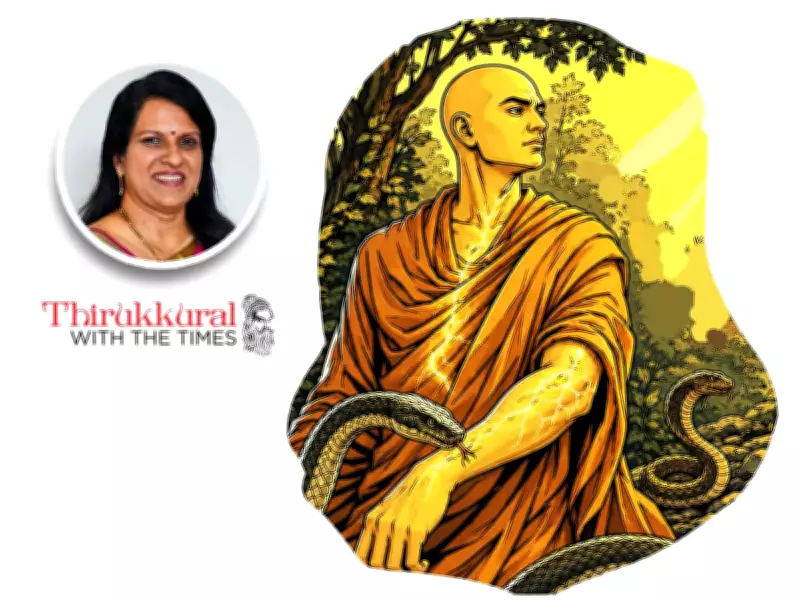
One of the most fascinating illustrations of this idea appears in literature. In Kalki’s epic ‘Sivakamiyin Sabadham’, the enigmatic Naganandhi stands among the most unforgettable characters in Tamil fiction. A Buddhist monk, strategist and antagonist, he carries within him brilliance and bitterness. As a child, Naganandhi and his brothers are betrayed and abandoned in the forests after their kingdom is usurped. Life in the wilderness teaches harsh lessons. Among the greatest dangers are venomous snakes. Naganandhi resolves that he will no longer live in fear of them. Day after day, he allows snakes to bite him, taking care that only tiny quantities of venom enter his body. The pain is immense. The risk is terrifying. Yet he persists. Over time, his body adapts. The poison becomes something he can withstand. Kalki takes the idea further, giving it an almost mythical dimension. Naganandhi becomes so saturated with poison that snakes perish after biting him. Hidden within the fiction lies the essence of hormesis. Naganandhi does not conquer danger by avoiding it. He survives by encountering it repeatedly in manageable doses.
Historical Parallel: Variolation and Vaccination
History offers a parallel. Long before modern vaccines transformed medicine, physicians practised ‘variolation’ against smallpox. People were deliberately exposed to a small quantity of the virus. The procedure carried risk but prepared the body to withstand a deadlier encounter. In principle, it reflected the same wisdom. Controlled exposure can cultivate resistance.
Modern Life and the Loss of Resilience
Modern life has become an elaborate exercise in removing discomfort. We rush to smooth every rough edge from our children’s lives. We intervene in their quarrels. We fight their battles. We shield them from criticism. A stern teacher becomes an adversary. A disappointing result becomes a crisis. Every thorn is removed before it can prick. In our anxiety to protect, we sometimes deny them the experiences that build resilience. Childhood was once a slow apprenticeship in disappointment, patience and recovery. Today, many children arrive at adulthood having been protected from every small storm. Then comes the first serious failure. The first rejection letter. The first betrayal. The first heartbreak. The first season, when life refuses to cooperate. Having never exercised the muscles of endurance, they find themselves shattered. A life without small hardships resembles a body without immunity. The slightest infection becomes dangerous.
Embracing Small Discomforts
Perhaps we need our own measured encounters with inconvenience. An hour without electrical appliances. A day away from the phone. Small doses of discomfort that awaken forgotten reserves within us.

Thiruvalluvar’s Wisdom
Thiruvalluvar captures this spirit beautifully. In couplet 625, he says: Adukki Varinum Azhivilaan Utra Idukkan Idukkat Padum. “They who take disasters one after another head-on but do not succumb; those people give distress to distress itself.” What a magnificent image. Distress arrives in waves, only to discover that its intended victim has become stronger than the assault. Small pockets of difficulties become quiet teachers. They fortify the mind. And one day, when life’s serpent finally bites, we may discover that the antidote has been growing within us all along.





