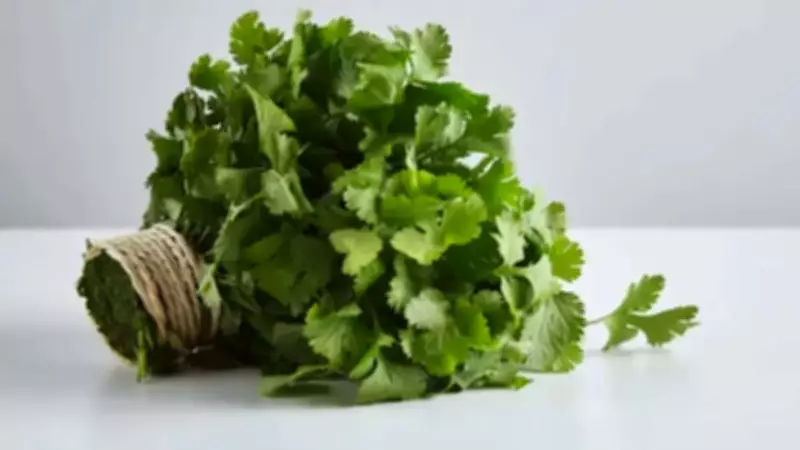
Coriander, also known as cilantro or dhania, is a staple in Indian kitchens. It adds flavor to dal, chutneys, curries, chaats, and garnishes. However, fresh coriander is delicate and spoils quickly. Within days, it turns yellow, soggy, and black, leading to waste and money loss.
The rapid spoilage occurs because coriander has high moisture content, thin stems, and soft leaves. It reacts quickly to temperature changes, trapped water, and poor air circulation. Storing it wet in a plastic bag accelerates rotting.
Fortunately, simple tricks can keep coriander fresh for a week or longer without expensive containers. Common household items like paper towels, jars, steel boxes, or old bottles work well. The key is to control moisture without drying out the leaves completely.

Vertical Water-Vase Method
Treat coriander like flowers. Trim the stem ends and place the bunch upright in a glass jar with an inch of water. Loosely cover the leaves with a plastic bag and refrigerate. This allows stems to absorb water while keeping leaves from drying. Change the water every two days. This method can keep coriander fresh for up to ten days. Trimming brown ends helps, similar to flower care.
Paper Towel Wrap
This method works best for washed coriander. Wash and dry the leaves thoroughly, then wrap them in a slightly damp paper towel (not dripping wet). Place the bundle in a zip bag or airtight container. The towel maintains enough moisture to prevent wilting without causing sliminess. Done correctly, coriander stays fresh for five to seven days. The keyword is damp, not soaking wet or bone dry.
Airtight Box with Paper Towel Layers
Line a container with paper towels, spread dry coriander, add another paper towel on top, and close tightly. The towels absorb condensation. Many Indian homes swear by this method. The leaves stay dry and crisp each time the container is opened. A pro tip: using an airtight container with paper towels at the bottom and top can keep coriander fresh for ten days.
Steel Dabba and Cotton Cloth Hack
This desi hack uses a steel tiffin box lined with dry muslin or cotton cloth. Place coriander inside, fold the cloth over, and close. Steel keeps things cool, and the cloth breathes better than plastic, avoiding stale smells common with plastic boxes.
Roots-First Ziploc Trick
If coriander has roots and stems attached, wrap just the roots and lower stems in a damp cloth, keeping leaves dry. Place in a Ziploc bag with a bit of air. This creates a mini greenhouse effect: roots stay moist, leaves avoid wet plastic. It is best not to wash before storing.
Avoid Pre-Washing
Unless necessary, skip washing before storage. Excess moisture causes quick spoilage. Wash coriander just before use, not before refrigerating. If washing is unavoidable, dry thoroughly using a fan or towel. Some Indian homes use a turmeric-salt rinse for sanitation, but leaves must be fully dried before storage.
No Fridge? No Problem
Without a fridge, wrap dry coriander in cotton or newspaper and store in a cool, dry spot. Clay pots and steel boxes also work well.
Ultimately, coriander freshness depends on moisture balance. Too much water leads to rot; too little causes drying. Find the sweet spot: trim stems, keep leaves dry, avoid packing wet herbs tightly in plastic, and allow air circulation. Proper storage reduces waste, fewer trips to the store, and tastier meals.