In every society, people are often divided by wealth, status, profession, or access to opportunities. Some are successful and powerful; others are constrained, with few resources and limited opportunities for advancement. Over the years, many have wondered why these differences exist. Are people born unequal, or do circumstances create these differences? This question has been a matter of debate among philosophers, educators, and social thinkers for centuries.
The Voice of Yukichi Fukuzawa
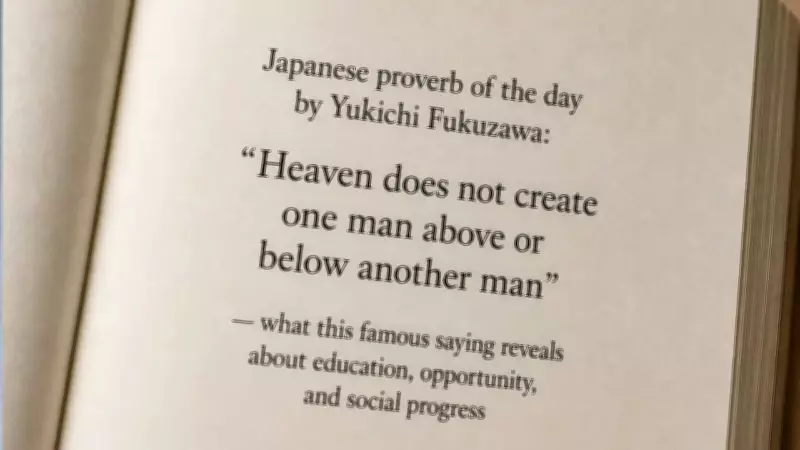
One of the most powerful voices on this topic in Japan was writer, teacher, and reformer Yukichi Fukuzawa, who helped modernize Japanese education in the 19th century. His ideas centered on equality, education, and self-improvement. He famously stated, "Heaven does not create one man above or below another man." This proverb conveys a powerful message about human potential. It means that no one is born superior or inferior. Instead, what you are educated in and what you are exposed to in terms of knowledge are major determinants of opportunities and outcomes in life.
Understanding the Meaning Behind the Proverb
At its core, the proverb challenges the idea that social or intellectual differences are inherent. It asserts that all men are created equal. The disparities we see in society are often fostered later through education, environment, and access to learning opportunities. When people are given knowledge, guidance, and skills, they are more likely to improve their situation and make informed decisions. The proverb tells us that education is not solely about academics; it also encompasses awareness, critical thinking, discipline, and understanding of the world.

Why Education Shapes Opportunities
Education is crucial for both personal and social development. It helps people learn new things, communicate better, and develop practical skills. Quality education opens up more career opportunities and boosts confidence in decision-making. Education also enables people to understand society, tackle challenges, and enhance their standard of living. The proverb suggests that many differences in life stem not from birth but from learning and opportunity.
The Connection Between Knowledge and Independence
One of the central ideas in Fukuzawa's philosophy was self-reliance through learning. Education empowers people to think for themselves and not depend entirely on others. Knowledge fosters problem-solving, informed decisions, confidence, and responsibility. The proverb implies that knowledge enables you to rise above your limitations and improve your future.
Relevance of This Proverb in Modern Society
Today, education remains closely linked to opportunity. Access to schools, technology, and resources continues to impact career growth and social mobility. Yet educational inequalities persist worldwide, with some communities having greater access to learning than others. This gives the proverb modern relevance, highlighting that investing in education can lead to long-term social progress and reduced inequality.
Education Beyond Classrooms
The proverb also hints at a broader concept of education. Learning does not only happen in schools and universities. People continue to learn from books, conversations, experiences, and observation. Curiosity and a willingness to learn can influence growth throughout life. This wider view makes the proverb applicable to people of all ages.
Why the Proverb Still Matters Today
Success is often equated with wealth or social standing, but this proverb redirects attention to knowledge and opportunity. It reminds us not to judge human potential based on current circumstances. With the right education and support, people can change and lead better lives. The statement also calls on societies to value equal access to learning and development.

How to Apply This Proverb in Daily Life
- Value education as a long-term investment for growth.
- Continue learning after finishing school.
- Never judge a person by wealth or social standing.
- Foster equal access to learning and knowledge.
- Acquire both academic knowledge and practical skills.
- Use knowledge to make good choices.
- Maintain curiosity and openness to new ideas.
- Support others' learning opportunities.
- Focus on self-improvement through continuous learning.
- Understand that growth often requires opportunity and effort.
- Appreciate people from diverse educational and social backgrounds.
A Simple Takeaway from This Proverb
The meaning is clear: no one is born superior or inferior. Education, opportunity, and learning are powerful forces in shaping life outcomes. Yukichi Fukuzawa's perspective on equality and education emphasizes that differences between people are usually more affected by learning opportunities than by birth. This concept is extremely pertinent in today's world, where education continues to influence careers and social progress. Meaningful growth is possible when people and societies value knowledge, promote learning, and support equal opportunity. The message is simple but powerful: Education can change lives, create opportunity, and break down the barriers that divide us.
About the Author: The TOI Lifestyle Desk is a dynamic team of dedicated journalists who, with unwavering passion and commitment, sift through the pulse of the nation to curate a vibrant tapestry of lifestyle news for The Times of India readers. At the TOI Lifestyle Desk, we go beyond the obvious, delving into the extraordinary. Consider us your lifestyle companion, providing a daily dose of inspiration and information. Whether you're seeking the latest fashion trends, travel escapades, culinary delights, or wellness tips, the TOI Lifestyle Desk is your one-stop destination for an enriching lifestyle experience.