If your family is able to keep only some dates of the Hindu calendar, Ganga Dussehra can still be one worth keeping in mind. For 2026, Drik Panchang lists Ganga Dussehra on May 25 for India, which is observed on Adhik Jyeshtha Dashami, the 10th lunar day of the bright fortnight. There are reports in the media that discuss the dates of May 25 and 26, based on the tithi, local sunrise, and the calendar method. If you are planning on a standard North India panchang, May 25 is the day that most people will choose to utilize.
This festival remembers Gangavataran, the descent of Mother Ganga to earth. It is connected to the ancient legend of King Bhagiratha who, through his tapas, a penance that was fervent, took the river from the sky to give his ancestors relief. According to Puranic practice, Shiva catches her fierce fall in his jata, his matted locks, so that the earth can support her. This image is important. Ganga is more than just the name of a river at this festival. It is grace that has been made manageable, power that is life-giving.
Why bathing and charity sit at the centre
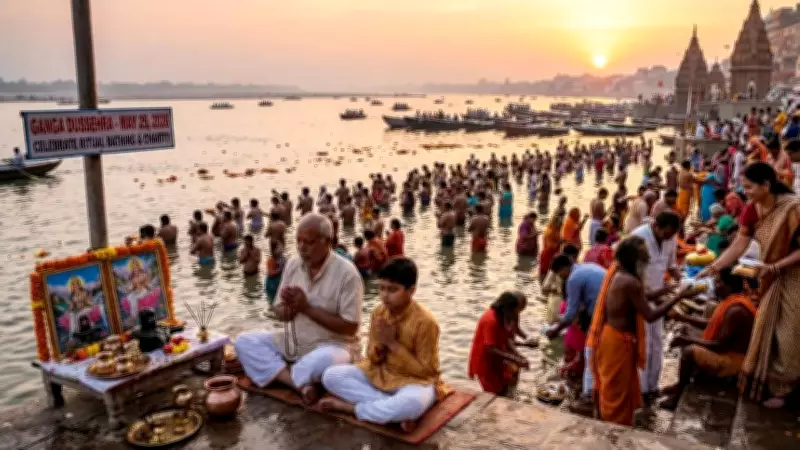
Ganga Dussehra is closely connected with ritual bathing, snan, and daan. Many traditions say that the day can eliminate ten kinds of wrongdoing. That is one reason why the word Dussehra refers to ten. You can see devotees gathering at the riverfronts before sunrise, offering arghya, water oblations, reciting hymns and stotras. They also offer food, clothing, fans, or even water during the heat of summer. The logic is simple and demanding. Purification is not only private. You bathe, and you give. You seek cleansing, and you relieve someone else's burden. In North India, this often has a seasonal feel because late May heat is harsh. Donating drinking water, earthen matkas, water pots, chappals, fruit, or cooling food is not decorative piety. It fits the month.

If you are near the Ganga, or another sacred river, a dawn bath is the classic observance. If you are not, do not force a fake version. Do not call a swimming pool dip the same thing. It is not. However, that does not mean that the day is gone.
The prayers that travel well
Some parts of Ganga Dussehra depend on place. Some do not. Sankalpa, a spoken intention, travels well. So does simple puja, worship, done with clean water, flowers, a lamp, and prayer. Reading or listening to the Ganga stotram, a hymn to Ganga, also travels well. So does chanting "Om Shri Gangayai Namah," salutation to Goddess Ganga, with attention instead of hurry.
At home, keep it plain. Bathe in the morning. Wear clean clothes. Set a small altar with an image of Ganga, Shiva, or a simple diya, lamp. Offer clean water in a small lota, metal vessel, flowers if you have them, and sit for a few minutes in silence before prayer. If children are involved, tell the Bhagiratha story in two minutes, not twenty. They will remember the river coming from heaven through Shiva's hair. They will not remember a lecture.
If you are working that day, do the puja before leaving or after sunset. This is one of those festivals where sincerity matters more than staging a perfect scene in a small flat kitchen.
What to do if you do not have Gangaajal
A lot of diaspora homes save one small bottle of Gangaajal for years, using it one drop at a time. Many others simply do not have any. That is common. You do not need to panic-buy something online of uncertain quality.
Use clean water. Respect it. If you want, put holy basil, tulsi, leaves if they are available, or some drops of Gangaajal previously stored into the vessel only when you already own it. Do not present normal water as being scripturally similar to Gangaajal. It is not. The best thing you can do is to offer clean water and a Sankalpa that you worship Mother Ganga, remembering her descent.
If you reside near a natural river or lake, or a seafront, and it is legal and safe to go there, you can sit there, pray, and think about rivers as life-giving sources. It is meaningful. It is not exactly the same as Ganga Snan, which is a ritual bath in Ganga. Honesty keeps the observance clean.

Some families in the UK, USA, and Canada also contact local temples a week in advance to ask if they have small quantities of Gangaajal available. Larger mandirs in places like London, Southall, Milton Keynes, Atlanta, New Jersey, Toronto, and Surrey sometimes do, especially if they have regular North Indian puja supplies. Ask early. Festival week can be chaotic.
What is changed and what is not?
What remains the same is the main purpose of the festival: recalling Ganga's descent, prayer for purification, thanksgiving for the life-giving water, and daan performed in a sincere manner.
What changes is the physical setting. Most NRIs will not bathe in the Ganga on this day. Many will not have a nearby pandit, priest, or temple with a special Ganga Dussehra program. Some will observe before work in British Summer Time, Eastern Time, Pacific Time, or after dinner when children finish homework. That is adaptation.
What also changes is the material form of the ritual. Clean tap water in a copper or steel vessel can stand in for the act of offering water at home, but it does not become Gangaajal by sentiment. A private prayer space in the home could be a place to keep the devotional spirit alive, but it is not an actual river ghat. Online donations to charities will preserve the daan urge, but it is not the same as giving water to someone who is thirsty during the summer heat. Find the difference and choose the best option that is available to you.
Charity that fits the day, even abroad
If you are in India, this is a good day to give water, fruit, hand fans, buttermilk, or support for riverbank cleanliness and local need. If you are abroad, choose charity with the same spirit. Donate to a food bank. Sponsor bottled water or summer supplies at a shelter. Be part of a group that is dedicated to protecting the environment if that is of interest to you and your family. When your kids are of sufficient age, you can ask for their help in putting together simple care packages containing snacks, water, and socks to distribute locally in areas where it is permissible. You can also give in India from abroad. Many families send money the same day to relatives who will offer jal seva, water service, or annadaan, food donation, in their hometown. That works well when grandparents are already involved at a local temple or community trust.
Keep the act concrete. Ganga Dussehra is not the day for vague good intentions and a forwarded message.
Finding a pandit in the right timezone
If your family wants guided puja, look first at nearby temples with a North Indian calendar tradition. Find out if they observe Ganga Dussehra specifically, not just an ordinary evening aarti. Also, ask if they worship using lamps. When you are in the diaspora, the temple calendars may reduce smaller celebrations due to packed volunteer schedules and scarce weekday attendance.
If there is no local option, the internet can be helpful, particularly for families of first generation trying to keep the tradition in the minds of their children. Find a priest who can work within your timezone and will perform a brief sankalpa at home along with puja. This is not a lengthy list of items that you are unable to get on Tuesday mornings in Ohio or Slough. Video calls via WhatsApp and Zoom are popular now. Inquire in your local Facebook communities, temple mailing lists, or your local WhatsApp groups for suggestions. Gujarati, Punjabi, Hindi-speaking, Bengali, and mixed Hindu associations are often aware of the right pandits and which ones are not for you.
A simple home observance that will not collapse by 8 a.m.
Step 1: Mark the date the night before
Clean up a cloth or diya, incense, if you want to make use of it, flowers, as well as a small jar of water. If you plan charity, prepare it before bed. Weekday observance fails when everything is left for the morning.
Step 2: Begin with bath and sankalpa
After your morning bath, stand before the altar and state your intention. Mention Ganga Dussehra, your family name, and your prayer for purification, gratitude, and welfare of ancestors and family.
Step 3: Offer water, light, and prayer
Offer the water mentally to Mother Ganga. Light the diya. Recite a brief prayer and chant "Om Shri Gangayai Namah," or listen to a hymn. If you are familiar with the tale of Bhagiratha, read it out loud to the children.
Step 4: Give something that helps someone that day
Complete a donation, send support to a trusted cause, or carry out a local act of giving. Try not to postpone this part. The day feels different when charity happens on the date itself.
Step 5: Keep one quiet minute for the river
Before you rush into the day, pause. Think of the actual river, of millions who still go to her banks, of water as mercy and responsibility. That minute is not decorative. It gives the ritual weight.
If you are fortunate enough that you are situated in North India this year, you will witness the ghats rise early, the brass lotas in the early morning light, priests chanting prayers, wet steps packed with families. If not, make a small pot in your kitchen, turn on the lamp prior to work, and allow your child to put a spoonful or two of water in a pot of tulsi on the window. This, too, could be a reminder of a stream that was flowing.
About the Author
AstroDevam is a premium organisation providing ancient and authentic knowledge of Astrology, Vastu, Numerology, and Innovative Corporate Solutions with a contemporary perspective. AstroDevam, having patrons in more than 100 countries, has been promoted by Achary Anita Baranwal and Achary Kalki Krishnan, who not only have Master's Degrees in Astrology but are engaged in teaching Scientific Astrology, Vastu, and Numerology for more than three decades.