

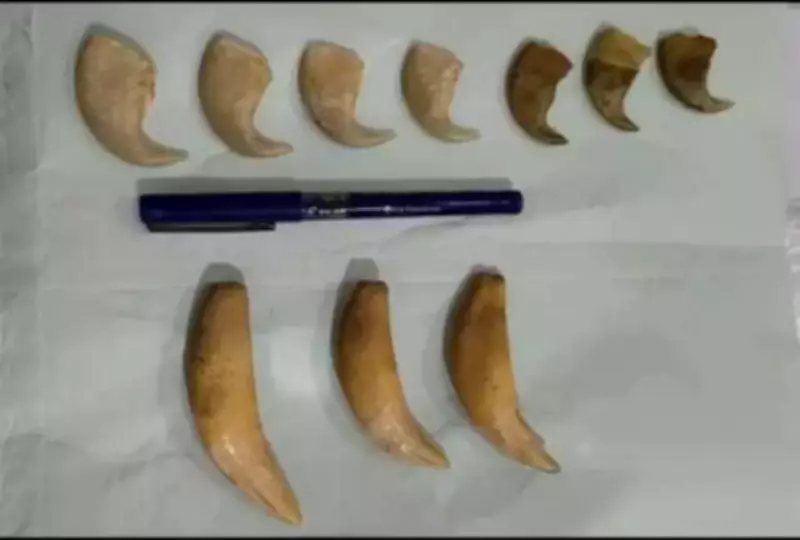
DRI Hyderabad Intercepts Wildlife Traffickers, Seizes Tiger Nails and Teeth
In a significant crackdown on illegal wildlife trade, officials from the Directorate of Revenue Intelligence (DRI), Hyderabad zonal unit, conducted a targeted operation at Nampally railway station on Monday. Acting on precise intelligence, the sleuths successfully intercepted two individuals suspected of trafficking protected animal parts.
Swift Operation Leads to Seizure of Protected Species Parts
The DRI team executed a coordinated action at the railway station, identifying and apprehending the two alleged traffickers. During subsequent questioning, one of the suspects produced a transparent zip-lock pouch from his backpack. Upon thorough inspection, authorities discovered the pouch contained seven tiger nails and three canine teeth, all suspected to be destined for the illegal grey market.
The tiger is a Schedule I protected species under India's Wildlife (Protection) Act, 1972, making any possession, transportation, or trade of its body parts a cognisable and severely punishable offence. This classification underscores the gravity of the violation and the importance of such enforcement actions.

Confiscation and Handover to Forest Department
Officials confiscated not only the seized tiger parts but also the pouch and backpack used to conceal them, along with mobile phones believed to be connected to the smuggling attempt. Following standard procedure, the two accused individuals and all recovered items were formally handed over to the Telangana forest department for comprehensive investigation and appropriate legal proceedings.
Forest authorities are now tasked with determining the origin of these tiger parts and exploring potential connections to broader wildlife trafficking networks. This investigation could reveal crucial insights into regional or national smuggling operations targeting endangered species.
Broader Implications for Wildlife Protection
This incident highlights the ongoing challenges in combating wildlife crime in India, particularly involving high-value species like tigers. The successful interception demonstrates improved intelligence-gathering and inter-agency coordination in addressing such illicit activities.
Wildlife trafficking remains a persistent threat to biodiversity, with protected animal parts often smuggled for use in traditional medicine, ornaments, or as status symbols. Enforcement actions like this DRI operation are critical in disrupting supply chains and deterring potential traffickers.
The case also emphasizes the need for continued vigilance at transportation hubs like railway stations, which traffickers frequently exploit for moving contraband. Public awareness and reporting of suspicious activities can further strengthen conservation efforts.






