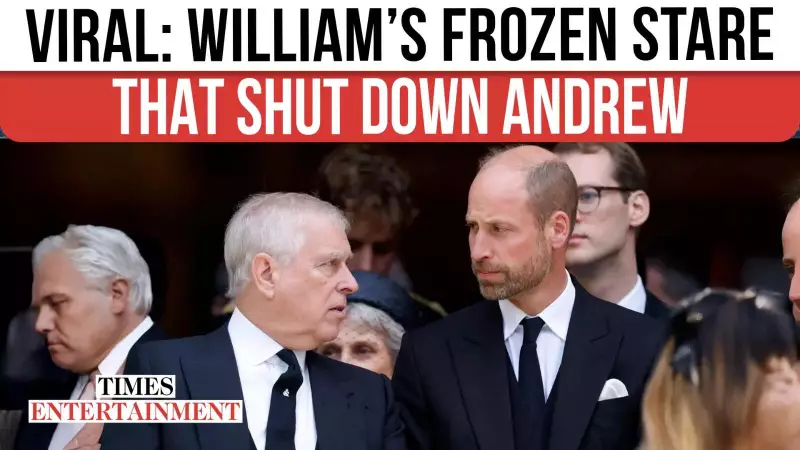
A shocking royal revelation has captivated viewers worldwide as Prince William's icy reaction to Prince Andrew during their final public appearance together goes viral. The dramatic moment, captured on cathedral steps, foreshadowed the seismic royal shake-up that would soon follow.
The Cathedral Steps Confrontation
Royal editor sources reveal that a tense exchange between Prince Andrew and Prince William occurred during what would become Andrew's final official royal engagement. Eyewitnesses described Andrew wearing a smug smile as he arrived at the cathedral, seemingly unaware of the dramatic consequences that would soon unfold.
The most telling moment came when Prince William delivered what observers called an icy cold stare toward his uncle. This non-verbal exchange, lasting mere seconds, spoke volumes about the deepening rift within the royal family. The incident, which took place in late 2024, has now resurfaced with new significance following recent developments.

The Dramatic Fallout Unfolds
Within weeks of that fateful cathedral appearance, Buckingham Palace announced the sudden stripping of Prince Andrew's military titles and royal patronages. The decision, described as unprecedented in modern royal history, effectively removed Andrew from all official royal duties.
The fallout has extended far beyond London, with repercussions reaching as far as Portugal where Andrew maintains connections. At the heart of this dramatic shake-up lies the persistent shadow of the Jeffrey Epstein scandal, which continues to haunt the royal family despite years of attempts to distance themselves from the controversy.
Family Tensions and Shifting Alliances
Insiders report that Prince William played a pivotal role in the decision to remove his uncle from royal duties. The young future king has been increasingly assertive in reshaping the monarchy's public image, particularly following his father King Charles III's accession to the throne.
The tension between William and Andrew represents more than just personal disagreement—it signals a fundamental shift in how the royal family handles internal crises. Where previous generations might have maintained a united front, the current leadership appears determined to prioritize the institution's survival over family loyalty.
Multiple sources confirm that family gatherings have become increasingly strained, with some members taking sides in the quiet but intense power struggle playing out behind palace walls. The Epstein connection continues to be the central point of contention, with Andrew's association proving too damaging for the modern monarchy to withstand.
The Viral Moment and Public Reaction
The video of Prince William's cold reaction to Andrew has sparked intense discussion across social media platforms. Viewers have analyzed every frame, noting the clear body language signals that now appear prophetic in hindsight.
Royal commentators suggest that William's visible discomfort with his uncle's presence that day reflected broader concerns within the royal household. The moment has become symbolic of the monarchy's efforts to distance itself from scandal while navigating complex family dynamics.
As the video continues to circulate online, public opinion appears largely supportive of Prince William's stance. Many see his reaction as appropriate given the serious nature of the allegations connected to Andrew through the Epstein case.
The timing of the video's resurgence coincides with renewed attention on Epstein-related documents and ongoing legal proceedings involving the disgraced financier's associates.
Looking Forward: The Monarchy's New Direction
This incident represents more than just another royal controversy—it marks a significant turning point in the Windsor family's approach to crisis management. Under King Charles and particularly Prince William, the monarchy appears determined to adopt a more transparent and accountable public stance.
The swift action against Andrew, despite his status as the Queen's favorite son during her lifetime, demonstrates the new leadership's willingness to make difficult decisions for the institution's long-term stability.

As the royal family continues to navigate these challenging waters, all eyes remain on how they will balance family loyalty with public duty in an era of increased scrutiny and changing public expectations.