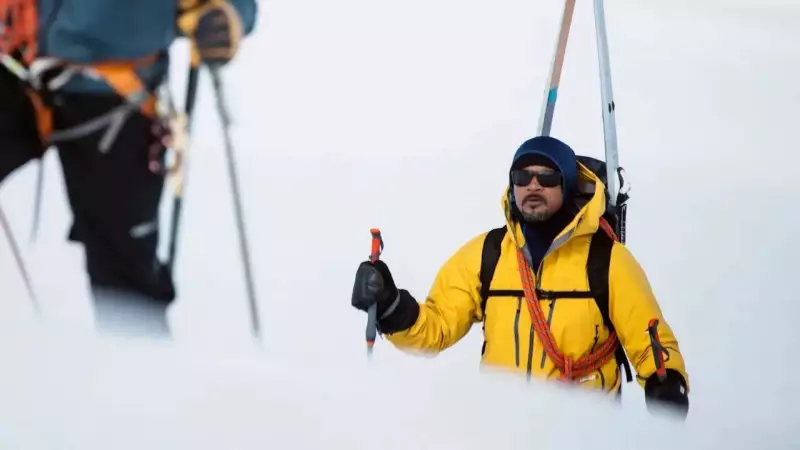
Will Smith has just completed what he calls the wildest adventure of his life, and it's a far cry from his usual Hollywood blockbusters. The actor stars in National Geographic's groundbreaking new series, 'Pole to Pole with Will Smith,' where he travels from Antarctica all the way to the North Pole over 100 consecutive days.
A Journey Unlike Any Other
This isn't your typical celebrity travel show. Smith circles the entire globe, visiting all seven continents in an epic expedition that took five years to produce. He begins in the brutal cold of the South Pole, then pushes through the Amazon's dense jungles, scales the towering Himalayas, crosses vast African deserts, visits remote Pacific islands, and finally reaches the top of the world at the North Pole.
The series covers thousands of miles across every imaginable ecosystem. Smith doesn't just observe from a distance—he gets right into the action. He climbs mountains, skis across ice fields, milks a venomous tarantula, and even dives beneath the Arctic's frozen surface alongside scientists.

More Than Just Scenery
Local guides, explorers, and researchers accompany Smith throughout his journey, giving him direct access to cutting-edge science and indigenous wisdom. The show reveals how fragile our planet truly is and emphasizes the crucial role humans play in protecting it.
Smith himself describes this as his most intense journey yet. "This journey was unlike anything I've ever done," he stated. "At times I feared I might not make it home! It's an exploration not just of the planet's edges, but of some of the most extraordinary people living there."
Transforming Perspectives
If you're used to seeing Smith in films like 'Men in Black' or 'The Pursuit of Happyness,' prepare for something completely different. Here, he appears open, curious, and sometimes vulnerable. He learns survival techniques from the San people in the Kalahari Desert and participates in genuine scientific research rather than just performing for cameras.
This series goes beyond typical celebrity adventures. It focuses on connecting with diverse communities, respecting wild places, and seeing the world through fresh eyes. Each episode transports viewers to a new part of the globe with unique experiences:
- The South Pole: Icy landscapes where polar experts teach Smith essential survival skills
- The Amazon Rainforest: Deadly creatures and complex ecosystems in deep jungle environments
- The Himalayas: High-altitude climbs that become journeys of personal meaning
- Pacific Islands: Communities facing rising seas while preserving endangered languages and cultures
- Kalahari Desert: Hunter-gatherer societies sharing ancient knowledge
- The North Pole: Diving under Arctic ice to collect rare scientific samples
A Visual Feast with Purpose
The series offers breathtaking scenery but also serves as a wake-up call. It urges viewers to consider environmental challenges, biodiversity loss, and the resilience of cultures facing significant changes. Smith notes that "the beauty of our world inspired my every step with awe and hope" throughout the journey.
How to Watch the Adventure
The first episode premiered this Friday at 9:30 PM on National Geographic. It features Smith heading straight to the South Pole, skiing and trekking across endless ice fields while confronting massive ice walls in freezing winds.
The second episode arrives on January 23, taking Smith into the heart of the Ecuadorian Amazon. He hunts for deadly creatures alongside Professor Bryan Fry and local mountaineer Carla Perez.
The final episode lands on January 30. This time, Smith, Fry, and Perez team up with Waorani elder Penti Baihua in the Amazon to track the world's largest snake—the giant green anaconda.
National Geographic's 'Pole to Pole with Will Smith' promises to deliver an adventure unlike anything television has seen before, combining stunning visuals with meaningful exploration of our planet's most remote corners.