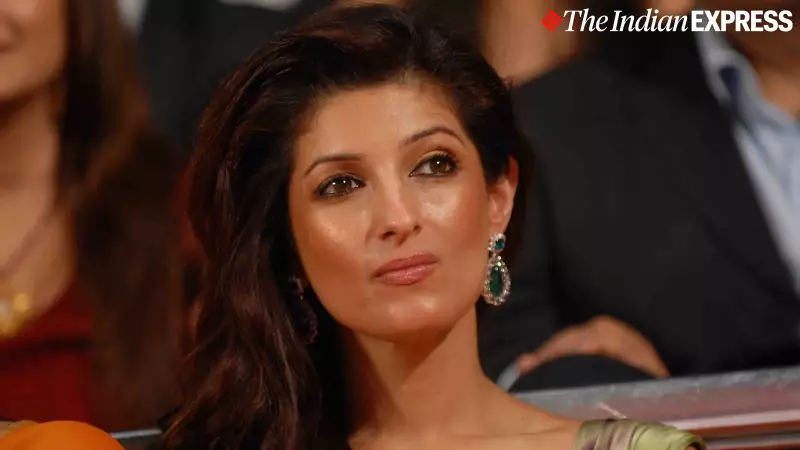
Twinkle Khanna's Childhood Blueprint: A Mother's Daily Discipline
Twinkle Khanna recently opened up about a powerful childhood experience that shaped her fundamental beliefs about gender and strength. She described how simply watching her mother, veteran actress Dimple Kapadia, navigate life as a single parent created an indelible impression.
"I always thought we were superior," Khanna stated frankly during an interview with BBC India. "I grew up with that notion." This perspective did not emerge from theoretical discussions about equality. Instead, it grew from daily observations within her home.
The Morning Ritual That Defined Strength
Khanna shared a vivid memory that encapsulates her mother's relentless work ethic. "My mother would wake up at five every morning," she recalled. Dimple Kapadia managed three demanding shifts daily. Amidst this grueling schedule, she maintained her professional appearance as an actress.

"She would put on this Jane Fonda tape, and she would work out around us... So it was on mute and she would work out around us and I would look up at her and she was my superwoman. She was even wearing tights," Khanna recounted with evident admiration. This image of her mother multitasking with determination became a permanent fixture in her young mind.
From Observation to Life Philosophy
This constant demonstration became what Khanna calls a "blueprint" for her own life. "That I think set a precedent for me that you have to be independent," she explained. "Every woman has to be independent, and your self-worth and value lie in being able to not need anybody."
Her initial belief was absolute: "The only person you can rely on is yourself." With time and maturity, Khanna says she moderated this view. "From there I had to come a little bit... to the back and say that 'okay it's okay to rely on a whole bunch of people but you still have to be independent.'" The core lesson of self-reliance remained, tempered by an understanding of healthy interdependence.
The Psychological Impact of a Self-Reliant Parent
How does growing up with such a parent shape a child's worldview? Psychologist Rasshi Gurnani provides insight into this dynamic. She explains that a strong, self-reliant parent often creates an internal blueprint for autonomy in a child.
The Childhood Modeling Effect
"In childhood, this becomes part of a 'modelling effect,'" Gurnani states. "A parent's behaviour unconsciously trains a child to associate competence with independence." This experience profoundly shapes early ideas about gender.
When a child observes a woman successfully fulfilling both nurturer and provider roles, it challenges traditional stereotypes. "It disrupts traditional binaries and normalises female agency," the psychologist notes. The child learns that capability and strength are not confined by gender.
Adult Outcomes and Potential Challenges
As adults, individuals raised in such environments often develop notable traits:
- High self-efficacy: A strong belief in their own abilities.
- Strong internal locus of control: The conviction that they control their own outcomes.
- A belief that capability is not gendered: Rejecting limitations based on gender stereotypes.
However, Gurnani cautions that this upbringing can also present challenges. It may set unusually high standards where self-sufficiency transforms from a skill into a core identity. This can make accepting vulnerability or shared responsibility difficult later in life.
Finding Balance: From Hyper-Independence to Secure Interdependence
Adults who derive their identity from self-reliance can sometimes drift into hyper-independence. Gurnani describes this as a protective mechanism rooted in early conditioning. The key lies in finding a balanced sense of independence that avoids over-responsibility and burnout.
Psychological regulation begins with self-awareness. Individuals must recognize patterns like:

- Over-functioning and taking on more than necessary.
- Struggling to delegate tasks to others.
- Equating personal worth directly with productivity.
"Building secure interdependence involves practising relational trust," Gurnani advises. This includes setting boundaries that protect one's energy and reframing dependence as collaboration rather than weakness.
Practical techniques can help. Cognitive reframing and self-compassion exercises reduce internal pressure to perform constantly. Emotional co-regulation within healthy relationships teaches a vital lesson: autonomy and support can coexist peacefully.
"Sustainable independence is ultimately the ability to choose when to stand alone and when to lean in, without guilt or fear of losing control," Gurnani concludes. Twinkle Khanna's journey from believing in female superiority to embracing balanced independence mirrors this psychological path from observation to integration.