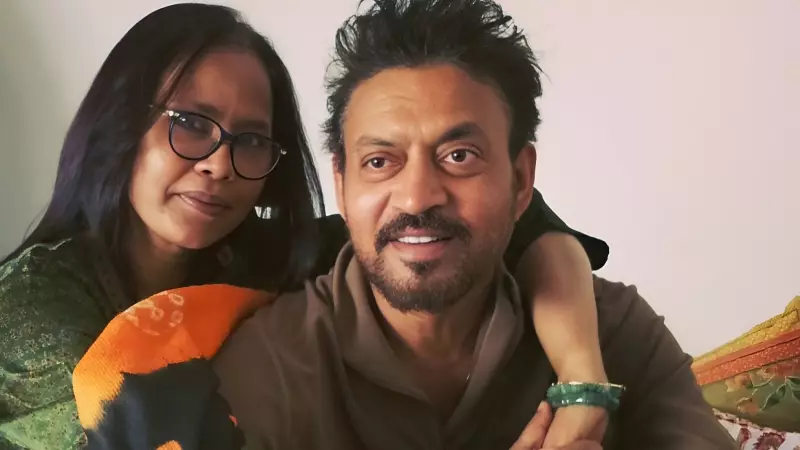
Sutapa Sikdar recently opened up about her life after the passing of her husband, the beloved actor Irrfan Khan. In a heartfelt conversation for the #SoShaya campaign by Shaya by CaratLane, she spoke candidly about her ongoing emotional journey.
The Overwhelming Nature of Pain
Sikdar described pain as a dominant force in her experience. She said, "You know, pain is the most visible thing even though it's invisible. For the person feeling it, pain becomes everything. You don't feel anything else except pain if it's a very big one, like it was for me. Honestly speaking, I'm still healing."
She emphasized that this profound grief stems from the deep bond she shared with Irrfan. Sikdar revealed that they had different backgrounds and strengths, but their connection was strong.

Memories as a Lifeline
What keeps her moving forward? Sikdar pointed to two key sources. "One is my kids, and the second thing is, he's still very alive. I still remember his delicate hands, I still remember his fragrance. I still can feel it. I remember our conversations, our arguments, our fights. He's so much part of me, even now."
She also shared how Irrfan's calmness contrasted with her own anxious nature, and how this loss has influenced her personal growth. "Since he was diagnosed, I have not written anything. I'm writing a book right now. But the point is, I'm also evolving because the pain has given me a perspective to see life."
Psychological Insights on Grief
Rahul Mamindla, a psychologist at Jagjivan Ram Hospital, Western Railway, weighed in on the psychological impact of such loss. He explained that intense pain often reflects the closeness of the bond.
"For the most part, everyone's life revolves around their loved person. We share experiences, emotions, and plan futures together. When a loved one dies, the world seems to collapse. Past, present, and future feel disrupted, making the pain unbearable and numbing," Mamindla said.
Healing Through Memories
Initially, grief can manifest as shock or denial, with pain overshadowing other emotions. Over time, however, individuals start to process their loss while cherishing memories.
Mamindla noted, "Memories can help the living partner heal if we see them through a lens of humility and appreciation. At first, memories might bring sadness or anger. But with time, we can revisit them intentionally to feel gratitude for the love and moments shared. This process supports healing and finding meaning."
Beyond Romance: Shared Values
Sikdar highlighted that her relationship with Irrfan was not just about love and romance. "It's about two people believing in the same things, not exactly the same profession, but the ethics, the values. If they're the same, it really feels good."
Mamindla added that such alignment is crucial for strong relationships. "Ethics and values can vary based on personal experience and culture. Partners who negotiate their definitions and understand each other create common ground. This mutual respect ensures transparency and compatibility."
Sikdar's confession serves as a powerful testament to life after immense loss. It shows how grief can coexist with growth, how memories act as anchors, and how shared values form the foundation of enduring love.