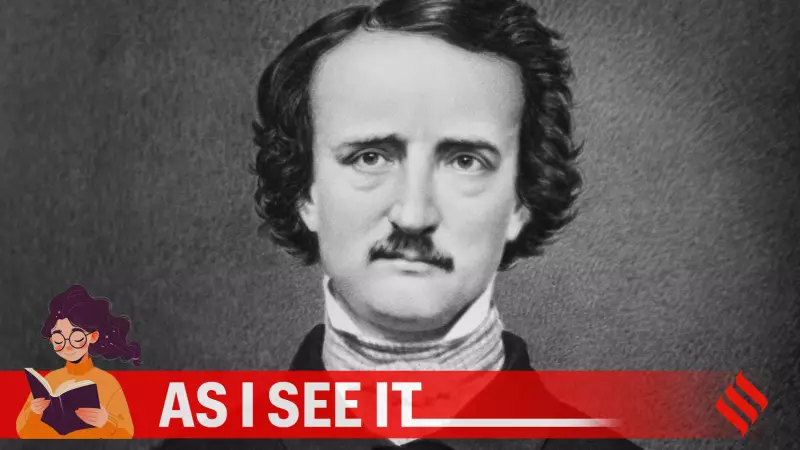
Edgar Allan Poe's Hidden World of Codes and Ciphers
Edgar Allan Poe possessed many unusual interests throughout his difficult life. Most people know him for his dark, melancholic tales of ravens and ghosts. Few realize his deep fascination with cryptography played a crucial role in his literary achievements.
A Life Marked by Struggle and Hardship
Poe entered this world on a cold January day. He never experienced privilege or financial stability. Both his birth parents died when he was young. His stepfather refused to formally adopt him. These early tragedies shaped his entire existence.
He briefly found refuge in military service but quickly realized it wasn't his true calling. Poe then turned to editorial work at various magazines and journals. His severe drinking problem, possibly inherited from his father, prevented him from holding any position for long.

He lived in persistent poverty, never witnessing the success his works would achieve after his death. One might wonder how someone facing such constant adversity could leave such an enduring literary legacy.
Discovering the Cryptographic Passion
The answer lies in Poe's fascination with secret codes and ciphers. His 1843 short story The Gold Bug represents the calm center of his creative storm. This groundbreaking work became the first piece of American fiction to incorporate a cryptogram as a central plot device.
Cryptography involves encoding confidential information using secret symbols, numbers, alphabets, and special characters. In The Gold Bug, the cipher text provides directions to buried treasure. Poe demonstrated remarkable confidence in his cryptographic abilities, surpassing most of his contemporaries.
The Evolution of a Cryptographic Master
Poe's interest in cryptography emerged during the early 1830s. While living in Baltimore, he studied ciphers published in local newspapers. His 1833 story MS Found in a Bottle won a literary contest, marking the beginning of his incorporation of secret messages into his writing.
As an editor at Graham's Magazine in Philadelphia, his passion for cryptography became increasingly evident. In 1839, he published an article titled Secret Writing that demonstrated his serious engagement with the subject. Between 1840 and 1841, Poe deciphered cryptograms sent by readers and published detailed articles on cryptanalysis.
His cryptographic challenges gained immense popularity nationwide. Readers from across the country sent him coded messages to solve. This expertise influenced numerous later writers, including Arthur Conan Doyle and Agatha Christie, establishing foundational elements for mystery and detective fiction.
Cryptography as Personal Sanctuary
Poe struggled as a writer long before achieving any recognition. Cryptography provided him with hope and sanity amid life's uncanny events. In The Gold Bug, the discovery of the insect leads to symbols representing a skull, creating eerie references throughout the narrative.
The cryptogram itself contains precise directions to hidden treasure. For Poe, this represented a distant dream made tangible through fiction. Creating this coded world brought him innate satisfaction as both an author and a man devoted to excellence in his chosen fields.
Cryptography offered Poe logical reasoning within linguistic creativity. It provided relief from a world where he experienced brutal abandonment. The coded messages became his solace, allowing him to conceal his true self while demonstrating confidence in his intellectual abilities.
This secret space enabled Poe to decode aspects of his own identity while creating enduring literature that continues to captivate readers nearly two centuries later.