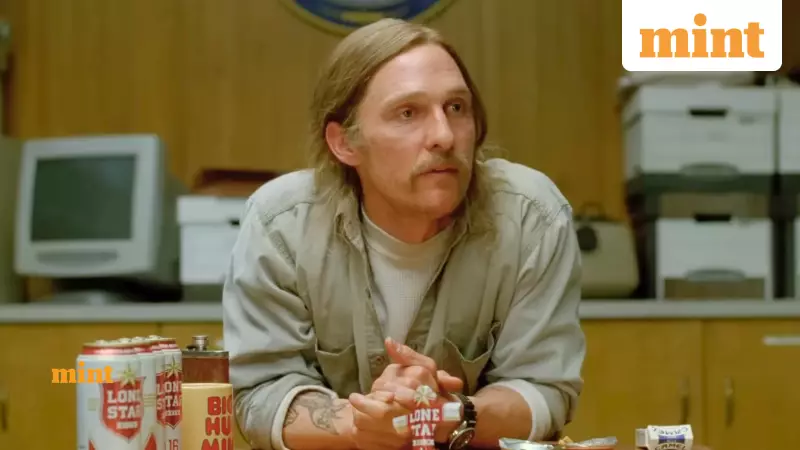
Hollywood actor Matthew McConaughey is taking a bold legal stand against the growing threat of artificial intelligence fakes. He has officially trademarked his own face, voice, and personal expressions. This move aims to stop unauthorized digital copies from spreading online.
McConaughey's Unusual Legal Strategy
According to a report in The Wall Street Journal, the US Patent and Trademark Office recently approved eight trademark applications linked to the Interstellar star. These trademarks cover short video and audio clips that feature McConaughey.
The approved material includes specific content like a brief porch video, a festive clip near a Christmas tree, and audio of his famous catchphrase, 'Alright alright alright'. By securing these trademarks, McConaughey ensures that his likeness or voice can only be used with explicit permission and clear attribution in today's AI-driven world.

A Clear Message on Ownership
In an email statement quoted by the publication, McConaughey explained his motivation. "My team and I want to know that, when my voice or likeness is ever used, it's because I approved and signed off on it. We want to create a clear perimeter around ownership with consent and attribution the norm in an AI world," he said.
His legal team views these trademarks as a powerful tool. They provide strong legal backing even before any misuse occurs. The trademarks can be used to block apps or users who create unauthorized content. If necessary, they enable McConaughey to take cases directly to federal court.
Setting a Global Example
With other celebrities like Tom Hanks and Taylor Swift already facing issues with AI fakes, McConaughey hopes his approach will serve as a useful example worldwide. His attorney, Jonathan Pollack, emphasized the importance of this tool. "In a world where we're watching everybody scramble to figure out what to do about AI misuse, we have a tool now to stop someone in their tracks or take them to federal court," Pollack stated.
Existing state laws in the United States already offer some protection for actors against the commercial misuse of their image or likeness. US law also allows for trademark claims without formal registration. However, official approval from the trademark office provides creators with stronger legal backing and clearer rights.
Strengthening Protection Against AI Harm
McConaughey's legal team believes that trademarking his identity adds an extra layer of protection. This approach can be particularly effective against AI-generated content that may not directly sell products but still causes significant harm to his reputation and personal rights.
The lawyers admit that this strategy is new and untested in the courts. No other major actor is known to have trademarked themselves so broadly in the current AI era. One of his attorneys acknowledged the uncertainty, saying, "I don't know what a court will say in the end. But, we have to at least test this."
McConaughey's Balanced View on AI
Interestingly, McConaughey is not entirely against artificial intelligence. He recently partnered with AI voice company ElevenLabs to release a Spanish version of his newsletter. This shows a nuanced approach where he embraces AI for legitimate uses while protecting himself from misuse.
Arijit Singh's Landmark AI Case in India
In a related development, Bollywood singer Arijit Singh won a landmark case in 2024 that highlights similar concerns. Singh, the most followed artist on Spotify, filed a lawsuit after his voice was cloned using AI without permission.
The case, Arijit Singh vs Codible Ventures LLP, brought serious issues around AI misuse, intellectual property, and personality rights into focus. Singh accused the company of using AI to create fake recordings of his voice. He also alleged that his image and name were used to falsely suggest his involvement in a virtual event.

The court ruled in Singh's favor, confirming that his voice, name, image, and persona are protected under personality and publicity rights. Justice R.I. Chagla, in the judgment, warned about the vulnerabilities of celebrities to unauthorized generative AI content. "What shocks the conscience of this Court is the manner in which celebrities, particularly performers such as the present Plaintiff, are vulnerable to being targeted by unauthorized generative AI content," Justice Chagla stated.
This case underscores the global nature of the challenge posed by AI fakes. It shows that artists everywhere are seeking legal remedies to protect their identities in the digital age.