Earlier this year, Bangladesh formally requested an apology from Pakistan for the atrocities committed during the 1971 Liberation War. However, a powerful new documentary argues that the responsibility for the civilian massacres extends beyond Pakistan. Veteran filmmaker Ramesh Sharma, in his latest work, turns the spotlight on a often-overlooked perpetrator: the United States of America.
Unveiling the Puppet Masters: CIA and the Nixon Administration
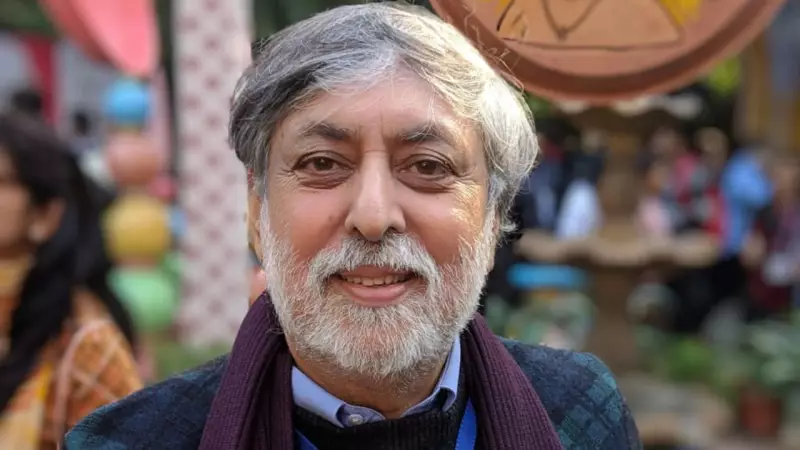
Sharma's Emmy-nominated documentary, titled 'Chronicles of the Forgotten Genocide', meticulously investigates the violent birth of Bangladesh. In an exclusive conversation, the filmmaker explained his motivation. Having recently completed a film on non-violence, he was drawn to the profound lack of accountability surrounding the 1971 events, which he terms a genocide.
"Almost every genocide in the 20th century bears the fingerprints of American imperialism," Sharma states, drawing parallels with Cambodia, Vietnam, and Chile. He acknowledges the Cold War context but firmly rejects it as a justification for the death of millions. "Because these were brown people in a country most Americans couldn't locate on a map, they were ignored," he adds.

The film heavily focuses on the role of the CIA and the Nixon-Kissinger duo, who provided steadfast support to Pakistan. Sharma reveals that despite a Congressional ban on supplying arms, equipment was funneled covertly through allies like Iran and Jordan. His research was aided by declassified documents, a result of efforts by historians like Gary Bass using mechanisms similar to India's RTI.
"I was clear: I'm not anti-American. I'm anti-American imperialism," Sharma emphasizes, defending his decision to highlight this controversial angle.
Lingering Scars and Contemporary Politics in Bangladesh
The documentary features poignant testimonies from survivors and journalists in Bangladesh, most now in their 70s and 80s. Sharma observes that while the younger generation may not have directly experienced the trauma, the scars from 1971 continue to run deep, affecting families and the national psyche.
Interestingly, the film's release coincides with significant political churn in Bangladesh. Sharma notes that he witnessed this shift firsthand during filming. He acknowledges the criticisms of Sheikh Hasina's leadership but points to a crucial fact: "A lot of the trials related to the 1971 pogrom took place only when Hasina came to power." He also suggests that the involvement of external powers, including the US, in regime change cannot be discounted.
On the current state of India-Bangladesh relations, Sharma offers a reflective critique. He believes India has made mistakes in its approach. "We should have nurtured friendships with the people of the country, not just with one family," he says. While praising India's sheltering of 10 million refugees in 1971, he warns against a "Big Brother approach" that risks making India unpopular in the neighbourhood.
Democracy as a Bulwark Against Radicalisation
Drawing from his previous work on the killing of journalist Daniel Pearl in 'The Journalist and the Jihadi', Sharma connects the dots between imperialism and the rise of radicalisation. He traces a pattern from the US-backed coup in 1953 Iran against PM Mohammad Mosaddegh to the Afghan jihad against the Soviets, arguing that American foreign policy often created the chaos that extremists filled.
"Whenever there is no democracy, people go to the mosque. Whenever there's no freedom of the press, they go to the streets," he observes. He credits India's relative resilience to radicalisation to its enduring, if imperfect, democratic framework. "A true democracy is the greatest safety valve against radicalisation. It is what keeps this pluralistic and incredibly varied country together," Sharma concludes.
In a technical innovation for non-fiction filmmaking, Sharma utilized AI-generated visuals to recreate historic scenes where archival footage was destroyed, unavailable, or prohibitively expensive. He predicts AI will soon become a standard, low-cost tool for documentary filmmakers.

Finally, when asked about a potential sequel to his National Award-winning 1986 film 'New Delhi Times', which explored politician-media baron nexuses, Sharma expressed pessimism. "Looking at the intolerance today, I would not have been able to make the film now," he admits, adding that finding funding for such a project in the current climate would be a tragedy.