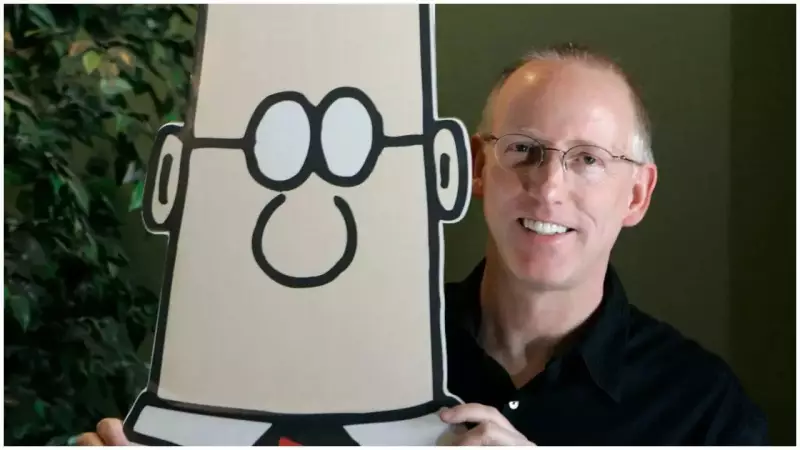
Scott Adams, the creative mind behind the beloved Dilbert comic strip, has died at the age of 68. His family confirmed his passing from aggressive prostate cancer. Adams gained worldwide fame for his satirical take on office life through Dilbert, which resonated with white-collar workers everywhere.
Final Message and Family Announcement
On Tuesday, Adams' ex-wife Shelly Miles shared the heartbreaking news during a tearful livestream on his YouTube channel, Real Coffee with Scott Adams. She read aloud a farewell message that Adams had prepared. In his own words, Adams wrote, "I'm trying to be strong. If you are reading this, things did not go well for me. My body fell before my brain."
He continued with poignant reflections, saying, "If I wake up in heaven, I won't need any more convincing than that. I hope I'm still qualified for entry." Adams used this opportunity to look back on his life, mentioning his marriages and various accomplishments. These included his numerous books, illustrations, and his popular YouTube channel.

Health Battle and Diagnosis
The cartoonist first revealed his health struggle in May of last year. He publicly announced that doctors had diagnosed him with an aggressive form of prostate cancer. This marked the beginning of his final health battle, which ultimately claimed his life.
The Rise of Dilbert and Career Success
Scott Adams' journey to cartooning fame began in 1989. While working at Pacific Bell, he received his first royalty check from United Media for $368.62 for his Dilbert comic strip. This modest payment signaled the start of his professional cartooning career.
Dilbert quickly captured the imagination of office workers around the globe. The comic strip's popularity soared during the 1990s. By 1994, newspapers syndicated Dilbert in more than 400 publications worldwide. Adams became an icon himself, landing lucrative book deals and a television show based on his creation.
Even after achieving success as a full-time cartoonist, Adams maintained connections to the corporate world. His 1996 book, The Dilbert Principle, became a bestseller. The following year, he received the prestigious Reuben Award from the National Cartoonists Society, cementing his status in the industry.
Introduction of Asok Character
Among his many creations, Adams introduced the character Asok, an IIT graduate working in the corporate environment. This character added an Indian connection to his globally recognized comic strip, making it particularly relatable to audiences familiar with the Indian Institute of Technology system.
Controversy and Downfall
Adams' career faced significant turbulence in recent years due to controversial statements. Multiple newspapers across the United States decided to drop the Dilbert comic strip after Adams made inflammatory remarks. During a YouTube broadcast, he called Black Americans a "hate group" and suggested white people should distance themselves from them.
Major media organizations responded swiftly to these comments. The USA Today Network, which operates hundreds of newspapers, immediately pulled the long-running comic strip. The Washington Post and The Plain Dealer in Cleveland followed suit, announcing they would no longer carry Dilbert.
These decisions came after Adams effectively encouraged segregation during his rant. He referenced a poll suggesting some Black Americans agreed with the statement "It's OK to be White." Adams declared, "If nearly half of all Blacks are not OK with White people, that's a hate group." He added, "I don't want to have anything to do with them."
Industry Response and Fallout
Newspaper editors issued strong statements explaining their decisions. Chris Quinn, editor of The Plain Dealer, wrote, "This is not a difficult decision. We are not a home for those who espouse racism. We certainly do not want to provide them with financial support."
Gannett, publisher of the USA Today Network, tweeted about their commitment to inclusion. They stated they strive to maintain a respectful environment for diverse communities nationwide. The Washington Post similarly announced they had ceased publication of the comic strip due to Adams' promotion of segregation.

Adams later defended himself on social media, claiming he was only "advising people to avoid hate." He suggested that canceling his cartoon represented an assault on free speech in America. Andrews McMeel Syndication, the company distributing Dilbert, did not immediately comment on the situation.
Legacy and Impact
Despite the controversies that marked his later years, Scott Adams leaves behind a substantial legacy. He created one of the most recognizable comic strips in modern history. Dilbert gave voice to the frustrations and absurdities of corporate life for millions of readers worldwide.
His work transcended cultural boundaries, with characters like Asok creating connections across continents. Adams demonstrated how humor could critique workplace dynamics while entertaining audiences. His books, awards, and media appearances established him as a significant figure in contemporary cartooning.
The news of his passing marks the end of an era for fans who grew up with Dilbert. While his later statements created division, his earlier work brought laughter and recognition to office workers everywhere. Adams' journey from corporate employee to celebrated cartoonist remains an inspiring story of creative success.