The Great South Indian Cinema Migration: Tamil Directors Head to Telugu
A quiet but significant power shift is reshaping South Indian cinema right now. For decades, visionary Tamil directors defined the industry's creative landscape. They shaped mass entertainment and set ambitious standards long before "pan-India cinema" became a common phrase. Legendary names like K Balachander, Shankar, Maniratnam, Atlee, Lokesh Kanagaraj, and Pa. Ranjith powered Tamil cinema's modern era with their innovative storytelling.
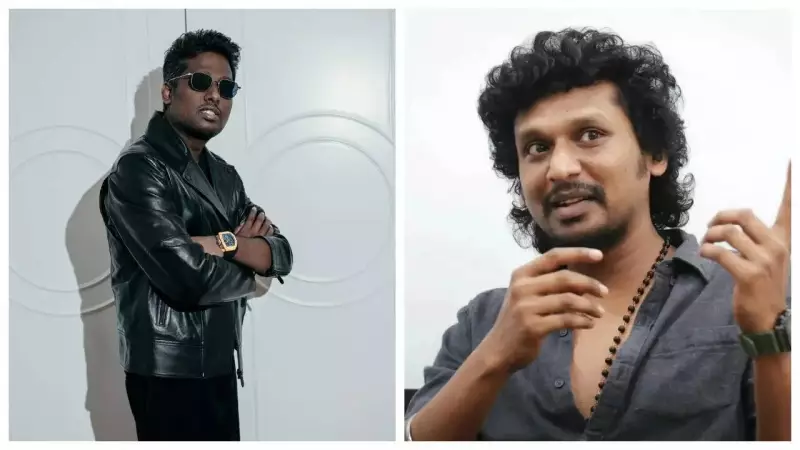
But 2025 marks a turning point. Two of Tamil cinema's hottest directors from recent years, Atlee and Lokesh Kanagaraj, are now working in Telugu. Both are collaborating with Allu Arjun, arguably India's biggest commercial star after the cultural phenomenon of Pushpa. These are not small experimental projects. They represent massive multi-language theatrical events designed for national release and global audiences.
Why Are Tamil Directors Moving to Telugu?
This development raises important questions in trade circles and fan communities. Why are Tamil directors, historically among Indian cinema's most powerful creative figures, migrating to Telugu? The answer lies in three interconnected realities: Tamil cinema's changing star ecosystem, Telugu cinema's meteoric scaling, and directors' evolving ambitions that now think in multi-state, multi-platform terms by default.

Tamil's Star Ecosystem Faces Transition
For nearly four decades, Tamil cinema revolved around four superstar pillars: Rajinikanth, Kamal Haasan, Thalapathy Vijay, and Ajith Kumar. Each represented distinct constituencies. Rajinikanth was the original mass phenomenon. Kamal Haasan served as the prestige icon and experimental actor-auteur. Vijay emerged as the modern box office king. Ajith Kumar became the enigmatic superstar with fierce fan mobilization.
Together, they created a star ecosystem that made Tamil cinema uniquely director-friendly. When directors envisioned large theatrical canvases, there was always a star to anchor their vision. But today, all four pillars are undergoing significant transitions.
Vijay has formally entered politics. After Jana Nayagan, he will not be available for cinema in the near future. This removes Tamil cinema's most consistent commercial opener from the pipeline.
Rajinikanth, now in the later phase of his career, works selectively. After Coolie's mixed reception, he has Jailer 2 lined up. However, nobody expects more than one major film every few years from him.
Ajith Kumar has deliberately slowed down. His current priorities include motorsport, travel, and personal interests. He has stepped back from the industrial rhythm required for franchise building or annual events.
Kamal Haasan, after his triumphant return with Vikram, splits time across cinema, politics, business ventures, and hosting. His output remains prestigious but selective. It is not positioned for the mass multi-film rollouts that pan-India spectacles demand.
Tamil cinema still maintains a robust second line of stars. Suriya, Vikram, Dhanush, Karthi, Vijay Sethupathi, Sivakarthikeyan, and Jayam Ravi are all actors of immense merit. An emerging third line includes new-age names like Pradeep Ranganathan. But regarding theatrical pull, especially in the mass segment, the ecosystem is still stabilizing.
Trade Analyst Explains the Shift
Trade analyst Ramesh Bala summarized this transition with striking clarity. He stated, "Tamil superstar Rajinikanth and Kamal Haasan are both getting older. Vijay has retired from movies, and Ajith is busy with racing. That leaves only Suriya and Vikram with some pan-India presence. But compared to them, Telugu stars like Allu Arjun, NTR, Ram Charan, and Prabhas have more pan-India exposure."
He added, "They have already done pan-India movies. So when big directors like Atlee and Lokesh want to make pan-India films, Telugu heroes make more sense than Tamil heroes. Tamil heroes are preoccupied, while Telugu heroes are more pan-India friendly and also handle promotions better. It makes sense for Tamil directors to choose Telugu heroes for pan-India presence."
For directors specializing in mass spectacle, Bala's reasoning explains the shift succinctly. Availability plus marketability plus scale equals feasibility.

Telugu Cinema Rewrites the Rulebook
While Tamil's star ecosystem recalibrates, Telugu cinema has undergone a structural upgrade. In just one decade, Telugu delivered India's biggest global spectacles: Baahubali, RRR, Pushpa, and Kalki 2898 AD. These films didn't just succeed in the South. They reshaped Hindi markets, dominated the American box office, and infiltrated global pop culture.
The Telugu industry now thinks in pan-India scale by default. Budgets of 300 to 500 crore rupees are not anomalies. They represent standard business models. Hindi dubbing is no longer an option. It has become standard practice. Overseas distribution is not bonus revenue. It is a major line item.
This industrial confidence creates a fertile environment for directors wanting to make big cinema. Telugu stars Allu Arjun, Jr NTR, Ram Charan, and Prabhas are not merely regional figures. They have become theatrical brands with demonstrated national draw.
The Director's New Logic: Pan-India or Bust
For modern Tamil directors, ambitions have expanded dramatically. The focus no longer centers only on Tamil Nadu. Instead, they view "Tamil Nadu plus Andhra Pradesh/Telangana plus Hindi belt plus Overseas" as a single revenue ecosystem. To compete on that board, they need scale, stars, and markets perfectly aligned. Today, Telugu offers all three in ways Tamil currently cannot.
This does not mean Tamil cinema is declining. Far from it. Tamil cinema is diversifying into OTT-friendly content, global collaborations, genre cinema, and auteur-driven experimentation. But mass spectacle requires specific industrial infrastructure. Right now, that infrastructure remains most intact in Hyderabad.
The migration of top Tamil directors to Telugu projects signals a new chapter in Indian cinema. It reflects changing market realities, evolving star dynamics, and ambitious filmmakers seeking larger canvases. This power shift will likely influence how South Indian cinema operates for years to come.