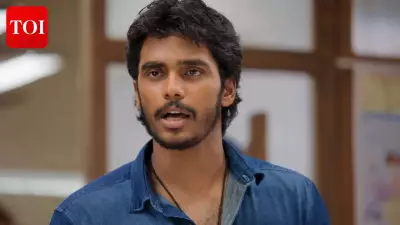
At a recent screening of his film Pedro, which drew a packed audience, filmmaker and actor Natesh Hegde reflected on the film's continued resonance with viewers in India and abroad. During a post-screening discussion, he turned the spotlight on the state of art cinema and the evolving landscape of Kannada filmmaking.
Rigid Separation in Kannada Cinema
According to Natesh, one of the biggest limitations of the Kannada film industry is the rigid separation between art-house and commercial cinema. "I think it has become more of a habit than a necessity," he says. "Filmmakers should not be forced to define themselves by a category, nor should audiences approach films with preconceived notions about what constitutes 'serious' cinema or 'mass' entertainment." He adds, "Such a collision would dissolve the distinction between them and encourage viewers to move freely across different forms of storytelling and aesthetics. The day director Prem is discussed among admirers of Girish Kasaravalli, and Kasaravalli becomes part of conversations among Prem's audience, we will have achieved a genuine blending of film cultures. That would create a much healthier ecosystem."
Learning from Malayalam Cinema
Natesh points to Malayalam cinema as a model. "Look at Malayalam cinema. Under what category would you place films like Bhramayugam or Manjummel Boys?" he asks. "The strength of that industry lies in its willingness to experiment while allowing artistic and commercial films to coexist." According to Natesh, Malayalam cinema has created an environment where artistic expression is viewed as part of mainstream storytelling, not as a barrier to success. Kannada cinema, he says, should aspire to build a similar culture.

Obsession with Scale
As both an actor and filmmaker, Natesh consumes a wide range of cinema — from international festival films and OTT releases to television classics. Over time, however, he has observed an increasing fixation on scale. "Producers love to spend on excess, whether it is production design, violence or even performances. We have started investing more in scale than in stories," he says. "Our industry often celebrates only films that cross the Rs 100-crore mark. Box-office success is important, but it cannot be the sole measure of achievement. A film made on a budget of three or four crores that successfully reaches its audience can be equally significant. An obsession with scale can distort expectations and make smaller successes appear insignificant. What matters is not only how much a film earns, but whether we continue making diverse films and finding ways to connect them with audiences."
Audience Habits and Hope
With the rise of OTT platforms, viewers have become accustomed to pausing films, skipping scenes and watching in fragments. Even in theatres, he notes, many people instinctively reach for their phones the moment a film slows down. "I consciously avoid doing any of that because every creative work deserves our respect. It's the least we can do," he says. "Our audiences have never abandoned good cinema. While giants like KGF and Kantara found loyal audiences, a modestly budgeted film like Su From So also went on to earn crores. That proves the market exists." His hope, he says, is for stronger distribution networks, broader viewing habits and filmmakers willing to move beyond rigid categories. "Only then can Kannada cinema create a space where artistic merit and popular appeal are no longer opposing forces, but part of the same conversation," he concludes.