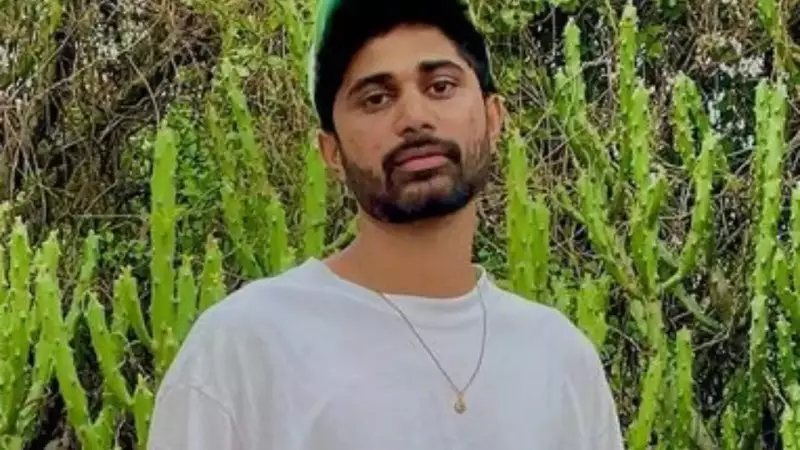
Ankit Sakhiya, the director behind the Gujarati film sensation 'Laalo – Krishna Sada Sahaayate,' has finally opened up about his movie's incredible journey. The film achieved something truly remarkable, entering the prestigious Rs 100 crore club after a surprisingly slow start. This unexpected success has completely transformed the landscape of Gujarati cinema.
The Director's Honest Reaction to Massive Success
In a recent interview with Bollywood Hungama, Ankit Sakhiya expressed genuine surprise at the overwhelming response to his film. He admitted he never anticipated such a massive impact. "I didn't think it would have such a big effect on people," Sakhiya confessed. While he always believed in creating quality cinema, the actual public reaction caught him completely off guard.
"It became clear that if you make a good film, it will naturally find its audience," Sakhiya explained. "People will come to see it, and they will appreciate it. But the profound effect Laalo had on viewers? I never imagined it would reach this level."

Addressing the 'Dhurandhar of Gujarati Cinema' Label
Many industry observers and fans have started calling 'Laalo' the 'Dhurandhar' of Gujarati cinema, referencing the blockbuster Marathi film. When questioned about this comparison, Ankit Sakhiya responded with remarkable humility and perspective.
"Dhurandhar stunned the entire nation with its success," Sakhiya acknowledged. "Our film created a storm specifically within Gujarat." He quickly clarified that he wasn't making direct comparisons between the two films. "There's really no comparison to be made, especially since Laalo represents my directorial debut."
Sakhiya emphasized the unprecedented audience turnout for his film. "People connected with Laalo on such a deep level," he shared. "For the first time in Gujarati cinema history, we witnessed this massive wave of viewers coming to theaters."
The Emotional Impact on Gujarat's Theaters
One of the most touching revelations from the director concerned the film's effect on local theaters. Sakhiya revealed that 'Laalo' actually revived several closed cinema halls across Gujarat.
"Some theaters that had shut down completely came back to life because of Laalo," Sakhiya said emotionally. "Single-screen theaters that were struggling found new energy through our film's success."
No Competition, Only Different Choices
When pressed about whether the 'Dhurandhar' comparison was appropriate, Sakhiya offered a thoughtful perspective on cinema appreciation. "There's no real comparison because different audiences enjoy different types of films," he explained.
"Some viewers prefer films like Dhurandhar, while others connect more with stories like Laalo," Sakhiya continued. "Both films have achieved success in their own right." His comments demonstrated deep respect for diverse storytelling approaches, suggesting that true success comes from reaching audiences rather than competing with other productions.
The Organic Evolution of Laalo's Story
Ankit Sakhiya also shared fascinating details about how Laalo's narrative developed from initial concept to final film. The director revealed that the story underwent significant transformation during the creative process.
"Originally, there was no spiritual element to the story," Sakhiya disclosed. Practical budget constraints played a major role in shaping the film's direction. "Our initial concept involved a trapped man trying to escape his situation," he explained. "Since we had limited resources, we considered shooting everything in a single location."
As the team delved deeper into the character's psychology, the story evolved naturally. "We began asking fundamental questions about our protagonist," Sakhiya recalled. "Why is he trapped? What problems does he face? How does his mind work? What actions define him?"
This character exploration eventually led to the spiritual dimension that defines the film. "We gradually introduced elements from the Bhagwat Gita into the plot," Sakhiya revealed. "The spiritual layer emerged organically as we developed the character's journey."

The film's expansion to Hindi audiences across India represents another significant milestone in its continuing journey. What began as a modest Gujarati production has grown into a pan-Indian phenomenon, demonstrating the universal appeal of well-told regional stories.