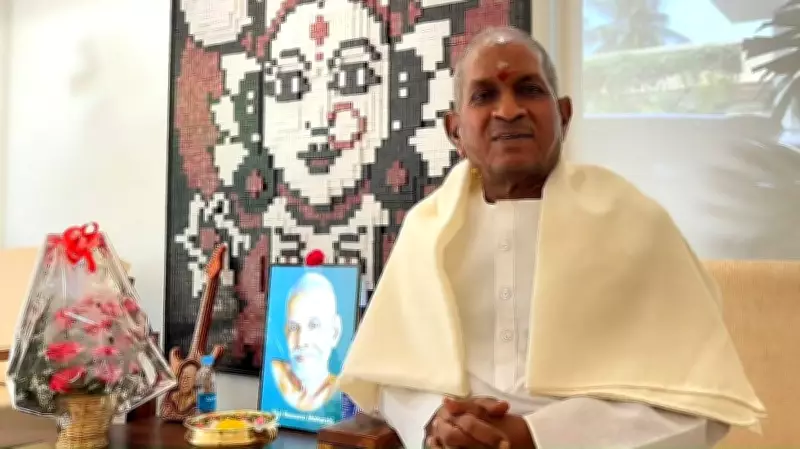
The Delhi High Court has upheld an injunction preventing legendary music composer Ilaiyaraaja from exploiting, licensing, or claiming ownership over tracks from 134 iconic films. The ruling affirms the rights owned by Saregama India Limited, a major Indian music label.
Court's Decision and Its Scope
Justice Prathiba M. Singh, presiding over the case, dismissed Ilaiyaraaja's appeal against the interim injunction granted in November 2024. The court held that Saregama had established a prima facie case of copyright ownership over the songs. The injunction covers tracks from films released between 1976 and 1995, including classics like Thalapathi, Nayakan, and Mouna Ragam.
According to the court order, Ilaiyaraaja cannot assign or license these songs to any third party, nor can he claim any royalty or ownership rights. The ruling is a significant blow to the composer, who had argued that he retained moral and intellectual property rights over his compositions.

Background of the Legal Battle
The dispute began when Saregama filed a suit in 2024, alleging that Ilaiyaraaja was claiming ownership and licensing songs for which Saregama held the copyright. Saregama, formerly known as The Gramophone Company of India, has a vast catalog of film music acquired over decades. The label argued that Ilaiyaraaja had assigned all rights to them under agreements signed during the 1970s and 1980s.
Ilaiyaraaja contested this, stating that he had only granted limited rights and that the copyright reverted to him after a certain period. However, the court found that the agreements clearly transferred all rights to Saregama, including the right to reproduce, distribute, and license the works.
Impact on Ilaiyaraaja's Career
Ilaiyaraaja, a Padma Bhushan awardee and one of India's most prolific composers, has over 7,000 film songs to his credit. The injunction affects a substantial portion of his early and mid-career work, limiting his ability to monetize these compositions. Legal experts note that this could set a precedent for similar disputes in the Indian music industry, where ownership of vintage film music often leads to litigation.
In a statement, Saregama expressed satisfaction with the ruling, stating, "The court has vindicated our long-standing rights over these iconic songs. We remain committed to preserving and promoting this cultural heritage." Ilaiyaraaja's legal team has indicated they may approach the Supreme Court for a final appeal.
Broader Implications for the Music Industry
The case highlights the complexities of copyright law in India, especially regarding works created before the digital era. Many composers and lyricists have challenged music labels' claims, arguing that they were not adequately compensated. The Delhi HC's decision reinforces the importance of written agreements and the principle that copyright can be fully assigned.
Industry observers say the ruling may lead to more clarity in licensing deals, encouraging both artists and labels to document rights meticulously. For now, Ilaiyaraaja's fans can still access these songs through Saregama's platforms, but the composer will not benefit financially from their use.