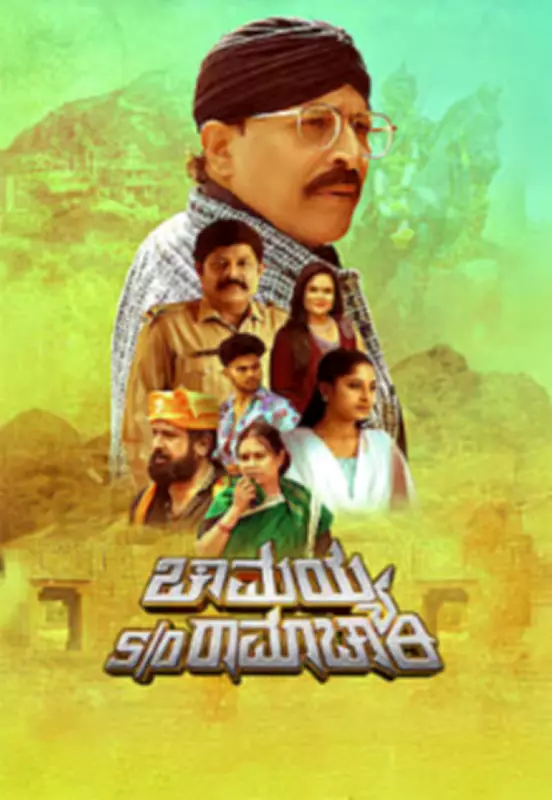
Chamayya S/O Ramachari: A Film That Fails to Live Up to Its Promising Premise
The Kannada drama-thriller Chamayya S/O Ramachari, released on March 27, 2026, with a runtime of 1 hour 45 minutes, presents an intriguing concept that ultimately falls flat due to weak storytelling and lackluster execution. Directed with a focus on nostalgia and regional culture, the film has garnered a disappointing 1.5 rating from both critics and audiences alike.
Plot Overview: Dreams, Addiction, and Tragedy
The narrative centers on Ramachari, portrayed by Jayashri Raj, a performer who bears a striking resemblance to the legendary actor Vishnuvardhan. Traveling across regions as a look-alike artist, Ramachari lives a modest life with his wife Bhavya, played by Prema Gowda. When their son is born, Ramachari names him Chamayya after an iconic character, dreaming of providing him with a prosperous future.
As Ramachari's popularity grows, the family's fortunes improve, leading to a more comfortable lifestyle with a larger home and a trusted house help named Obavva. However, their happiness is short-lived as young Chamayya, portrayed by Pallakki Radhakrishna, succumbs to addiction, falling into the traps of alcohol and drugs. The story takes a dark turn when Chamayya is found dead, triggering a police investigation involving Chota Jaleel, leaving the family shattered and searching for answers.

Cultural Context and Missed Opportunities
The film opens with a compelling exploration of Chitradurga's rich history, delving into its rulers, local deity, celebrated writers, and cultural identity. It pays homage to the timeless legacy of Puttanna Kanagal's film Nagarahavu and its unforgettable characters. An intriguing premise is introduced—what if Ramachari and Margaret from the classic had survived and built a life together? Unfortunately, this thought-provoking idea is abandoned rather than developed.
Instead, the screenplay shifts focus to Ramachari's journey as a Vishnuvardhan impersonator, relying heavily on this angle without constructing a solid emotional or dramatic foundation around it. The cultural glimpses of Chitradurga, while informative, feel disconnected from the main plot, serving as mere backdrop rather than integral narrative elements.
Critical Assessment: Weak Screenplay and Technical Execution
According to The Times of India review by Susmita Sameera dated March 28, 2026, Chamayya S/O Ramachari suffers from multiple shortcomings:
- Poor Story Structure: The screenplay feels outdated, poorly structured, and fails to maintain engagement throughout.
- Lack of Emotional Depth: Despite a few emotional moments, the film struggles to build compelling character arcs or dramatic tension.
- Technical Mediocrity: The execution remains average across cinematography, editing, and direction, with no particularly memorable technical aspects.
- Over-reliance on Nostalgia: The Vishnuvardhan look-alike concept is overused without sufficient narrative support.
The film's opening portions that explore Chitradurga's cultural roots stand out as its strongest element, but this promising start quickly gives way to a conventional and uninspired narrative that fails to leave a lasting impression.
Cast and Performances
The ensemble cast delivers adequate performances within the constraints of the material:
- Jayashri Raj as Ramachari brings sincerity to the role of the devoted father and performer.
- Prema Gowda as Bhavya portrays the concerned mother with subtlety.
- Pallakki Radhakrishna in dual roles demonstrates versatility but is limited by the script.
- Chaitra Santhosh and other supporting actors fulfill their roles competently.
However, the characters lack sufficient development, making it difficult for audiences to form deep connections with their struggles and tragedies.

Final Verdict: A Disappointing Cinematic Experience
Chamayya S/O Ramachari represents a missed opportunity to create a powerful drama about family, dreams, and cultural legacy. While the premise holds potential and the regional cultural elements add initial interest, the film ultimately falters due to weak screenplay, poor structure, and lack of emotional resonance. The 1.5 rating reflects its failure to deliver on its promising concepts, making it a disappointing watch for both fans of Kannada cinema and general audiences seeking meaningful storytelling.
The film serves as a reminder that interesting ideas require strong execution to succeed, and that nostalgia alone cannot carry a narrative without solid dramatic foundation and emotional depth.