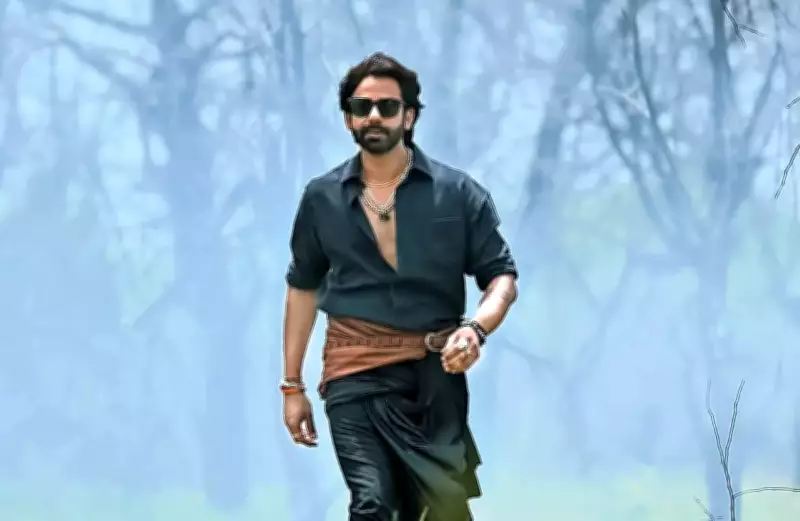
From Actor to Director: Aryan Santhosh's Cinematic Transformation
After dedicating fifteen years to acting in the vibrant Kannada film industry, Aryan Santhosh reached a pivotal moment in his career. He realized that merely performing in front of the camera no longer fulfilled his creative aspirations. "I understood I needed to narrate a more expansive story. That realization propelled me toward becoming a director," Santhosh explains, marking a significant shift in his artistic journey.
Chenkol: A Directorial Debut Born from Ancient Legends
His inaugural directorial venture, titled Chenkol, originates from a deep-seated fascination with the enigmatic tales surrounding Kerala's renowned Sri Padmanabhaswamy Temple. For years, Santhosh was captivated by the legends of concealed vaults and unresolved mysteries associated with the temple, which ultimately served as the foundation for his cinematic narrative.
"The curiosity about the temple persistently lingered with me," Santhosh recalls, highlighting how this enduring interest gradually evolved into the film's conceptual framework.

Navigating the Director's Role: Challenges and Responsibilities
Transitioning from actor to director introduced Santhosh to a entirely new set of responsibilities and hurdles. As an actor, his role involved arriving on set, memorizing dialogues, and delivering performances. However, as a director, he found himself rising before everyone else, meticulously overseeing the collective efforts of approximately ninety individuals involved in the production.
"Unexpected challenges rapidly became an integral part of the filmmaking process," Santhosh notes, emphasizing the demanding nature of his directorial duties.
Evolution of Chenkol: From Romantic Comedy to Folklore Epic
Interestingly, Chenkol was not initially conceived as a grand folklore epic. Santhosh reveals that the original screenplay was a lighthearted romantic comedy centered around a character named DJ Santu. However, he paused to reflect deeply on his creative direction.
"I questioned myself—if I am committing fully to this endeavor, what story genuinely deserves to be told?" This introspection steered him toward the rich realms of mythology and folklore, transforming the project's essence.
Inspired by History: The Mushika Dynasty and Fictional Foundations
During his extensive research, Santhosh encountered references to the historical Mushika dynasty, which profoundly inspired the narrative's fictional underpinnings. "There are numerous echoes of a kingdom that might still remain submerged beneath the ocean. That curiosity stayed with me and gradually, the story's universe began to materialize," he elaborates.
Santhosh aimed to envision a monarch whose tale had never been recounted. "I wanted to imagine a king whose story was never spoken about," he states, underscoring the film's exploratory theme.
Symbolism and Linguistic Harmony in Chenkol
The film's title, Chenkol, holds significant symbolic meaning, referring to the royal sceptre that represents the authority of a just and righteous ruler. This symbolism is intricately woven into the film's core narrative.
In a deliberate move to promote linguistic unity, Santhosh decided to feature the film in both Kannada and Malayalam without dubbing. Approximately 60% of the dialogue is in Kannada, while 40% is in Malayalam.
"I chose not to dub the Malayalam segments because contemporary audiences are adept at reading subtitles to grasp contextual nuances. Cinema should serve as a bridge that unites languages, rather than dividing them," Santhosh asserts, highlighting his commitment to cultural and linguistic integration.