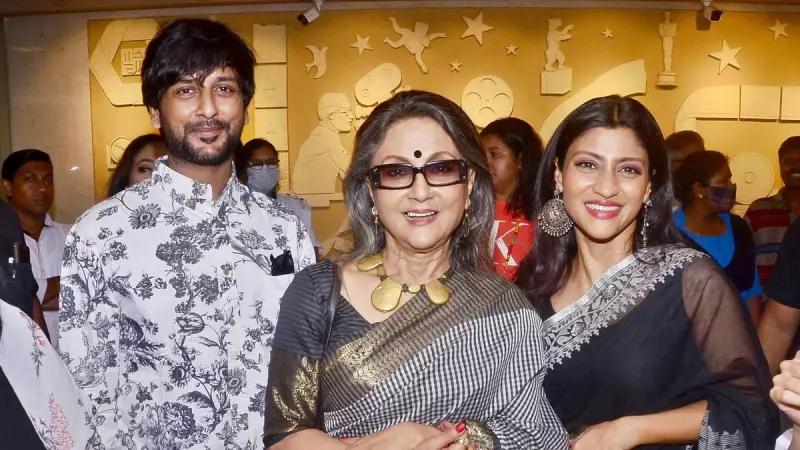
The landscape of Indian cinema witnessed a significant and transformative shift in the 1980s, marked by the rise of a powerful creative voice: Aparna Sen. Her emergence as a filmmaker during this period was not an isolated event but a crucial development within a specific and evolving historical context.
The Crucible of Parallel Cinema
By the time Aparna Sen stepped behind the camera, the Indian parallel cinema movement had already carved out a vital space. This wave of filmmaking, distinct from mainstream commercial productions, was known for its serious engagement with social realities, artistic expression, and nuanced storytelling. It provided a platform for narratives that often questioned societal structures and explored complex human conditions.
However, even within this progressive and intellectually charged milieu, a significant gap remained. The director's chair was overwhelmingly occupied by men. Women directors were exceptionally rare, making the field a challenging frontier for female artists with a vision. It was into this environment that Aparna Sen introduced her unique directorial perspective, thereby becoming an indispensable and pioneering figure.

Breaking Barriers in a Male-Dominated Arena
Sen's foray into direction was a bold move that challenged the entrenched gender dynamics of the film industry. While the parallel cinema movement had opened doors for alternative content, it had not fully democratized the role of the creator. Her work thus represented a dual breakthrough: contributing to the art-house tradition while simultaneously shattering the glass ceiling for women in Indian film direction.
Her films, beginning from this pivotal decade, went on to address themes of feminism, personal liberty, and social hypocrisy with a sensitive yet incisive eye. They carried forward the parallel cinema mandate of reflecting reality but did so through a distinctly female gaze that had been largely absent before. This added a new, essential layer to the movement's narrative scope.
A Lasting Legacy and Influence
The impact of Aparna Sen's pioneering journey extends far beyond her own filmography. By establishing herself as a formidable director in the 1980s, she helped legitimize the presence of women behind the camera in serious, auteur-driven cinema. She paved the way for future generations of female filmmakers, demonstrating that women could not only participate in but also shape and lead the discourse of Indian art cinema.
Her career stands as a testament to the power of perseverance and artistic integrity. From her early days in the 1980s to her continued relevance today, Aparna Sen remains a cornerstone of Indian cinematic history. She is celebrated not just for the films she made, but for the path she created, proving that talent and vision know no gender, and that meaningful stories require diverse storytellers.